

A car that shakes while driving is usually giving you a useful diagnostic clue, not just a vague symptom. The fastest way to narrow it down is to notice when the vibration appears: at a certain speed, only when braking, only when accelerating, or mainly over bumps. Those patterns point toward different systems and can keep a simple problem from turning into a long guessing game. (michelinman.com)
The first clue is when the shake happens
- At one speed range, especially at highway speed: tire balance, tire wear, or the wheel-and-tire assembly rises to the top of the list. A vibration that comes and goes as speed changes is a classic balance clue. (nhtsa.gov)
- Only when braking: think brake rotors or other brake-surface problems before blaming alignment or tire balance. (static.nhtsa.gov)
- Mostly when accelerating: look beyond the tires to the driveline. Manufacturer service bulletins show that acceleration-only vibration can come from inner joint or driveshaft wear. (static.nhtsa.gov)
- Mainly over bumps, or with extra bouncing and clunks: suspension wear becomes more likely. Worn shocks or struts can also contribute to steering-wheel vibration on smooth roads. (monroe.com)
- Only for the first few minutes on a cold morning, then it fades: temporary tire flat spotting is possible. If it does not diminish with driving, it still needs inspection. (michelinman.com)
Alignment and wheel balancing are different services. If the vehicle pulls to one side or the steering wheel sits off-center, alignment is a stronger suspect. If the vibration changes with speed, balancing is usually the better first suspect. (michelinman.com)
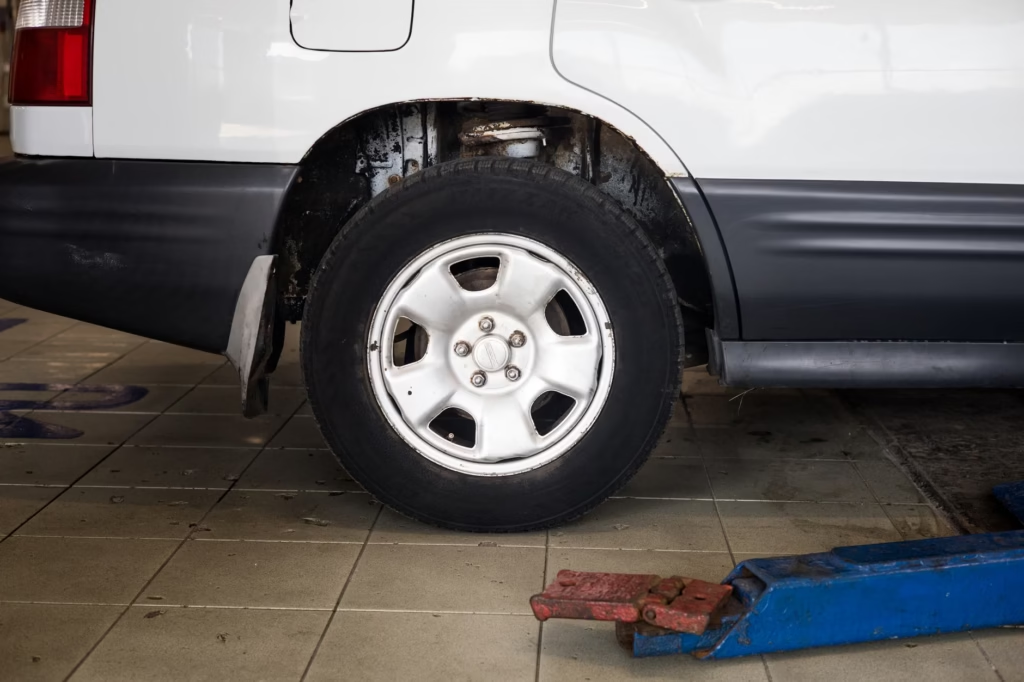
What the pattern usually points to
Tires and wheels deserve the first inspection because speed-related vibration often starts there. NHTSA notes that tire balancing is meant to keep the wheels rotating properly without making the vehicle shake, and Michelin notes that imbalance often shows up as vibration through the steering wheel or floor at certain speeds, sometimes with irregular or scalloped tread wear. (nhtsa.gov)
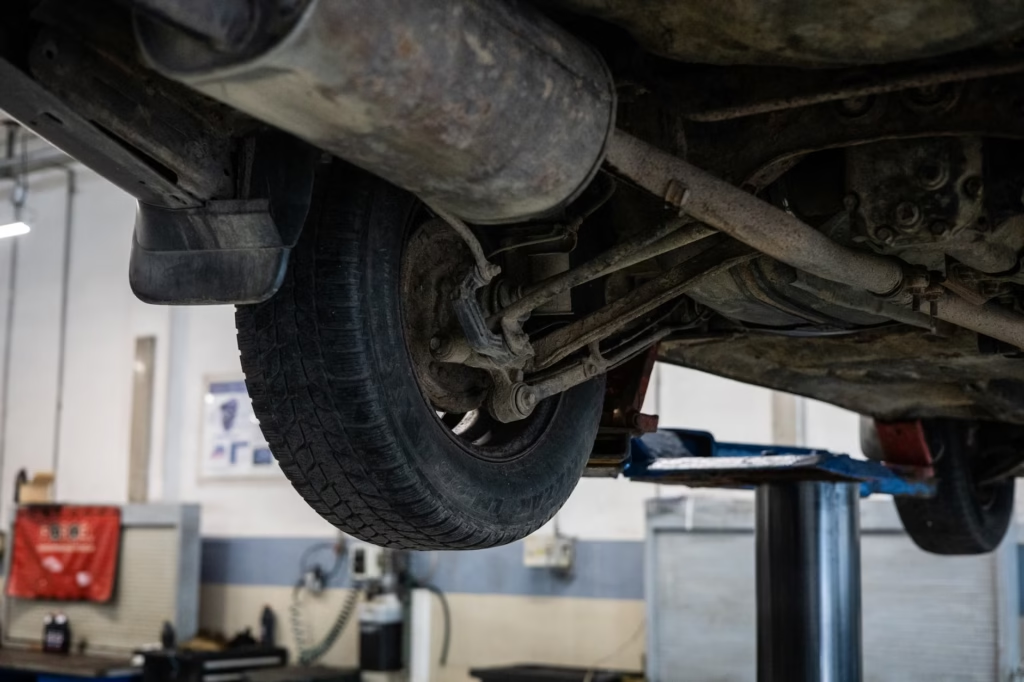
Alignment matters too, but it is commonly misunderstood. A pure rhythmic shake is not the most typical alignment symptom. Pulling, wandering, rapid edge wear, or a crooked steering wheel are more classic clues. That distinction matters because drivers often ask for an alignment when the real problem is wheel balance, or ask for balancing when the car is actually scrubbing tires because the alignment is off. (michelinman.com)
If the car is smooth until the brake pedal is pressed, look hard at the brakes. Volkswagen’s brake-rotor bulletin describes brake-pedal pulsation, vehicle-body vibration, and steering-wheel shake during highway-speed braking. In plain terms, a braking-only shake usually points to the brake system rather than a general tire-balance problem. (static.nhtsa.gov)
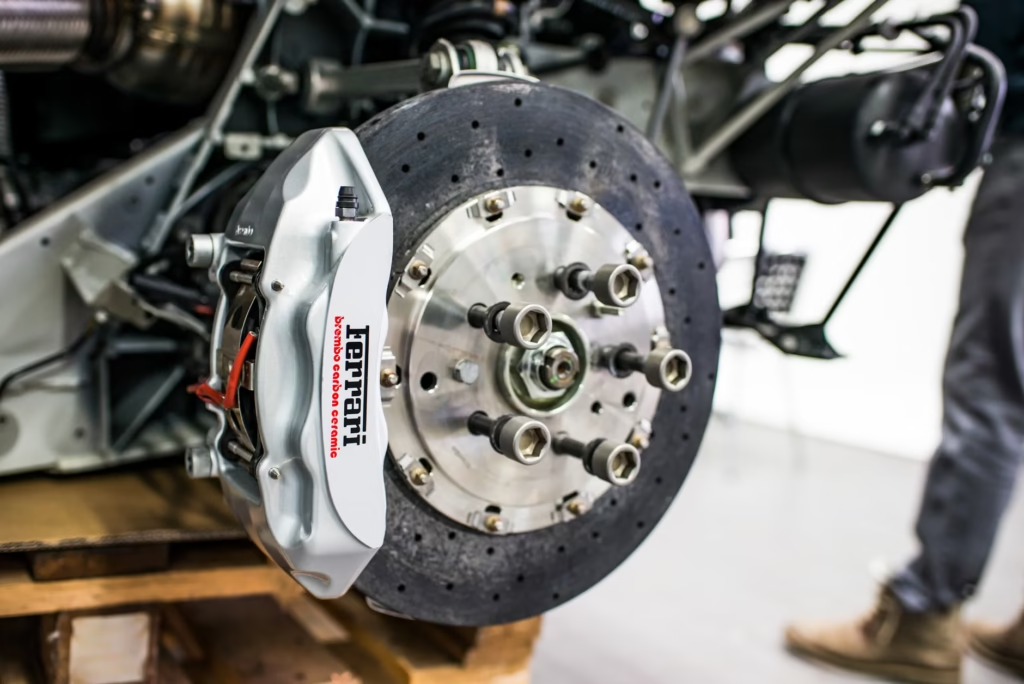
Suspension and driveline issues are the next tier. Worn shocks or struts can contribute to steering-wheel vibration and let the tires bounce enough to create uneven, cupped wear. And if the shake shows up mainly under throttle, not steady cruising, the driveline moves up the list; a Mazda service bulletin, for example, ties a narrow-speed acceleration vibration to wear in the inner front driveshaft joint. (monroe.com)
A short check before the shop visit
- Note the trigger as specifically as possible: exact speed range, braking, acceleration, or bumps. That description helps separate balance, brake, suspension, and driveline problems much faster. (michelinman.com)
- Check tire pressure when the tires are cold and compare it with the vehicle’s recommended placard pressure. Michelin notes that proper placard pressure helps minimize flat spotting. (michelinman.com)
- Inspect the tread for uneven or patchy wear. Scalloping or cupping can point toward a balance or suspension problem, not just an old tire. (michelinman.com)
- Think back to timing. If the shake started right after new tires, a tire repair, or a remount, balance becomes a stronger suspect; NHTSA says new tires should be balanced when installed. If it started after a pothole or curb strike, an alignment and tire inspection move up the list. (nhtsa.gov)
- If the vibration is severe, getting worse, or affecting braking or steering, stop testing it at highway speed and arrange an inspection instead. Persistent vibration can point to a more serious problem. (nhtsa.gov)
One useful exception: a rhythmic thump or shake that shows up right after a cold overnight park and fades after a few minutes can be temporary flat spotting. Michelin says that can be normal, but a vibration that does not fade should be treated like any other tire or suspension concern. (michelinman.com)
When not to keep driving
Do not keep experimenting if the shake is suddenly severe, shows up with brake pulsation, makes the car pull, or leaves the vehicle feeling unstable. NHTSA advises getting tire performance issues such as vibration checked by a tire professional, and persistent vibration should not be brushed off as a comfort issue. It can mean extra wear at best and a safety problem at worst. (nhtsa.gov)
The practical takeaway is simple: speed-related shake usually starts with the tire-and-wheel assembly, braking-only shake usually points to the brakes, and acceleration- or bump-related shake widens the search to the driveline or suspension. Once the pattern is clear, the repair path gets much more accurate. (michelinman.com)
References
- NHTSA – Tire Safety Ratings and Awareness | TireWise – https://www.nhtsa.gov/vehicle-safety/tires
- Michelin USA – Wheel Alignment & Balancing Explained – https://www.michelinman.com/auto/auto-tips-and-advice/tire-maintenance/wheel-alignment-wheel-balancing
- Michelin USA – Tire Flat Spotting: Causes, Prevention, and Solutions – https://www.michelinman.com/auto/auto-tips-and-advice/tire-damage/tire-flat-spotting
- Monroe Shocks & Struts – Signs of Bad Shocks & Struts – https://www.monroe.com/technical-resources/shocks-101/symptoms-worn-shock-struts.html
- Mazda Motor of America Service Bulletin 03-003/16 – https://static.nhtsa.gov/odi/tsbs/2016/SB-10092505-6903.pdf
- Volkswagen Group of America Technical Service Bulletin 46-19-02 – https://static.nhtsa.gov/odi/tsbs/2022/MC-10207832-0001.pdf