


A large repair estimate has an unpleasant way of making the car look finished. The amount is immediate, the car is old, and a replacement suddenly feels less like a purchase than an escape route. That reaction is understandable, but it gives one invoice far too much authority.
Repair cost divided by resale value is useful context, not a verdict. Resale value estimates what someone might pay for the car today, while your actual decision is whether this repair can deliver another credible stretch of dependable transportation for less total burden than replacing it.
I once caught myself feeling relieved by a replacement-car payment on a sales page immediately after flinching at a repair estimate. The payment felt gentler because it had been sliced into smaller pieces, not because the replacement was cheaper, and that little mental trick is exactly why the comparison needs more discipline.
- Is the car fit to drive while you decide?
- Does the estimate resolve an isolated failure or join a worsening pattern?
- What will keeping and replacing actually cost over the same period?
Handle Problems That Make the Car Unfit to Drive First
Before authorizing unrelated work or shopping for another vehicle, run the VIN through the federal recall lookup. An unresolved recall is a separate issue that may have an available manufacturer remedy, although its presence does not prove the current symptom is recall-related.
An urgent repair can still be a poor long-term investment if the rest of the car is deteriorating. Fixing an immediate roadworthiness problem and deciding to replace the car afterward are not contradictory decisions.
Judge the Car’s Pattern, Not Its Odometer
Start by making the estimate more specific. The written diagnosis should identify the failed part, any damage it caused, which work is required now, what can wait, what warranty applies to the parts and labor, and whether the proposed repair should restore normal operation rather than merely suppress a symptom.
I find vague bundled estimates especially irritating because they make a merely old car look terminal. Separating the actual failure from maintenance due soon and watch-list items often changes the decision, even when the total amount on the original page looked frightening.
The repair case is strongest when the fault is clear and isolated, the car has received consistent maintenance, breakdowns have not become routine, and there is no major corrosion or unresolved drivability problem. It also matters whether the car still fits your real life, including commute length, passenger needs, weather, and the trips you cannot afford to miss.
Replacement becomes more persuasive when repairs repeat in the same system, unrelated failures keep arriving close together, electrical or drivability faults remain unresolved, structural corrosion is advancing, or downtime itself is causing serious disruption. The important word is pattern, because an alternator failure after years of ordinary service tells a different story from a car returning repeatedly with starting, charging, and wiring problems.
Mileage changes the probability of wear, but it cannot summarize maintenance, climate exposure, corrosion, model-specific trouble spots, or the condition of this particular car. Add scheduled work due within your comparison period by using the vehicle’s service records and maintenance schedule, not a universal mileage slogan.
Compare Two Futures Over the Same Time Period
The cleanest comparison uses the same 12- to 24-month period for both choices. I like this approach because it turns a frightening lifetime question into a manageable one: what is each option likely to demand during the time you would realistically keep it?
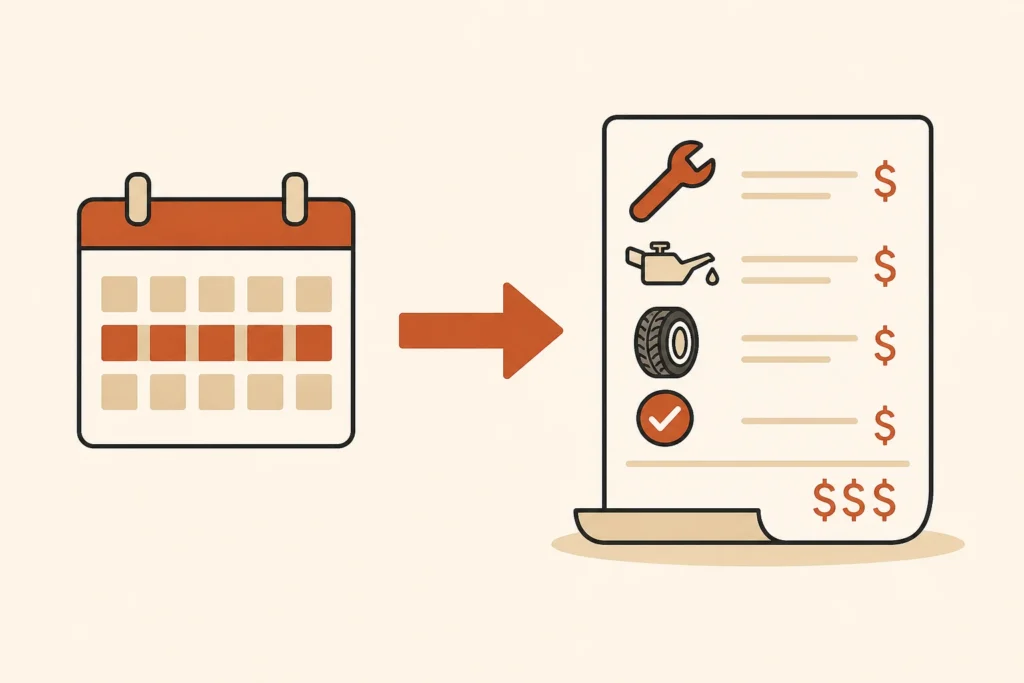
- Choose the horizon. Use a period that matches how long you would realistically keep either vehicle, rather than assuming the current car must last forever to justify one repair.
- Build the keep total. Include the current repair, scheduled maintenance due in the period, other clearly anticipated work, and a modest contingency for uncertainty. Leave out money already spent because sunk costs do not become recoverable when you sell the car.
- Build the replacement total. Start with the purchase price minus realistic sale or trade-in proceeds, then add taxes, title and registration charges, dealer fees where applicable, financing interest, insurance changes, fuel differences, expected depreciation, and immediate inspection or catch-up work.
- Compare the practical burden. Consider required reliability for work or caregiving, access to backup transportation, and whether a used replacement has a documented history and a thorough pre-purchase inspection.
Do not let the advertised monthly payment settle the argument. Compare the amount financed, APR, loan term, monthly payment, and total loan cost, because stretching the term can produce a smaller payment while increasing the amount paid overall.
Online ownership-cost tools can help you remember categories such as depreciation, insurance, financing, maintenance, and repairs, but their default assumptions are not a prediction. Replace them with local insurance quotes, actual purchase terms, personal mileage, and the condition of the replacement you could genuinely buy.
The Signals That Usually Settle the Decision
| Signal | What it suggests | Lean |
|---|---|---|
| One specific repair after a dependable period | The bill may restore normal service rather than continue a pattern | Repair |
| Consistent maintenance and no major rust or unresolved drivability issue | The car still has a credible foundation | Repair |
| Repeated or cascading failures with disruptive downtime | Dependability is declining, not merely aging | Replace |
| Structural corrosion or work that will not restore confidence for required trips | The repair does not solve the ownership problem | Replace |
| Vague diagnosis, bundled estimate, or no verified replacement candidate | The decision lacks usable information | Pause |
| Choice justified only by a low monthly payment | The replacement cost is being understated | Pause |
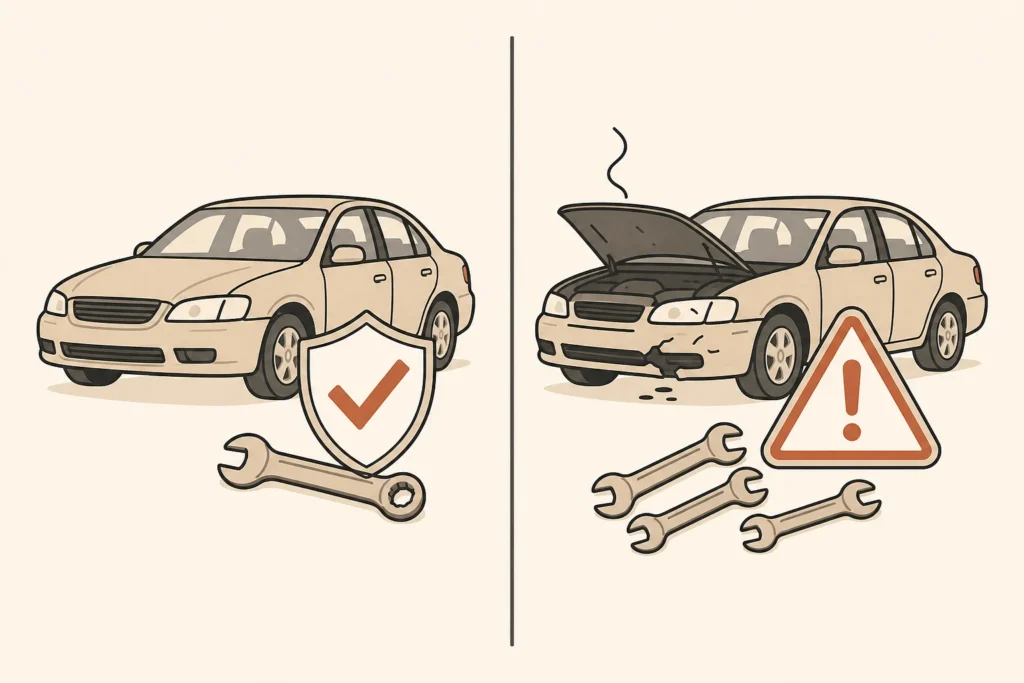
Even a used replacement with a documented history and a condition inspection carries vehicle-specific uncertainty that broad reliability data cannot resolve. Price that uncertainty into the comparison rather than treating replacement as the end of repair risk.
Repair is the better answer when the work buys a believable period of dependable service at a lower total burden than replacement. Replace when recurring faults, foundational deterioration, or unacceptable downtime mean the car can no longer credibly provide that service. You are not voting for or against an old car, you are buying the next useful stretch of transportation, and that is the comparison the estimate alone cannot make.
Sources and references
- Consumer Financial Protection Bureau: How do I compare auto loan offers? (2024-01-30)
- Edmunds: Cost of Car Ownership, 5-Year Cost Calculator
- National Highway Traffic Safety Administration: Check for Recalls
- Consumer Reports: Should You Buy a New, Certified Pre-Owned, or Used Car? (2026-06-22)
- Kelley Blue Book: Repair or Replace My Car: Free Tool