

Most road-trip breakdowns are not mysterious. They are ordinary problems such as marginal tires, ignored warning signs, low fluids, weak batteries, bad wipers, or overloaded cargo that become obvious only after hours of heat, speed, and luggage. Good preparation is less about doing every possible service and more about removing the failures most likely to strand you or make the trip unsafe. NHTSA’s road-trip guidance puts the emphasis on tires, fluids, batteries, lights, wipers, recalls, emergency supplies, and route planning for that reason. (nhtsa.gov)
A long trip is a stress test, not a normal week of commuting
A car that feels fine around town can be borderline on the interstate. Higher speeds, mountain grades, hot weather, heavy passenger loads, air conditioning use, rough pavement, and rooftop cargo all ask more from the vehicle. They can also cut fuel economy, and in an EV they can reduce real-world range. That is why pre-trip prep should be more conservative if the route includes long highway stretches, remote areas, steep climbs, very hot or cold weather, towing, or a full cabin and trunk. (epa.gov)
If the vehicle has an open safety recall, recent overheating, obvious tire damage, recurring brake vibration, or a warning light you have been postponing, make diagnosis part of trip prep. Recall repairs are free, and NHTSA’s VIN or license-plate lookup is the fastest first check. (nhtsa.gov)
Use the Stop, Run, Recover check
A useful way to avoid random last-minute prep is to sort the job into three questions. First, can the car stop, steer, and see safely? Second, can it keep running for hours without overheating, stalling, or draining itself? Third, if something still goes wrong, can everyone stay safe and get moving again? That simple sequence keeps attention on the parts of the vehicle that actually change road-trip risk.
- Stop: tires, brakes, lights, wipers, and clear forward visibility.
- Run: fluids, cooling, battery, charging or fuel plan, and maintenance items that are already due soon.
- Recover: spare tire, jack, emergency kit, cargo security, roadside-assistance details, and a breakdown plan.
Stop first: tires, brakes, lights, and visibility
Tires deserve the first check because they affect braking, steering, wet-road traction, heat resistance, and roadside failure risk. NHTSA advises checking pressure when the tires are cold, using the vehicle manufacturer’s recommended pressure on the door placard or in the owner’s manual, not the maximum number molded onto the tire sidewall. NHTSA also says tread should be at least 2/32 inch and that sidewalls should be checked for cuts, punctures, bulges, cracks, or bumps before long trips. (nhtsa.gov)
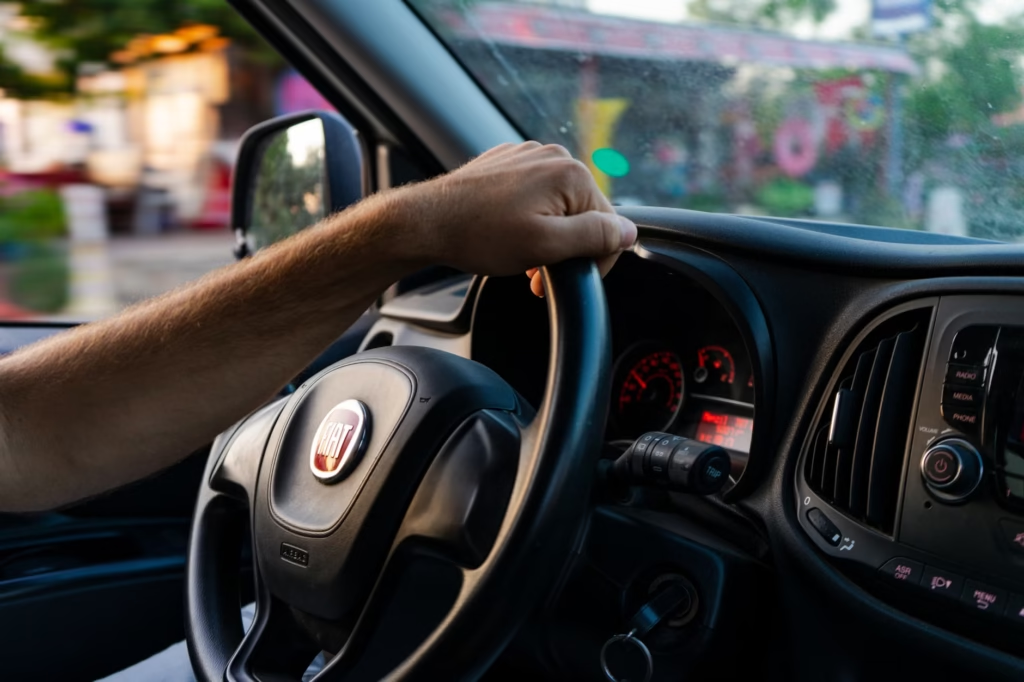
- Check all four tires and the spare with a gauge, not a visual guess. Tire pressure should be checked cold, and NHTSA notes that TPMS warnings typically appear only after a tire is significantly underinflated. (nhtsa.gov)
- Inspect tread across the full width of each tire. If wear is close to the built-in wear bars or below 2/32 inch, replace the tire before the trip. (nhtsa.gov)
- Look for uneven wear. One shoulder wearing faster than the rest often means the trip should include an alignment, rotation, or suspension check rather than just more air. (nhtsa.gov)
- Do not solve a heavily loaded car by inflating to the sidewall maximum. The correct starting point is the vehicle placard and the Tire and Loading Information Label. (nhtsa.gov)
- If the route involves towing or a packed vehicle, confirm the tire size and loading guidance in the owner’s manual and keep the load within the vehicle’s limits. (nhtsa.gov)
After tires, move to braking and visibility. AAA advises getting the brakes inspected if you hear grinding or feel vibration when braking. NHTSA recommends checking headlights, brake lights, turn signals, emergency flashers, and wiper blades before a road trip. It also flags improperly installed floor mats as a crash risk if they interfere with the pedals. This is easy to miss because the car may still feel mostly fine on a short drive. (aaa.com)
Then make sure the car can keep running for hours
NHTSA’s road-trip checklist recommends checking coolant, engine oil, brake fluid, transmission or clutch fluid where applicable, power steering fluid if the system is hydraulic, windshield washer fluid, and the battery and charging system. It also recommends checking for leaks and resolving open recalls before travel. In practical terms, this means a clean driveway spot under the car matters, a low coolant reservoir matters, and a battery that has needed a recent jump should not be trusted simply because it started this morning. (nhtsa.gov)
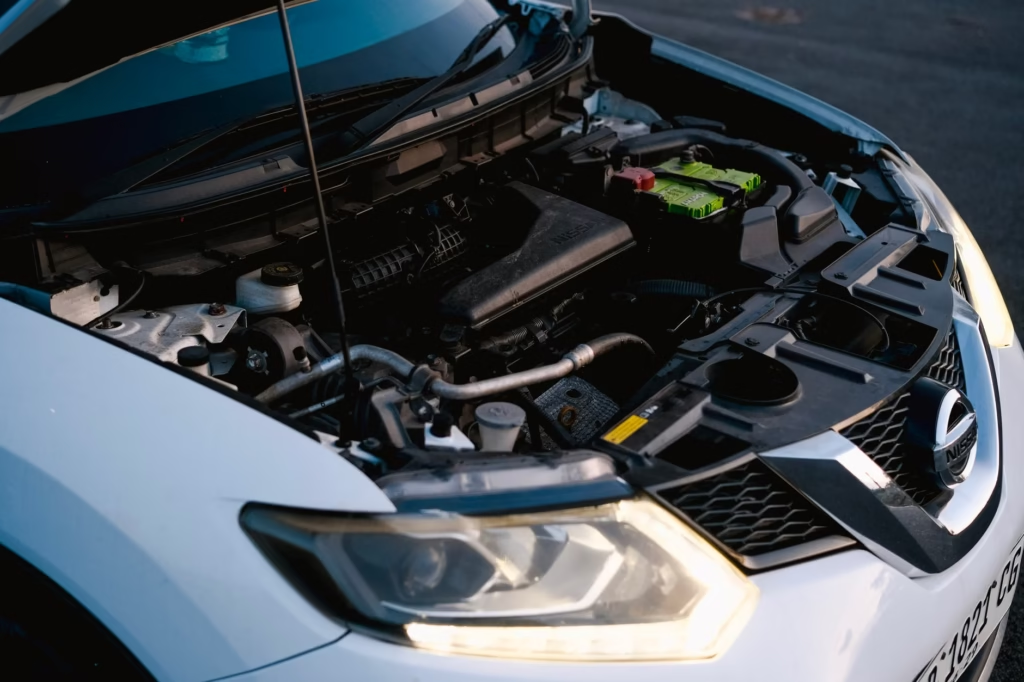
This does not mean every car needs a full service just because a trip is coming up. If maintenance is current, fluids are full, the battery is healthy, and nothing feels or sounds wrong, the better move is often inspection rather than replacement. But if an oil change, battery test, or coolant service is already due soon, doing it before departure is usually smarter than trying to stretch it through a multi-state drive. (nhtsa.gov)
For EVs and plug-in hybrids, the same principle applies, but the details change. The Department of Energy’s Alternative Fuels Data Center says longer EV trips require planning ahead, charging fully before departure, and mapping charging stops in advance because public chargers are still less common than gas stations. AFDC also notes that highway travel, extreme temperatures, rapid acceleration, heavy loads, and steep grades can reduce range. (afdc.energy.gov)
What deserves a shop appointment before you go
The hardest part of road-trip prep is deciding whether a symptom is a small nuisance or a real pre-trip repair. This table is a useful dividing line.
| What you notice | What it may mean | Best move before departure |
|---|---|---|
| Tread near wear bars, under 2/32 inch, or a sidewall cut, bulge, or puncture | Reduced wet traction or elevated tire-failure risk | Replace or have the tire inspected by a tire professional before the trip. (nhtsa.gov) |
| Uneven tread wear, steering-wheel shake, or the car pulling to one side | Possible alignment, balance, or suspension issue | Schedule an inspection before adding hundreds of highway miles. (nhtsa.gov) |
| Grinding, scraping, or vibration when braking | Brake wear or another brake-system problem | Have the brakes inspected rather than seeing how it goes. (aaa.com) |
| Low coolant, signs of leaking fluid, a rising temperature gauge, or a recent overheating episode | Cooling-system problem that can escalate quickly on a long drive | Service it before the trip. Long uphill or hot-weather driving makes this worse, not better. (nhtsa.gov) |
| Slow cranking, recent jump-start, or erratic electrical behavior | Weak battery or charging-system problem | Get the battery and charging system tested before you leave. (nhtsa.gov) |
| Open safety recall | Known safety issue with a free manufacturer remedy | Look up the VIN and complete the recall repair before travel if possible. (nhtsa.gov) |
If none of those signals are present and maintenance is current, many drivers can handle the rest themselves: setting tire pressure, topping up approved fluids, testing lights, swapping wiper blades, checking the spare, and packing the kit. The key is to be honest about symptoms instead of interpreting “it still drives” as proof that it is ready. (nhtsa.gov)
Recovery prep matters because even a good car can still have a bad day
NHTSA recommends carrying an emergency roadside kit even in a well-maintained vehicle, and AAA makes the same point. At minimum, preparation should assume a flat tire, a dead battery, a delay in extreme heat or cold, or a stop in an area with poor cell coverage. Just as important, confirm that the spare is inflated and that the jack, lug tool, wheel-lock key if you use one, charging cable or adapter if needed, and roadside-assistance details are actually in the vehicle. (nhtsa.gov)
- A charged phone and car charger. NHTSA puts this at the top of the emergency-kit list. (nhtsa.gov)
- A flashlight, first-aid supplies, drinking water, nonperishable snacks, and any essential medicines. (nhtsa.gov)
- Jumper cables or a jump pack, a tire-pressure gauge, work gloves, and basic tools. (nhtsa.gov)
- Extra windshield washer fluid, paper towels or rags, and weather-appropriate layers or blankets. (nhtsa.gov)
- Reflective warning devices or flares if legal and appropriate for where you travel. (nhtsa.gov)
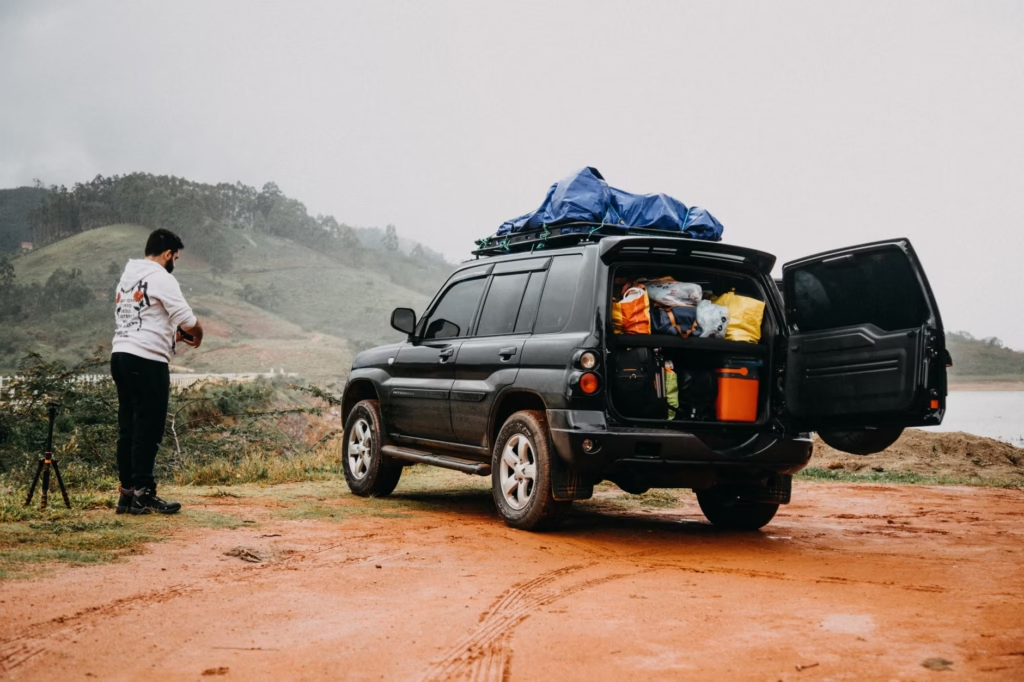
Packing also changes how the car behaves. NHTSA says not to overload the vehicle and to secure cargo so it cannot shift or escape. EPA notes that unnecessary weight and roof racks reduce fuel economy. The practical takeaway is simple: put dense items low and forward in the cargo area, keep loose items from flying forward under hard braking, use interior space before rooftop storage when possible, and do not treat the roof as free capacity just because it is empty. (nhtsa.gov)
As a hypothetical example, a crossover that feels stable on a 20-minute commute may feel very different with four adults, vacation luggage, and a rooftop box in summer crosswinds. The right fix is not automatically adding more air. It may be reducing cargo, redistributing weight, or deciding the trip calls for newer tires before anything else.
If a breakdown does happen, safety comes before convenience. Pull as far off the travel lane as possible, use flashers, know your location, and call for assistance. AAA notes that all 50 states have Move Over laws for emergency vehicles with flashing lights. (northway.aaa.com)
The driver is part of the road-trip system too
A fully prepared car does not cancel out a tired or distracted driver. NHTSA says getting adequate sleep is the only true way to protect against drowsy driving and notes that crash risk is commonly associated with travel between midnight and 6 a.m. and in the late afternoon. It also warns drivers to check prescription and over-the-counter medication labels for drowsiness and not to drive after using impairing substances. (nhtsa.gov)
This matters for trip planning more than many drivers admit. Build in real stops, not just fuel stops. Rotate drivers before anyone feels desperate to swap. Keep the gas tank reasonably full when traveling through remote areas. Set navigation, climate controls, mirrors, and music before leaving or while parked. If messages need attention, assign a passenger to handle them or pull over safely first. NHTSA’s distracted-driving campaign explicitly recommends pulling over and parking before reading or sending a text. (nhtsa.gov)
Caffeine can help for a short time, but NHTSA warns it is not a substitute for sleep. If you become sleepy, pull over in a safe place and rest rather than trying to push through. (nhtsa.gov)
A practical timeline that prevents last-minute mistakes
- One to two weeks before: run the recall lookup, decide whether any symptoms justify a shop visit, and schedule battery, brake, or tire work early enough that you are not shopping for parts the night before departure. (nhtsa.gov)
- Two to three days before: check cold tire pressure, inspect tread and sidewalls, confirm fluid levels, test all exterior lights, replace bad wipers, verify the spare and jack kit, and make sure charging cables or adapters are packed if you drive an EV. (nhtsa.gov)
- Departure morning: start with a full charge or a near-full tank, load the car once instead of shuffling cargo repeatedly, secure loose items, review the route, weather, and road conditions, and tell someone your ETA if you will be covering a long or remote stretch. (nhtsa.gov)
- At the first stop: walk around the vehicle, look for leaks, check that cargo has not shifted, and ask whether the driver still feels alert. Small problems are cheaper to correct in the first hour than after six hours of denial. (nhtsa.gov)
Common road-trip prep mistakes
- Using the pressure number on the tire sidewall instead of the vehicle placard. NHTSA is clear that the sidewall number is not the recommended pressure for your vehicle. (nhtsa.gov)
- Assuming the TPMS light will catch every tire problem. It may warn only after a tire is significantly underinflated, and it does not replace an actual inspection for tread damage or sidewall issues. (nhtsa.gov)
- Packing a just-in-case trunk so full that the car carries unnecessary weight or relies on a roof rack for items that could have been left home. Extra weight and roof racks hurt efficiency, and unsecured loads create safety risks. (epa.gov)
- Treating driver-assistance features as a substitute for preparation or attention. NHTSA says these systems are assistive; the driver is still responsible for steering, braking, and monitoring the vehicle. (nhtsa.gov)
- Waiting until departure day to learn the battery is weak, the spare is flat, a recall is open, or the EV route depends on a charger you never checked. Nearly all of those problems are easier to solve days in advance. (nhtsa.gov)
The best road-trip prep is not flashy. It is a calm, honest inspection of the things most likely to end the trip early: tires, brakes, fluids, battery health, visibility, cargo security, emergency supplies, and driver readiness. If the car passes the Stop, Run, Recover check and the trip plan respects weather, fatigue, and vehicle limits, the odds of a smoother drive improve substantially. (nhtsa.gov)
Frequently asked questions
Should you get an oil change before every long road trip?
Not automatically. If the oil change is already due soon or the level is low, do it before travel. If the vehicle is on schedule and the oil level is correct, follow the owner’s manual rather than treating every trip as a mandatory oil-service event. (nhtsa.gov)
Does the spare tire really need to be checked?
Yes. NHTSA specifically recommends checking the spare along with the four road tires and making sure the jack kit is in the vehicle. A perfect set of main tires does not help much if the spare is flat or the wheel tools are missing. (nhtsa.gov)
Can you rely on the tire-pressure monitoring system instead of checking pressure yourself?
No. NHTSA says TPMS warnings usually appear only when a tire is significantly underinflated. For a road trip, pressure should still be checked with a gauge while the tires are cold. (nhtsa.gov)
Is an older car automatically a bad road-trip car?
Not necessarily. Age alone is less important than maintenance, tire condition, cooling-system health, and battery strength. An older car with current maintenance and no symptoms may be a better trip car than a newer one with ignored warning signs. Older vehicles do benefit from more conservative prep and a stronger recovery plan. (nhtsa.gov)
How is EV road-trip prep different from gas-car prep?
The safety checks are similar, but the planning burden is higher. AFDC recommends charging fully before longer trips, mapping charging stops ahead of time, and remembering that highway speed, temperature, terrain, and heavy loads can reduce range. (afdc.energy.gov)
References
- NHTSA – Summer Driving & Road Trip Tips – https://www.nhtsa.gov/summer-driving-tips
- NHTSA – Tire Safety Ratings and Awareness – https://www.nhtsa.gov/vehicle-safety/tires
- NHTSA – Check for Recalls – https://www.nhtsa.gov/recalls?vin=1fm5k8ar8ega91900
- AAA Automotive – Prepare Your Car for Summer Travel – https://www.aaa.com/autorepair/articles/prepare-your-car-for-summer-travel
- AAA Northway – What to Do When Your Vehicle Breaks Down – https://www.northway.aaa.com/automotive/what-do-when-your-vehicle-breaks-down
- NHTSA – Drowsy Driving – https://www.nhtsa.gov/risky-driving/drowsy-driving
- NHTSA – Prescription and Over-the-Counter Medicines – https://www.nhtsa.gov/campaign/prescription-and-over-counter-medicines
- NHTSA – How to Secure Your Load – https://www.nhtsa.gov/drive-safe-secure-your-load
- NHTSA – Move Over: It’s the Law – https://www.nhtsa.gov/move-over-its-law
- US EPA – Your Mileage May Vary – https://www.epa.gov/greenvehicles/your-mileage-may-vary
- Alternative Fuels Data Center – Electric Vehicles for Consumers – https://afdc.energy.gov/vehicles/electric-consumers
- Alternative Fuels Data Center – All-Electric Vehicles – https://afdc.energy.gov/vehicles/electric-basics-ev