

When the temperature gauge climbs or steam starts coming from under the hood, the real question is not just why the car is overheating. It is whether continuing to drive will turn a manageable repair into a much bigger one. In practical terms, an overheating engine usually means one of three problems: the system is low on coolant, coolant is not circulating properly, or the radiator is not shedding heat the way it should. The sooner that is handled, the better the odds of avoiding serious engine damage.
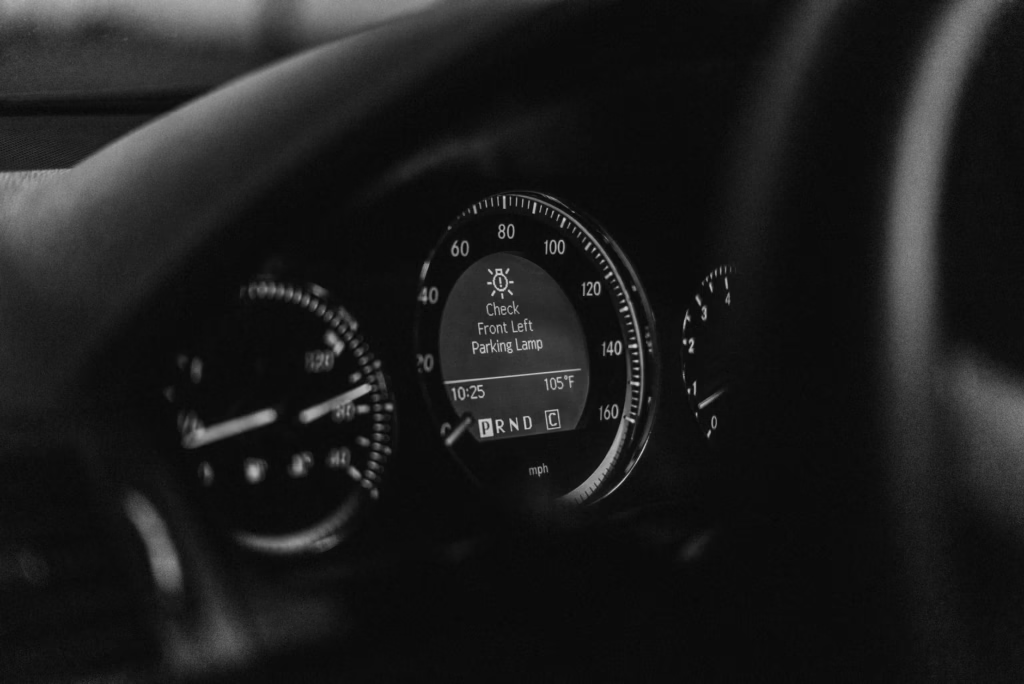
First, decide whether it is a true overheat or a heavy-load warning
Not every rising gauge means the engine is seconds from failure. A long uphill grade, towing, stop-and-go traffic, or extreme heat can push temperatures up temporarily, and some newer vehicles may even reduce power or cycle the A/C to protect themselves. But if the gauge reaches the red zone, a dashboard warning says the engine is too hot, power drops sharply, or you see steam or spray, treat it as a real overheating event and stop as soon as it is safe.
- Pull over safely, turn on the hazard lights, and get the car out of traffic if possible.
- Shut off the A/C. If you cannot stop immediately, turning the cabin heat on high can help pull some heat away from the engine for a short time while you reach a safe spot.
- If steam or spray is coming from under the hood, shut the engine off and do not open the hood until it has stopped.
- Do not remove the radiator cap or open the cooling system while it is hot. Hot coolant is pressurized and can cause severe burns.
- If the warning remains on, the car keeps running hot, or coolant is visibly pouring out, call for roadside assistance or a tow rather than trying to limp home.

Check the owner’s manual for your exact vehicle. Some manufacturers give slightly different instructions depending on whether there is steam, whether the engine has already shut down, and whether the vehicle is a hybrid.
Most overheating problems come from leaks, circulation trouble, or airflow trouble
A simple way to narrow the problem is to think about what the cooling system is failing to do.
- Low coolant or an external leak: This is one of the most common starting points. A split hose, leaking radiator, weak cap, loose clamp, or failing water pump can let coolant escape. After the engine cools, a very low overflow reservoir, damp areas around hoses, or fresh fluid under the front of the car all point in this direction.
- Coolant is present but not moving correctly: A thermostat that sticks closed or a water pump that is not doing its job can trap heat in the engine instead of sending it through the radiator. This often shows up as repeated overheating even after the system has been topped off.
- The radiator cannot get rid of enough heat: If the cooling fan is not coming on, the radiator is clogged internally, or debris is blocking airflow through the fins, the engine may run especially hot at idle or in traffic, where it cannot rely as much on air moving through the grille.
- A secondary problem is adding heat or strain: Less commonly, low oil, a slipping belt, or internal engine trouble can contribute. Hot weather alone usually is not enough to make a modern car steam unless something in the cooling system is already weak.
That last point matters. Many drivers assume summer heat is the cause, when it is often the trigger that exposes an existing issue. The weather did not break the car by itself; it revealed that the cooling system no longer had much margin left.
What you can safely check after the engine cools
Once the engine has cooled completely, a short visual check can tell you whether the car might make it to a nearby shop or whether it needs a tow.
- Start with the overflow or reserve tank, not the radiator cap. If the tank is empty or well below the minimum mark, the system has likely lost coolant.
- Look under the car and around the front of the engine bay for obvious leaks, wet hoses, or fresh drips.
- Check for visible belt damage without reaching into the engine bay. If a belt that drives cooling components is damaged or missing, do not continue driving.
- If the vehicle is fully cool and your owner’s manual allows it, topping up with the correct coolant may help as a temporary measure. Plain water can be an emergency-only fallback, not a real repair.
- If you restart the car and the temperature climbs again within a few minutes, stop. Repeated overheating is a strong sign that the cause has not been solved.
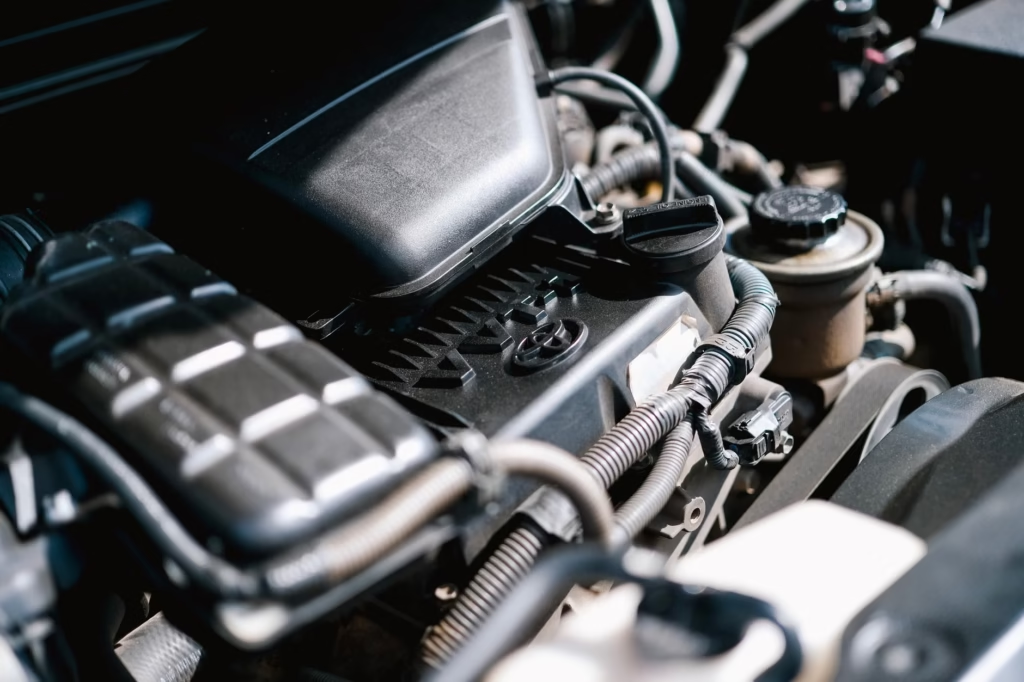
The mistake to avoid is treating a refill as a fix. If coolant disappeared once, it usually went somewhere. Even if the car seems normal again, the underlying leak, fan problem, thermostat issue, or circulation fault still needs attention.
When it is smarter to stop troubleshooting and get a tow
Call for a tow if the car is steaming, dumping coolant, losing power, overheating again almost immediately, or showing a red temperature warning that will not clear. The same applies if you are stranded in an unsafe location, are not sure which fluid you are looking at, or cannot confirm that the engine is completely cool. A short tow usually costs less than an engine damaged by one more mile of driving.
In most cases, an overheating car is not mysterious. The engine is either low on coolant, unable to move coolant, or unable to dump heat. Use that logic, respond quickly, and do not gamble on a second overheat. That is often the difference between a repairable cooling-system problem and a much more expensive engine problem.
References
- AAA Via, “What to do if Your Car Is Overheating and How to Prevent it” – https://mwg.aaa.com/via/car/prevent-overheating
- Honda Owners Manual, 2025 Civic Sedan Hybrid, “How to Handle Overheating” – https://techinfo.honda.com/rjanisis/pubs/OM/AH/AT542525IOM/enu/details/131266047-386875.html
- Ford Owner’s Manual, “Coolant – Managing the Coolant Temperature” – https://www.fordservicecontent.com/Ford_Content/vdirsnet/OwnerManual/Home/Content?ProcUid=G2241237&Uid=G2357965&buildtype=web&countryCode=USA&div=f&languageCode=en&userMarket=USA&vFilteringEnabled=False&variantid=9156
- Car Care Council, “Car Care Guide” – https://www.carcare.org/car-care-resources/car-care-guide/