

Monthly car maintenance is not a substitute for scheduled service. It is a way to catch the small changes that show up between shop visits: a tire losing air, a coolant reservoir dropping, a battery terminal starting to corrode, or a brake light that quietly stopped working. Federal safety guidance and manufacturer maintenance schedules both point drivers toward regular checks of tires, lights, fluids, and visible condition rather than waiting for a warning light or a roadside breakdown. (nhtsa.gov)
A car can feel normal and still be developing two problems at once. For example, the vehicle may drive fine on a short commute while one rear tire is wearing unevenly on the inner edge and the coolant level is slowly slipping lower month by month. Neither issue has to create a dramatic symptom right away. The value of a monthly routine is that it makes those quiet changes visible early, when the fix is usually simpler, cheaper, and safer to manage. (nhtsa.gov)
Start with a cold-car baseline, not a rushed gas-station glance
The most useful way to do these checks is what this article calls the cold-car baseline: inspect the vehicle when it is parked on level ground and, ideally, has been sitting for at least three hours. That gives a more accurate tire-pressure reading, lets oil and coolant settle where they can be read properly, and reduces the chance of touching or opening hot components. Just as important, it gives you the same conditions each month, which makes small changes easier to notice. (nhtsa.gov)
- Park on level ground in daylight, set the parking brake, and let the vehicle cool if you need accurate readings for tire pressure, engine oil, or coolant. (nhtsa.gov)
- Keep a small kit nearby: a tire-pressure gauge, flashlight, gloves, and paper towels. NHTSA also recommends carrying basics such as a gauge, jack, gloves, and extra washer fluid in case you need them on the road. (nhtsa.gov)
- Use the same order every time: walk around the car, inspect the tires, open the hood, then sit in the driver’s seat and test lights or warnings. Consistency is what turns a quick glance into a useful baseline. (fordservicecontent.com)
- Write down what changed from last month. A small note such as added 3 psi to left rear again or coolant slightly lower than last month is often more useful than memory. (fordservicecontent.com)
Always use the owner’s manual as the source of truth for fluid type, service intervals, and model-specific procedures. Automotive fluids are not interchangeable, and NHTSA advises EV owners to follow manufacturer instructions and leave high-voltage battery service to qualified technicians. (fordservicecontent.com)
The 10 monthly checks that catch most avoidable problems
1. Check tire pressure with the tires cold
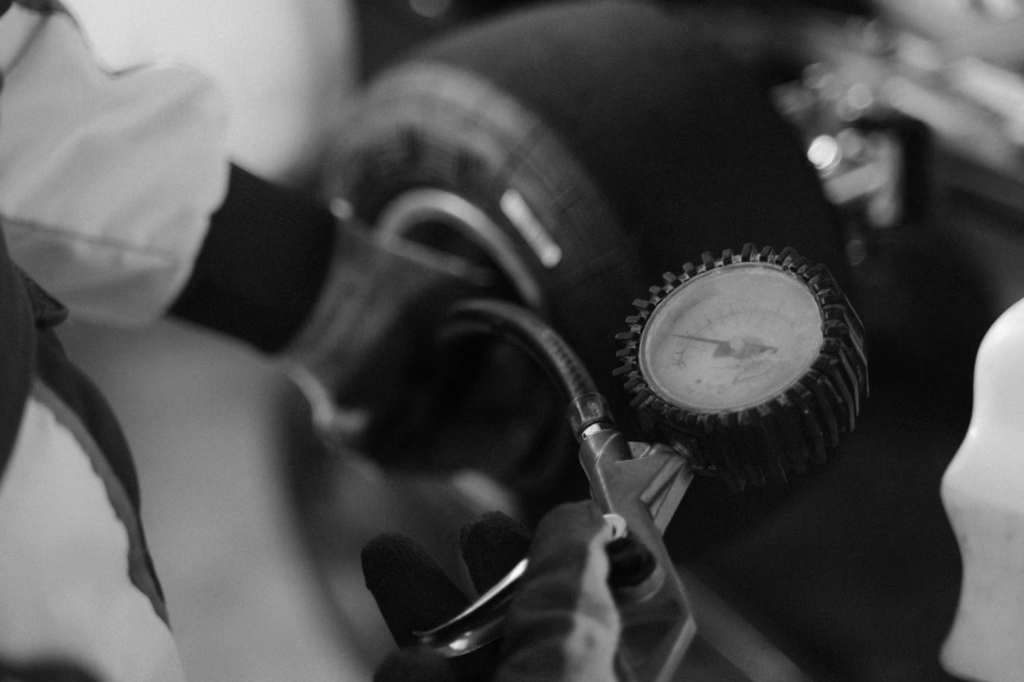
This is the check with the biggest safety payoff for the least effort. Use a gauge on all four tires and the spare, and compare the reading with the vehicle manufacturer’s recommended pressure on the door-jamb placard or in the owner’s manual, not the maximum pressure molded into the tire sidewall. NHTSA recommends checking pressure at least once a month when the tires are cold. (nhtsa.gov)
Do not rely on the tire pressure monitoring system to replace a manual check. NHTSA notes that TPMS warnings generally come on only when a tire is significantly underinflated. In other words, the dashboard light is a backstop, not a maintenance plan. A tire that is a few psi low may still look acceptable and drive normally around town while wearing faster and heating up more than it should. (nhtsa.gov)
2. Inspect tread depth and sidewall condition
Pressure alone does not tell you whether a tire is still safe. Look across the tread for uneven wear, and inspect the sidewalls for cuts, bulges, cracks, or exposed cords. NHTSA says tires are not safe once tread is worn to 2/32 of an inch, and it also points drivers to treadwear indicators or the penny test as a quick way to judge remaining tread. Uneven wear often tells a second story as well: alignment problems, neglected rotations, or chronic underinflation. (nhtsa.gov)
3. Check the spare tire or mobility kit
Drivers routinely remember the four tires on the ground and forget the one they may need most on the worst day. If the vehicle has a spare, check its pressure monthly too. If it uses a temporary mobility kit instead, make sure the sealant is present and has not passed its use-by date. Manufacturer guidance specifically calls out the spare or mobility kit as part of routine inspection, and NHTSA does the same. (nhtsa.gov)
4. Check engine oil level
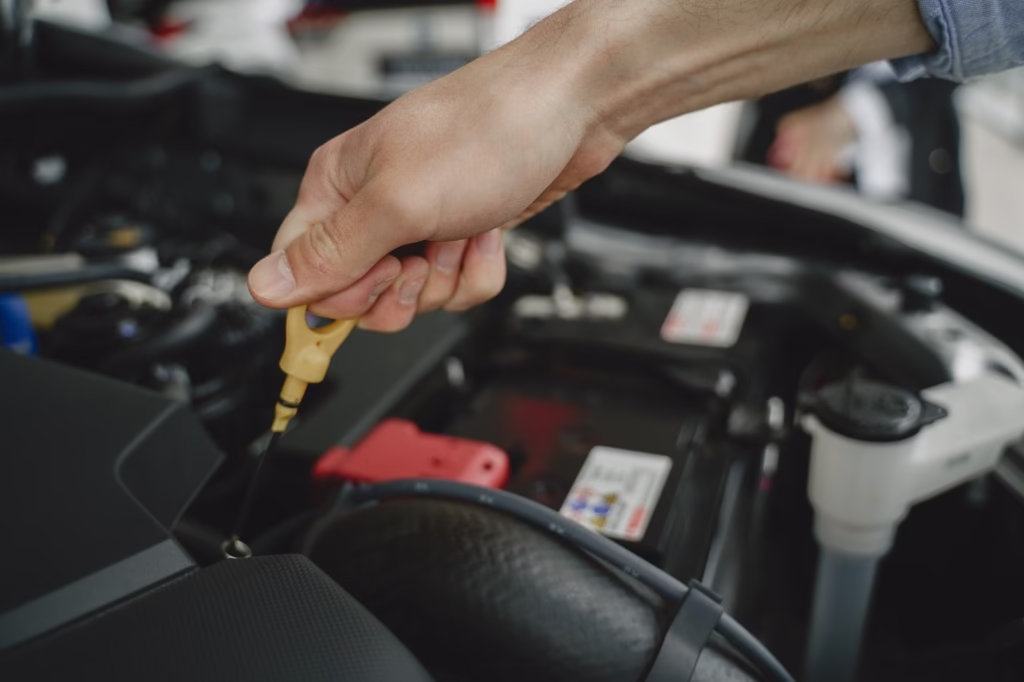
For gasoline cars and hybrids, a monthly oil check is basic self-defense. On many vehicles, the process is simple: park on level ground, wait a few minutes after shutdown, pull the dipstick, wipe it, reinsert it fully, and read the level. Honda’s owner guidance says the oil should sit between the upper and lower marks and that oil should be added carefully if the level is near or below the lower mark. Monthly checking is not the same as monthly changing. It is a way to spot abnormal consumption or a leak before the engine runs low. (techinfo.honda.com)
Battery-electric vehicles do not have engine oil, so this step becomes an owner-manual check rather than a dipstick check. Use the same monthly slot to review the EV-specific items your manual asks for, and do not treat high-voltage battery service as a DIY task. NHTSA is explicit that traction-battery work requires specialized training and equipment. (nhtsa.gov)
5. Check coolant only when the engine is cold
Coolant is easy to ignore because most systems are sealed and many vehicles go a long time between full coolant service intervals. That does not mean the level never needs a glance. Check the coolant reservoir only when the engine is cold and confirm the level is between the minimum and maximum marks. If it is at or below minimum, add the manufacturer-specified coolant and pay attention to whether it happens again. Repeated coolant loss usually means the real issue is not topping off; it is finding the leak or cooling-system fault. Never remove the cap from a hot cooling system. (fordservicecontent.com)
6. Look at brake fluid, but do not treat it as a routine top-off
Brake fluid deserves a monthly look because it tells you something about the condition of a safety-critical system. On a level surface, check that the fluid sits between the MIN and MAX marks on the reservoir. Ford notes that levels below MIN or above MAX should be checked as soon as possible, and Honda’s guidance says fluid at or below MIN can point to leaks or worn brake pads. That is why brake fluid is not the same as washer fluid. If it is low, the right question is why. (fordservicecontent.com)
This is also a good time to pay attention to changes in braking feel. Continuous grinding, continuous squeal, or shudder while braking are not monthly-maintenance issues to monitor for another month; official owner-manual guidance treats them as reasons to have the system checked. A warning light with the parking brake released belongs in the same category. (fordservicecontent.com)
7. Test washer fluid and wiper blades together
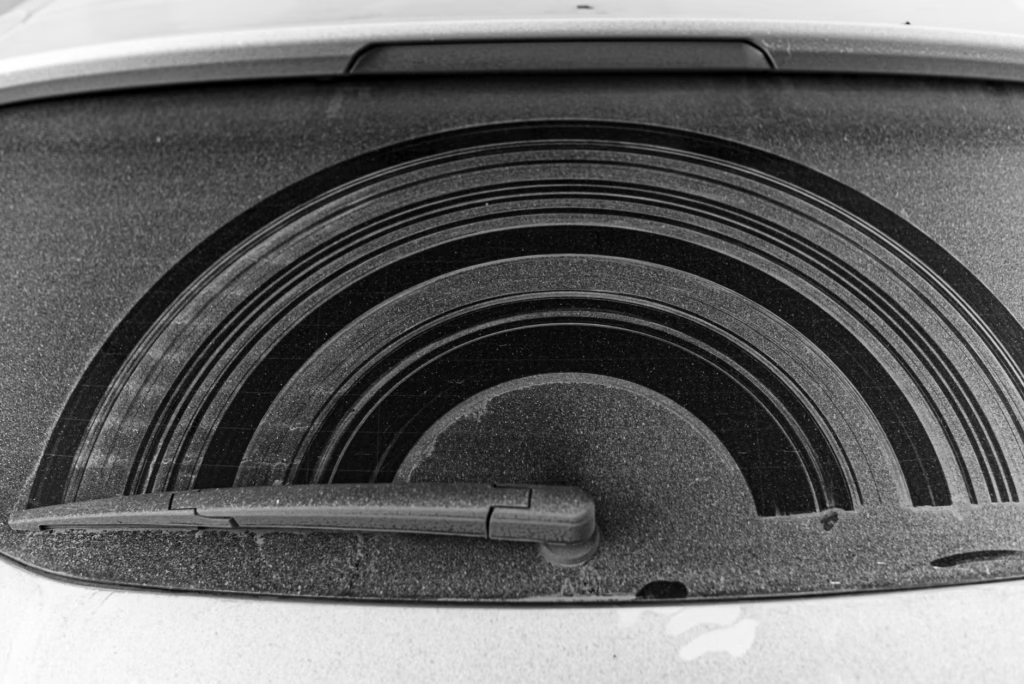
Washer fluid and wipers should be treated as one visibility system, not two unrelated chores. Top off the reservoir, then spray the windshield and watch what the blades do. If they chatter, smear, skip, leave wide wet bands, or show split rubber, replace them. NHTSA specifically recommends checking washer fluid and inspecting wiper blades for wear, noting that blades can deform and fail to wipe properly in both directions. (fordservicecontent.com)
8. Walk around the car and test every exterior light
A burned-out lamp is one of the easiest things to miss from the driver’s seat and one of the easiest things to fix before it becomes a safety or legal problem. Check headlights, brake lights, turn signals, hazard flashers, reverse lights if practical, and any trailer lights the vehicle depends on. This takes only a minute with a helper, or a little longer using reflections in a garage door or storefront window. NHTSA and manufacturer checklists both treat light operation as a routine inspection item. (nhtsa.gov)
9. Inspect the 12-volt battery and notice how the car starts
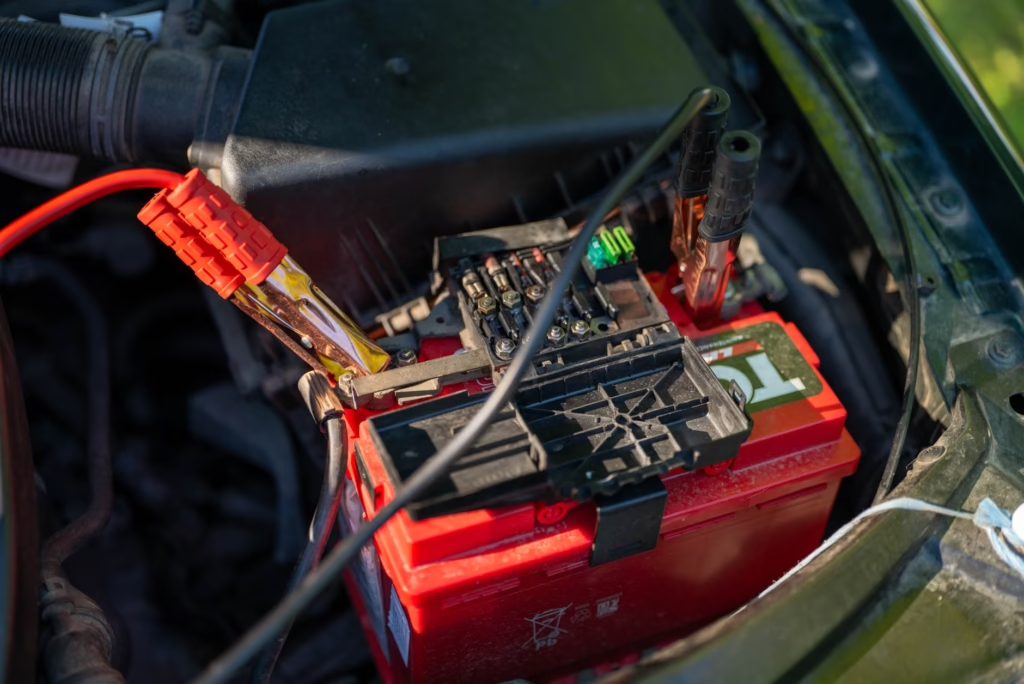
Even cars loaded with electronics still depend on a healthy 12-volt battery for starting and basic electrical functions. Honda owner guidance says to check the battery terminals for corrosion monthly. Look for white, blue-green, or yellowish buildup around the posts and cable ends, make sure the hold-down looks secure, and pay attention to slow cranking or a vehicle that seems increasingly reluctant to start. Light corrosion can sometimes be cleaned carefully, but repeated starting issues call for a proper battery and charging-system test. (techinfo.honda.com)
10. Look for leaks, belts, hoses, and anything that changed since last month
The final check is less about one component and more about pattern recognition. Look under the parked car for fresh drips or puddles. Under the hood, inspect hoses for bulges, cracks, cuts, or loose-looking connections, and look for belts that appear damaged or obviously worn. NHTSA specifically advises checking belts and hoses for bulges, blisters, cracks, or cuts, and manufacturer maintenance checklists call for looking for fluid leaks during inspection. (nhtsa.gov)
This is where a notebook helps. A single damp spot after the air conditioner runs may not mean much. The same colored drip in the same place three weekends in a row does. A hose that looked fine six months ago but now feels brittle or shows swelling is exactly the kind of slow change a monthly routine is designed to catch. When something is repeatedly low or repeatedly wet, stop treating it as random. (nhtsa.gov)
A simple triage rule: top off, book service, or stop driving
Monthly inspections are most useful when they lead to a clear decision. In practice, most findings fall into three buckets: a simple top-off, a repair appointment, or a stop-driving safety problem. This quick table helps sort common monthly discoveries into the right response. (nhtsa.gov)
| What you found | Most sensible next move | Urgency and why |
|---|---|---|
| A tire is a few psi low, with no visible damage | Inflate it to the door-jamb specification and recheck within a week | Usually okay short term, but recurring loss needs attention because cold-pressure checks should match the manufacturer recommendation. (nhtsa.gov) |
| A tire has a bulge, exposed cord, or tread worn to the wear bars | Replace the tire and avoid treating it as a normal monitor-it item | High urgency. NHTSA says tires with worn tread or visible damage should no longer be used. (nhtsa.gov) |
| Oil is near the lower mark on the dipstick | Add the exact oil specification listed in the manual, then recheck after a short interval | Moderate urgency. Low oil should be corrected, and repeated loss deserves diagnosis rather than endless topping off. (techinfo.honda.com) |
| Coolant is below MIN on a cold engine | Add the specified coolant and book service if it happens again or if you see leaks | Moderate to high urgency because repeated coolant loss points to a system problem, not normal use. (fordservicecontent.com) |
| Brake fluid is at or below MIN | Schedule inspection for leaks or worn pads rather than treating it as routine maintenance | High urgency. Official guidance links low brake fluid to possible leaks or brake wear. (techinfo.honda.com) |
| The brakes grind continuously or shudder while braking | Have the brake system checked promptly | High urgency because manufacturer guidance treats continuous grinding, continuous squeal, or braking shudder as a repair issue. (fordservicecontent.com) |
| Battery terminals show corrosion or the car cranks slowly | Clean light corrosion carefully or book a battery and charging-system test | Moderate urgency. Terminal corrosion and weak starting behavior rarely fix themselves. (techinfo.honda.com) |
| Washer fluid is low or wipers streak badly | Top off the reservoir and replace the blades if they smear, split, or skip | Lower urgency until weather turns bad, then it becomes a visibility and safety problem. (fordservicecontent.com) |
The biggest lesson in that table is that not every low level means the same thing. Washer fluid is usually a simple refill. Brake fluid below MIN is a diagnosis problem. Repeated coolant loss is a diagnosis problem. Tire damage and serious brake symptoms are safety problems. Monthly checks work best when they help you separate ordinary upkeep from signs that the car is asking for real repair work. (fordservicecontent.com)
Common mistakes that make monthly checks less useful
- Using the number on the tire sidewall as your target pressure. That is the tire’s maximum rating, not the vehicle manufacturer’s recommended operating pressure. (nhtsa.gov)
- Checking tire pressure right after driving and assuming the reading matches the cold specification. NHTSA says cold means the car has been parked for at least three hours. (nhtsa.gov)
- Treating low brake fluid as a routine top-off. Official guidance says low fluid can reflect leaks or worn brake pads. (techinfo.honda.com)
- Opening a coolant reservoir when the engine is hot. That is a burn risk and can turn a simple check into an injury. (fordservicecontent.com)
- Assuming a TPMS light replaces a gauge. It does not; it usually means the tire is already significantly underinflated. (nhtsa.gov)
- Ignoring the spare tire or sealant kit for months at a time. It is common to discover that problem only when stranded. (nhtsa.gov)
What changes if the vehicle is an EV or hybrid
Most of this checklist still applies. Tires, lights, washer fluid, wipers, brake fluid, visible leaks, and the 12-volt battery still matter on electrified vehicles. NHTSA notes that many EVs and hybrids still use a conventional 12-volt battery for low-voltage functions, and it emphasizes following the owner’s manual for maintenance requirements. The main change is that a battery-electric vehicle has no engine oil to check, and high-voltage battery service is not do-it-yourself work. Tires deserve extra attention because NHTSA notes that EVs are often heavier and may use EV-specific tires, even though the basic maintenance principles remain the same. (nhtsa.gov)
The real advantage is consistency, not complexity
None of these checks is difficult on its own. Their value comes from repetition. Pick one day each month, use the same cold-car baseline, and record what changed. If the same tire keeps losing pressure, the same fluid keeps dropping, or the same battery starts looking worse each month, the pattern is the diagnosis. That is how a 15-minute routine turns into fewer surprises, better maintenance decisions, and a safer car. (nhtsa.gov)
Frequently asked questions
Do monthly checks replace the service schedule in the owner’s manual?
No. Monthly checks are a layer between scheduled maintenance visits, not a replacement for them. Manufacturer maintenance schedules still control the correct service intervals, fluid specifications, and model-specific procedures. (fordservicecontent.com)
Can I rely on the tire pressure monitoring system instead of using a gauge?
No. NHTSA says newer vehicles may have TPMS, but those systems generally warn only when a tire is significantly underinflated. A manual cold-pressure check is still the right monthly habit. (nhtsa.gov)
Should I just top off brake fluid if it looks a little low?
Not automatically. Official owner guidance says brake fluid at or below MIN can indicate leaks or worn brake pads, and Ford notes that fluid outside the normal range should be checked as soon as possible. Brake fluid is one of the worst places to confuse topping off with solving the problem. (techinfo.honda.com)
Do EVs still need monthly maintenance checks?
Yes, just not the exact same set as a gasoline car. EVs still need tire checks, wiper and washer checks, light checks, brake-fluid checks, visible inspections, and attention to the 12-volt battery. NHTSA also says high-voltage battery service should be handled only by qualified technicians and according to the owner’s manual. (nhtsa.gov)
When is a problem serious enough that I should avoid driving until it is fixed?
Avoid treating obvious tire damage, severely worn tread, overheating risk, brake warning issues, or continuous grinding while braking as wait-until-next-month problems. NHTSA says damaged or worn-out tires should not continue in service, coolant systems should not be opened hot, and manufacturer brake guidance treats continuous grinding or shudder as something to have checked promptly. (nhtsa.gov)
References
- NHTSA – Tire Safety Ratings and Awareness – https://www.nhtsa.gov/vehicle-safety/tires
- NHTSA – Summer Driving Tips – https://www.nhtsa.gov/summer-driving-tips
- NHTSA – Electric and Hybrid Vehicles: Battery, Charging & Safety – https://www.nhtsa.gov/vehicle-safety/electric-and-hybrid-vehicles
- Ford Owner’s Manual – Checking the Coolant – https://www.fordservicecontent.com/Ford_Content/vdirsnet/OwnerManual/Home/Content?ProcUid=G2144782&Uid=G2170183&buildType=web&countryCode=USA&div=f&languageCode=EN&userMarket=BHS&vCode=&vFilteringEnabled=False&variantid=8501
- Ford Owner’s Manual – Brake Fluid Check – https://www.fordservicecontent.com/Ford_Content/vdirsnet/OwnerManual/Home/Content?ProcUid=G2015700&Uid=G2090996&buildtype=web&countryCode=USA&div=f&languageCode=en&userMarket=USA&vFilteringEnabled=False&variantid=8852
- Ford Owner’s Manual – Scheduled Maintenance: General Maintenance Information – https://www.fordservicecontent.com/Ford_Content/vdirsnet/OwnerManual/Home/Content?ProcUid=G2080362&Uid=G2080357&countryCode=USA&div=f&languageCode=EN&userMarket=USA&vCode=&vFilteringEnabled=False&variantid=7430&buildtype=web
- Honda Owner’s Manual – Oil Check – https://techinfo.honda.com/rjanisis/pubs/OM/AH/A30A2424IOM/enu/details/131244047-13475.html
- Honda Owner’s Manual – Checking the Battery – https://techinfo.honda.com/rjanisis/pubs/OM/AH/A30A2424IOM/enu/details/131244047-14991.html
- Honda Owner’s Manual – Brake Fluid – https://techinfo.honda.com/rjanisis/pubs/QS/AH/A1919THRWG/enu/GUID-EF27779A-A127-4311-9031-AD6695D68B97.html