

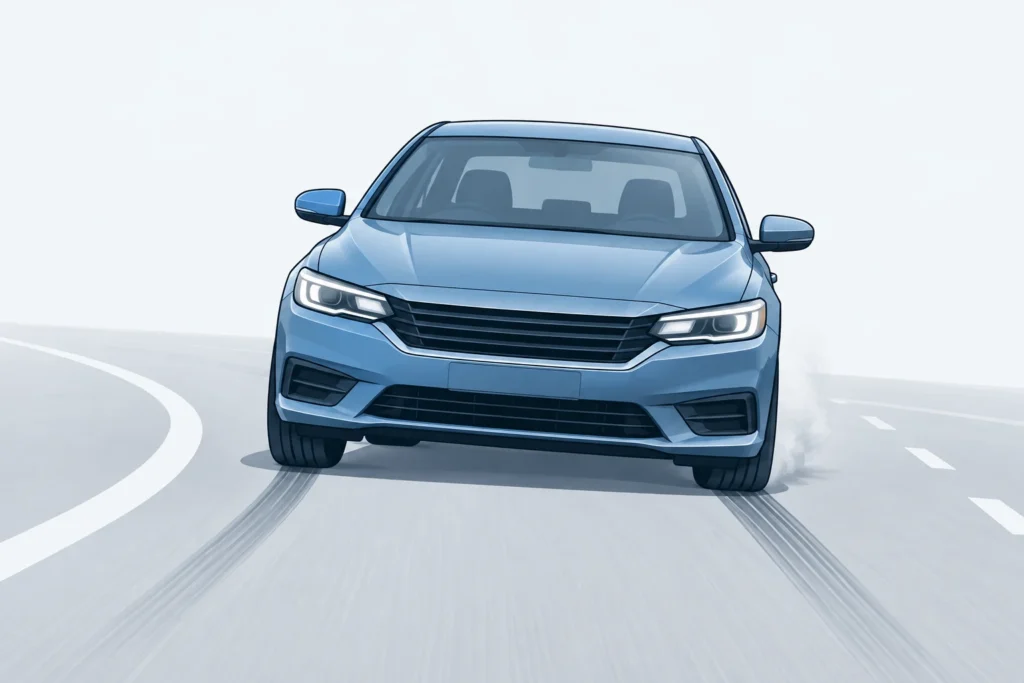
If stopping causes your car to veer so much it could trigger lane control, or if your stopping performance has gotten worse, stop in a safe spot and get it towed. A pull that happens only when you brake does need an inspection, but it doesn’t mean a caliper has failed. I’d make that decision based on what the inspection finds. I’d move the vehicle based on the pull, not based on what the inspection finds.
When the trip to the shop should be a tow
If you’re having a strong pull that gets worse, can’t hold your lane, has reduced braking, a soft or sinking pedal, smoke from a wheel, or think you have a brake fluid leak, do not keep driving. Stop in a safe spot and get it towed. These situations could mean you’ve lost control of your direction, have a failing hydraulic system, or your brakes are overheating. If there’s smoke, don’t get too close, and if it’s on fire, move away and call for help.
The type of warning you get is important. The [2017 Mazda6 manual](https://www.mazdausa.com/static/manuals/2017/mazda6/contents/08070400.html) says not to drive with the brake warning on after releasing the parking brake and says to have it towed if the parking brake and ABS warnings are on simultaneously. That info is specific to that vehicle and not all ABS lights or parking brake warning indicators. Also, just because there aren’t any warning lights on doesn’t mean there aren’t any issues.[1]
If the pull is mild, and there are no signs listed above, contact the shop for an immediate inspection, and discuss towing. I can’t give an estimate on safe speed or distance. A shop being a mile away does not change the unknowns for the next unexpected stop. If you are not confident about the performance of the braking system, towing would be the better option rather than driving to evaluate it.
Braking changes more than the brakes
From what you’ve described, it sounds like a slight braking pull. Pressing the pedal applies braking force. It also changes the loading on the wheels, and puts a load through the steering and suspension. Different forces on the wheels can cause the vehicle to turn. So can a wheel that is changing direction due to support moving under the load. That is one of the reasons why Raybestos includes the steering and suspension system when checking for a braking pull.
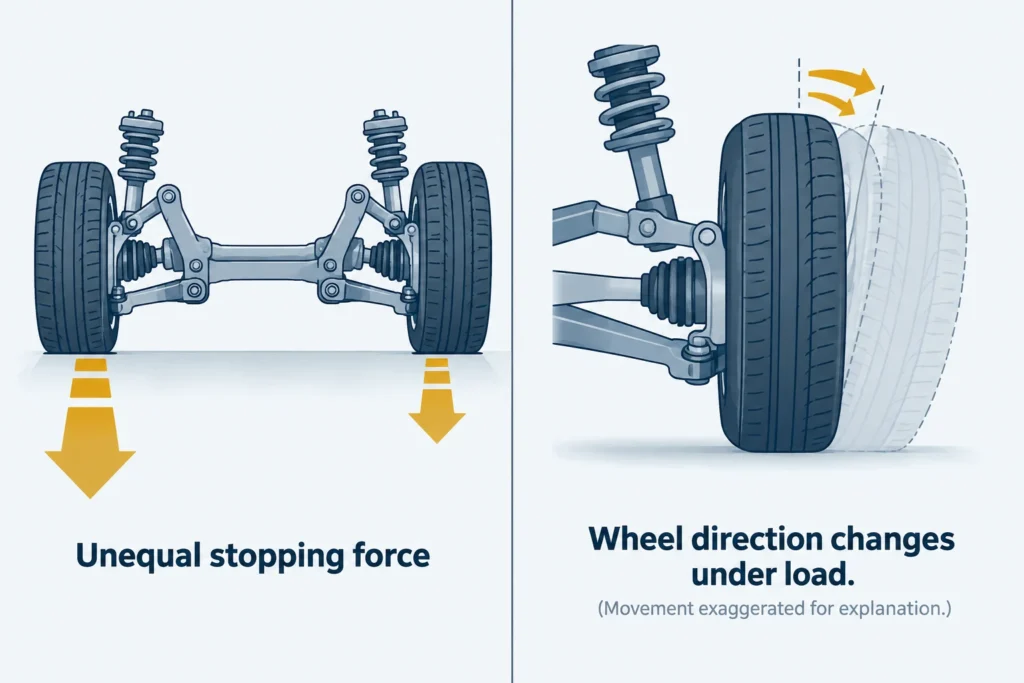
If it pulls while cruising, misalignment, irregular wear on the tires, and road conditions need to be checked. It it tracks normally and pulls under braking, then there needs to be further check on movement under braking load, as well as operation of the brake system. Tires are not free from check and suspicion. Checking and adjusting the alignment is part of the general procedures suggested by Michelin, along with checks on the condition and alignment of the tires and the steering and suspension system. This does not suggest there is fault with the tires in your case.
I don't want a brake-only inspection to miss moving suspension support, for example. Corrosion of a lower control-arm cross-member, noted in a [Mazda recall procedure](https://static.nhtsa.gov/odi/rcl/2019/RCRIT-19V323-8030.pdf) for certain 2009-2013 Mazda6 vehicles, can lead to reduced support for the control arm and change the vehicle alignment, causing pull in either left or right steering during acceleration or braking. It is a good example of how something can happen without a vehicle diagnosis or recall and can provide a different means to a known end.[4]
A leftward pull isn't a left-caliper diagnosis
In a simplified front brake example, stronger braking on the left side than the right can cause the vehicle to pull to the left. Weakness in the right brake causing reduced braking compared to the left can also pull to the left. The direction of the pull provides information about the cause and an imbalance; suspension movement can also produce the same pull complaint.
Picture me in an imagined service-counter conversation, holding an estimate that says only “left caliper, vehicle pulls left.” I've already rearranged my morning for a ride home, and I'd love a tidy answer. But I'd pause before approving it: “What did you find when you checked application and release on both sides?” That answer matters more than the arrow in the complaint.
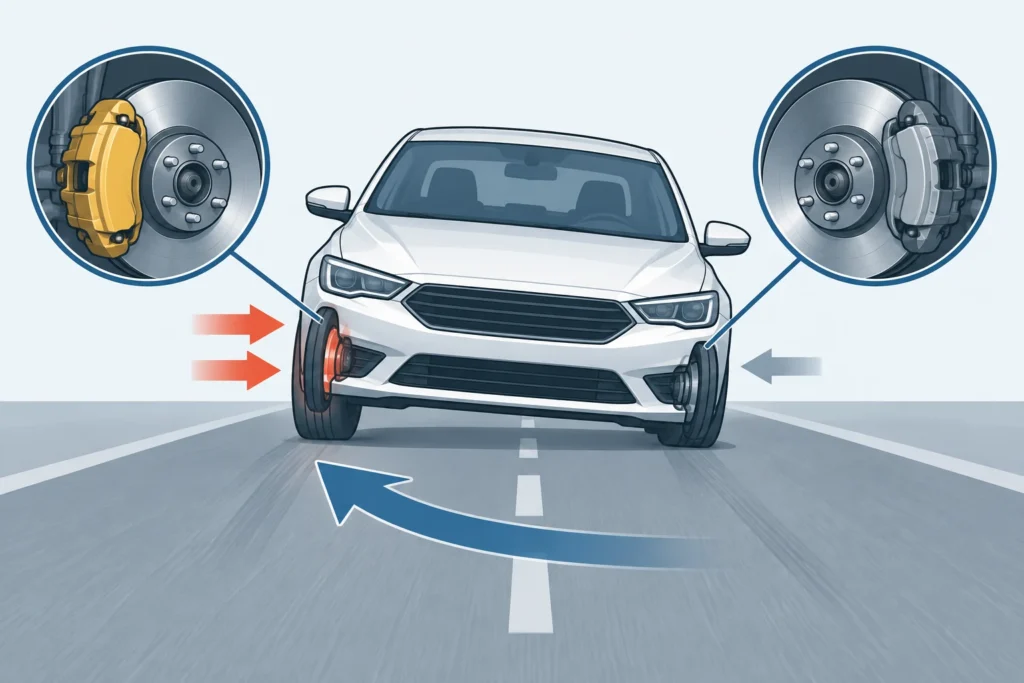
That application-and-release question separates two different problems: a brake that doesn’t contribute enough when you push the pedal, and one that stays applied after you release it. Restrictions in the internal hose of the brake line can slow the flow of brake fluid to or from the caliper, says Raybestos. Comparing pressure-build and pressure-release waves, coupled with piston and slide checks, will identify hydraulic restrictions and distinguish them from mechanical binds. Trapped pressure in the system is not necessarily an indication of a defective hose; the technician has to locate the restriction and rule out binds upstream.
What the repair recommendation should show
The estimate should explain the findings that warranted the pull. Worn components may need to be addressed, but their presence alone will not explain this concern. Depending on the year, make and model of the vehicle as well as the brake configuration, there are tests to determine if a restriction exists; here is what would lend merit to each recommendation.
| Proposed work | What should support it |
|---|---|
| Caliper or slide repair | Documented piston or slide binding, leakage, or abnormal application/release, with relevant hydraulic causes distinguished. |
| Brake hose or other hydraulic repair | Evidence of leakage, damage, or abnormal pressure buildup/release that localizes the fault, not simply a dragging brake. |
| Pads or other friction-related work | Recorded friction-surface condition, contamination, damage, or an applicable manufacturer procedure connecting the condition to the complaint. |
| Tire correction or replacement | Pressure, condition, fitment, and wear findings; when appropriate, a professional comparison that isolates tire-related pull within tire and vehicle restrictions. |
| Steering, suspension, or alignment work | Recorded looseness, support damage, movement, or alignment readings compared with vehicle specifications; structural or joint faults addressed before final alignment. |
One reason I'm wary of caliper-first guesses is [FCA bulletin 05-008-15](https://static.nhtsa.gov/odi/tsbs/2015/MC-10148996-9999.pdf). For certain 2012-2015 RAM 1500 vehicles built on or before July 10, 2015, FCA documented rotor coating embedded in the pads as a cause of braking pull, and specifically excluded caliper and rotor replacement for that concern. This historical bulletin isn't a general fix. The shop needs to confirm that it applies to the vehicle and check for superseding instructions.[5]
You can bring this to the attention of the shop without repeating the problem. Tell them what you already observed: whether the pulling starts and stops with pedal application and release, whether it occurs while cruising, etc. Also let them know about any recent noise, warning, and tire/brake work. Describe a steady pull to the side separately from a shake of the steering wheel. Don’t do deliberate braking to gather information and don’t release the steering wheel.
Roadside heat comparisons don’t help, either, and don’t touch the wheels or brakes. They can burn you. Temp difference can be due to recent operating conditions. There are several possibilities that may exist and controlled professional measurements can help. However, in the end, “this wheel is hotter” won't help solve the problem.
Just before picking the vehicle up, I'd ask, “What checks did you do to confirm the original pulling force is gone?” After repairs and preliminary checks, the shop should use the vehicle’s applicable professional completion and complaint verification procedures. FCA's bulletin states that the pull should be eliminated and diagnosis continued if it is not. If the symptom couldn’t be reproduced, that should be documented. “New parts installed” and “problem solved” are different things.
Sources and references
- Mazda USA: 2017 Mazda6 Owner's Manual: If a Warning Light Turns On or Flashes
- Raybestos: Raybestos caliper FAQ: Pulling to one side during braking
- Raybestos / Brake Parts Inc.: Brake Service Bulletin BPI 07-12: Brake Hose Restriction
- Mazda, hosted by NHTSA: Mazda6 Front Cross Member Recall Inspection Procedure
- FCA US LLC, hosted by NHTSA: FCA Bulletin 05-008-15: Vehicle Pulls or Drifts While Applying the Brakes (2015-08-29)
- Michelin USA: Michelin FAQs: What should I do if my vehicle is pulling to one side?