

Unexpected battery failure usually is not truly sudden. In many cases, a battery has been getting weaker for months because of age, heat, vibration, undercharging, or resistance at the terminals. What feels like a surprise is often the moment the problem finally becomes impossible to ignore: one slow crank on a cold morning, or a car that will not restart after a short errand. AAA says most car batteries last about three to five years, but extreme temperatures, frequent short trips, advanced electrical loads, and poor maintenance can shorten that window. (acg.aaa.com)
Why battery failures feel sudden even when the battery has been warning you
A starter battery can lose margin long before it loses all function. That is why a battery may seem normal for weeks, then fail the first morning temperatures drop, or after the car sits for a few days. AAA notes that batteries gradually deteriorate until they can no longer provide enough power to start the engine, and that not every failing battery shows obvious symptoms early. (aaa.com)
Four patterns show up again and again. First, time: even a well-treated battery has a finite life. Second, temperature: heat accelerates wear, while cold reduces the battery’s ability to deliver starting power. Third, charging habits: lots of short trips can leave the battery chronically undercharged. Fourth, physical and electrical stress: vibration, loose hold-downs, and modern accessory loads all work against long-term reliability. Preventing failure means managing those patterns before the battery reaches its last reserve. (acg.aaa.com)
Use the 5-minute battery health check once a month
If the goal is to avoid a no-start day, the most useful habit is not complicated DIY service. It is a brief, repeatable inspection that catches deterioration early. Do it monthly, before a road trip, and before the most extreme part of summer or winter. Once the battery is past its third year, shift from casual observation to deliberate testing. (acg.aaa.com)
- Check the battery’s age. If it is more than three years old, treat it as a component that needs monitoring, not blind trust. By the time many batteries reach the three- to five-year range, annual testing is prudent. (acg.aaa.com)
- Look at the case and the terminals. White, green, or blue buildup around the posts usually means corrosion; cracks, swelling, leaks, or a warped case are more serious and point toward replacement, not cleanup. (cluballiance.aaa.com)
- Notice how the car starts. A slow crank, intermittent clicking, dim headlights, or electrical accessories that seem weaker than usual are all meaningful clues. (acg.aaa.com)
- Think about recent use. Has the car only been driven on short trips? Has it sat for a week or two? Have lights, chargers, a dash cam, or another accessory been drawing power with the engine off? Those details often explain why a battery tests low on charge. (aaa.com)
- Choose the next step on purpose. Clean and tighten connections if corrosion is the obvious issue, recharge if the battery is simply low, schedule a proper battery and charging-system test if the cause is unclear, and replace the battery if the case is damaged or it no longer holds a charge. (ace.aaa.com)
What an under-hood inspection can tell you before the car leaves you stranded
Corrosion is one of the easiest problems to spot and one of the easiest to underestimate. AAA explains that battery corrosion forms as electrolyte vapors and hydrogen gas condense around exposed metal. That buildup can restrict the flow of electricity, which is why a car with corroded terminals may crank slowly or refuse to start even when the battery itself is not completely dead. Clean both the posts and the cable ends, not just the visible top surface. If you use a baking soda and water solution, wipe it on carefully rather than pouring it over the battery. (cluballiance.aaa.com)
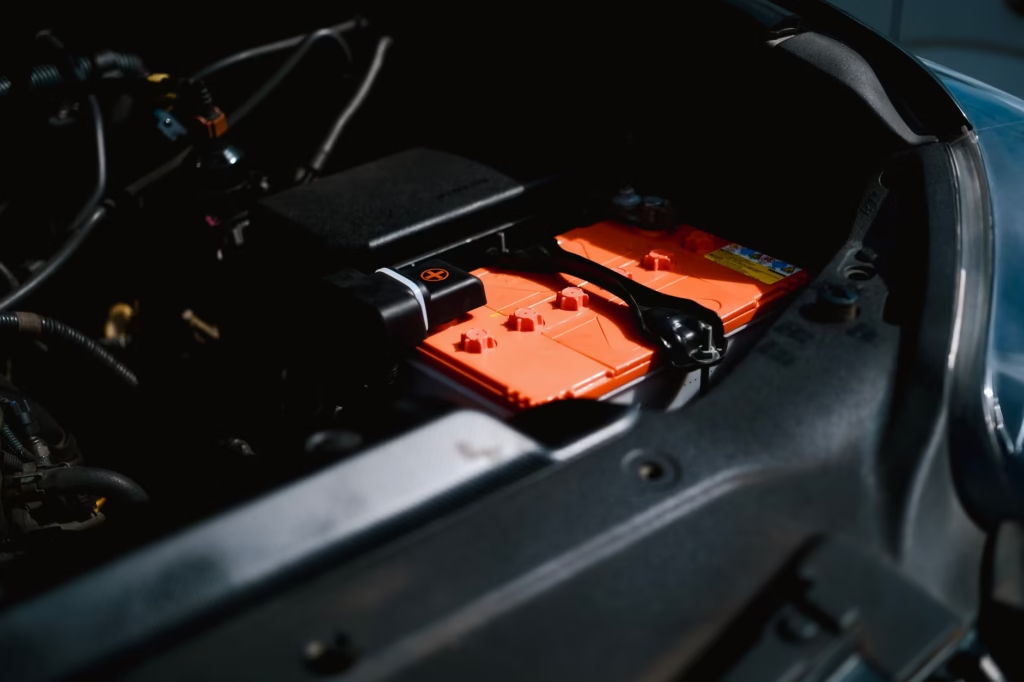
The battery should also be tight in its tray. A loose battery is not a minor fitment issue. AAA identifies vibration and insecure hold-down hardware as battery-life killers, and correct fitment matters because the original group size determines not just dimensions but terminal layout and hold-down compatibility. If a vehicle uses a heat shield or protective cover, that should go back in place as well. (aaa.com)

Not every battery asks for the same maintenance. Many modern batteries are maintenance-free, but some flooded batteries still use liquid electrolyte and may need periodic attention. Battery Council International defines a maintenance-free battery as one that normally requires no service watering, while AAA notes that traditional flooded lead-acid batteries may still require fluid checks. If the battery is serviceable and the owner’s manual permits it, use distilled water and do not overfill. AGM batteries are sealed and are not treated the same way. (batterycouncil.org)
| What you notice | What it usually means | Best next move |
|---|---|---|
| Slow crank, especially first thing in the morning | Low charge, declining battery health, or growing resistance at the connections | Charge and test soon; if the symptom returns, do not wait for complete failure. (aaa.com) |
| White or green crust around the posts or cable ends | Corrosion is increasing electrical resistance | Clean the posts and cable ends, then retest starting behavior. (cluballiance.aaa.com) |
| Frequent jump-starts | The battery may no longer hold a charge, or the charging system may be underperforming | Stop treating jump-starts as maintenance; get the battery and charging system tested. (acg.aaa.com) |
| Battery or charging light while driving | Often a charging-system issue rather than a battery-only problem | Reduce electrical load if necessary and get service promptly. (cluballiance.aaa.com) |
| Bulging, cracked, leaking, or sulfur-smelling battery | Internal damage, overheating, or overcharging risk | Do not treat this as routine upkeep; replace the battery professionally. (aaa.com) |
If the battery case is swollen, cracked, leaking, or smells strongly of sulfur, skip the home-maintenance mindset. That is a safety issue, not just a reliability issue. AAA warns that damaged batteries should be replaced, not simply jumped or cleaned and put back into service. (aaa.com)
The driving patterns that quietly shorten battery life
Many battery problems start with a mismatch between how the battery is designed to live and how the car is actually used. Every engine start takes a meaningful bite out of the battery’s charge. If the next drive is only a few minutes, the alternator may not fully restore what was used. AAA specifically notes that short trips may not fully recharge the battery, and that simply starting the car without driving it is not the same as recharging it properly. (aaa.com)
Long idle periods cut the other way. A parked car still loses charge over time, and some modern vehicles keep certain ports or electronics active even after shutdown. AAA advises checking whether your vehicle has always-on accessory ports and avoiding unnecessary drains from chargers, dash cams, or other devices when the car is not in use. For a vehicle that sits regularly, a battery maintainer is usually the smarter answer. (ace.aaa.com)
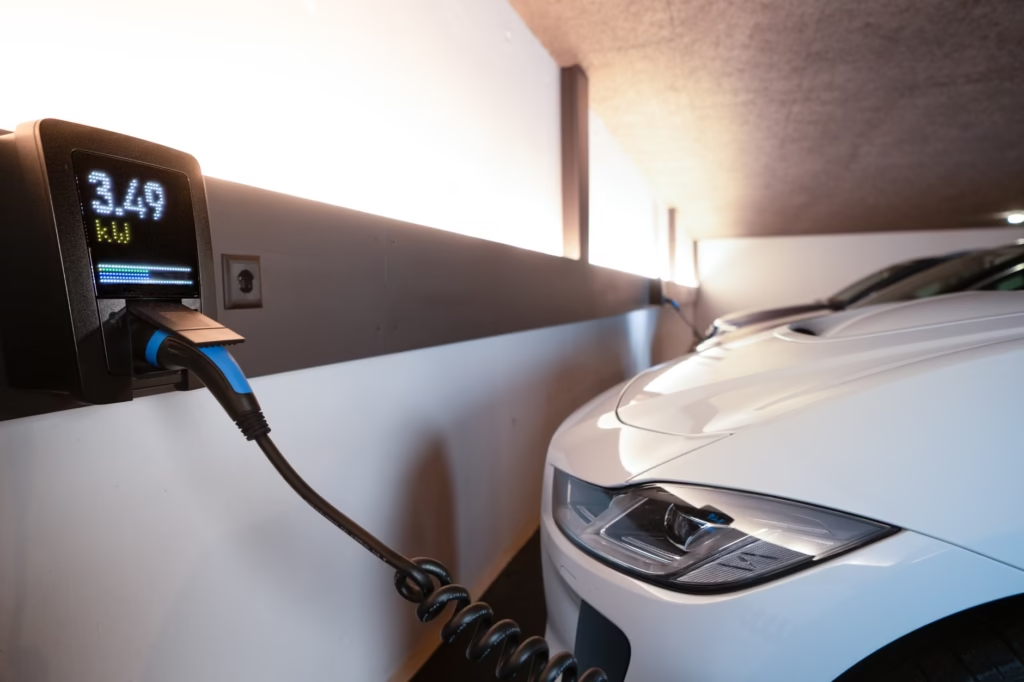
Temperature adds another layer. Heat accelerates battery degradation, while cold makes it harder for the battery to deliver the current needed for starting. That is why a battery that was merely weak in August may become a no-start problem in January. Parking in shade or a garage can help, and in vehicles that are stored, keeping the battery charged matters more than hoping the weather stays mild. (acg.aaa.com)
A realistic example: imagine a four-year-old battery in a crossover used mostly for two-mile errands, with a phone charger left plugged in and the car parked outside through a hot summer. That battery may seem fine for weeks. Then the first chilly morning exposes the accumulated undercharge and wear. In that situation, the real fix is not just a jump-start. It is a full charge, a retest, and a change in use pattern, or replacement if the battery no longer tests well. (ace.aaa.com)
Testing, charging, and knowing when maintenance has reached its limit
Voltage is a clue, not a verdict
An at-home multimeter check is useful, but it is only a first pass. AAA notes that a fully charged 12-volt battery should read about 12.6 volts with the engine off. If the reading is much lower, the battery may be discharged. But a decent voltage reading does not prove the battery is healthy, because voltage and charge level are not the same thing as reserve starting ability or overall state of health. That is why load or conductance testing is more informative than resting voltage alone. (aaa.com)
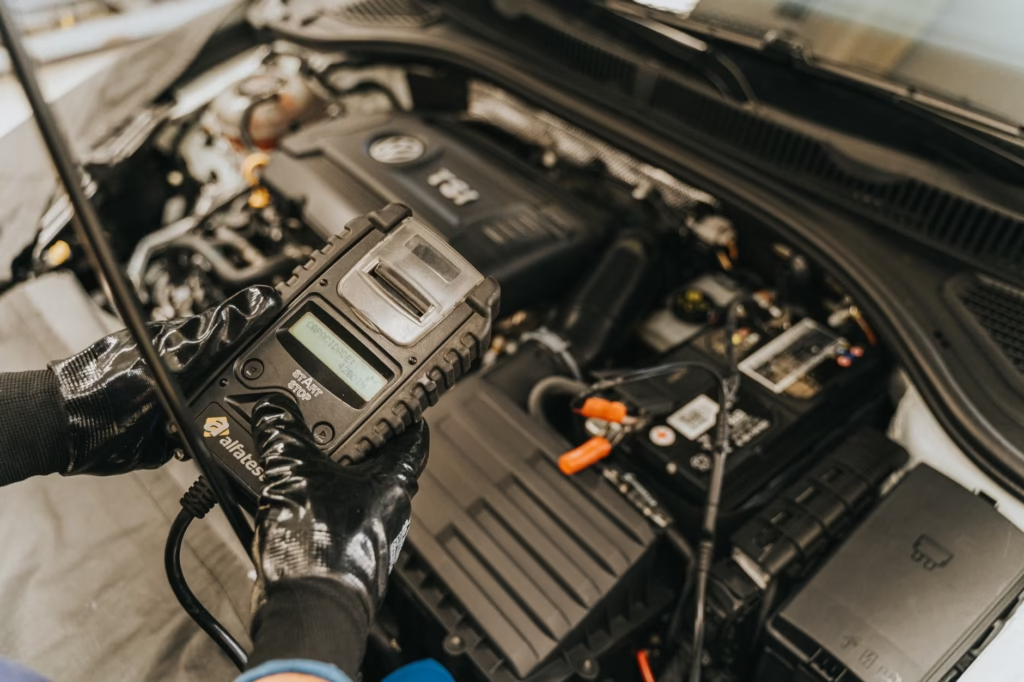
Charge first, then judge
A battery that tests good but low on charge is not the same thing as a battery that has reached end of life. AAA’s battery test guidance distinguishes between a healthy-but-discharged battery and one that needs replacement, and it specifically notes that driving alone may not always recharge a depleted battery. If a battery has been run down, give it a proper recharge, then retest. For cars that sit, a battery maintainer or smart charger is a practical preventive tool because it keeps the battery topped up without the guesswork of occasional short drives. (ace.aaa.com)
Charger compatibility matters too. Interstate notes that AGM batteries should be charged with equipment designed for AGM use, while EFB and flooded batteries use different profiles. This is an easy place to make an expensive mistake: using a generic charger on the wrong battery type can shorten life instead of extending it. (interstatebatteries.com)
When the real problem is the charging system
Battery maintenance will not solve a failing alternator or a broader charging-system problem. If the battery or charging warning light comes on while driving, AAA says it usually indicates a charging-system issue. Another classic clue is a car that starts with a jump but dies again after a short drive, which often means the alternator is not recharging the battery. NHTSA’s road-trip guidance is blunt on the larger point: have a mechanic check the battery and charging system for necessary repairs or replacement. (cluballiance.aaa.com)
Replacing the battery before it strands you is still maintenance
Sometimes the most sensible maintenance decision is to stop nursing an old battery through one more season. A battery in the three- to five-year range that struggles to hold a charge, needs repeated jump-starts, shows a bad-cell result, or has visible damage is no longer a good candidate for wishful thinking. Replacing it before a failure is not wasteful if the evidence says the battery is near the end. It is preventive maintenance in the most literal sense. (acg.aaa.com)
When replacement time comes, match the battery to the vehicle rather than shopping by price alone. Battery Council International group sizes define fitment by dimensions, terminal arrangement, and related features, and AAA warns that the wrong type or fitment can affect electrical performance or even create short-circuit problems. Use the original battery type, the correct group size, and at least the manufacturer-required CCA or Ah rating. If the car came with AGM, replace it with AGM. If it came with EFB, do not substitute casually. (batterycouncil.org)
Also account for the modern-car nuisance factor. Some vehicles lose settings or need resets after battery replacement, which is a good reason to check the owner’s manual or use a professional installer even if the hardware swap looks easy. And when the old battery comes out, recycle it properly. EPA says lead-acid batteries should go back to a battery retailer or local household hazardous waste program, not into the trash or curbside recycling. (acg.aaa.com)
Common maintenance mistakes that shorten battery life
- Treating corrosion as a cosmetic issue instead of an electrical one. Corroded terminals can be the direct reason for hard starting. (cluballiance.aaa.com)
- Assuming a successful jump-start means the problem is solved. If the battery keeps needing help, the real issue may be battery health or the charging system. (aaa.com)
- Buying any battery that seems close enough. Battery type, group size, terminal layout, and required ratings all matter. (aaa.com)
- Letting a seldom-driven vehicle sit for weeks and expecting an occasional short drive to recover it. That pattern often leads to chronic undercharge. (aaa.com)
- Using the wrong charger on AGM or other specialized battery types. Charger compatibility is part of battery maintenance now. (interstatebatteries.com)
- Waiting for total failure instead of acting on slow cranking, warning lights, repeated jump-starts, or case damage. Those are already late-stage warnings. (acg.aaa.com)
The best way to prevent an “unexpected” battery failure is to stop treating the battery as invisible until the car will not start. Check it briefly and regularly, pay attention to how the vehicle is used, test it before old age turns into roadside inconvenience, and replace it when the evidence says maintenance has reached its limit. That approach costs less time than a jump-start in a parking lot and far less frustration than missing work, school, or a trip because the car would not crank. (aaa.com)
FAQ
How often should a car battery be tested?
A practical rule is inspection at every oil change and annual testing once the battery reaches its third year. Seasonal checks before very hot or very cold weather are also sensible, especially if the vehicle does lots of short trips or sits for long periods. (aaa.com)
Does idling in the driveway recharge a weak battery?
Not reliably. AAA notes that simply starting the car without driving it does not help much, and even driving alone may not fully recharge a depleted battery. A proper charger or maintainer is usually the better tool when the battery is low or the car sits often. (ace.aaa.com)
Can terminal corrosion alone keep a car from starting?
Yes. Corrosion can block current flow enough to cause slow cranking, dim lights, or a no-start condition. Cleaning both the battery posts and the cable ends is important, because resistance can be hiding at either point. (cluballiance.aaa.com)
Should I replace a flooded battery with AGM just because AGM sounds better?
Not automatically. AAA says battery systems are optimized for specific battery types, and Interstate notes that vehicles built for AGM should stay with AGM, while EFB applications should not be substituted casually either. Follow the owner’s manual or a trustworthy fitment guide. (aaa.com)
What does the battery light mean if the car is still running?
Usually, it points to a charging-system problem rather than a simple reminder that the battery is getting old. The vehicle may be running on stored battery power, so it is wise to reduce unnecessary electrical load and get the system checked promptly. (cluballiance.aaa.com)
Where should an old car battery go after replacement?
EPA says lead-acid vehicle batteries should be returned to a battery retailer or a local household hazardous waste program. They should not go in household trash or curbside recycling bins. (epa.gov)
References
- AAA – Car Battery Maintenance: A Comprehensive Guide – https://www.acg.aaa.com/connect/blogs/4c/auto/car-battery-maintenance-guide
- AAA Trip Canvas – How Long Do Car Batteries Last – https://www.aaa.com/tripcanvas/article/how-long-do-car-batteries-last-CM1260
- AAA Club Alliance – How to Clean Battery Corrosion – https://cluballiance.aaa.com/the-extra-mile/advice/car/how-to-check-for-car-battery-corrosion
- AAA – Power Up: Tips for Replacing Your Car Battery – https://www.acg.aaa.com/connect/blogs/4c/auto/replacing-your-car-battery
- AAA – Interpreting Your Car Battery Test Results – https://www.ace.aaa.com/automotive/roadside-assistance/aaa-mobile-battery-service/battery-test-results-explained.html
- AAA – How to Maximize the Life of Your Car’s Battery – https://www.ace.aaa.com/automotive/advocacy/how-to-maximize-car-battery-life.html
- AAA Automotive – Car Battery Types: Which One Is Best for Your Vehicle? – https://www.aaa.com/autorepair/articles/car-battery-types-which-one-is-best-for-your-vehicle-
- NHTSA – Summer Driving & Road Trip Tips – https://www.nhtsa.gov/summer-driving-tips
- Battery Council International – Battery Glossary of Terms – https://batterycouncil.org/battery-facts-and-applications/battery-terms/
- Battery Council International – BCI Group Sizes – https://batterycouncil.org/battery-facts-and-applications/bci-group-sizes/
- Interstate Batteries – AGM Batteries – https://www.interstatebatteries.com/agm-batteries
- Interstate Batteries – Enhanced Flooded Batteries (EFB) – https://www.interstatebatteries.com/efb-batteries