

The repairs that hurt the most usually do not begin as dramatic failures. They start as ordinary maintenance jobs that were delayed because the car still seemed to run fine. The common thread is simple: drivers rely on habit, guesswork, or a generic rule of thumb instead of the vehicle’s actual schedule and early warning signs. AAA notes that the owner’s manual is the definitive source for maintenance needs, while NHTSA stresses that even something as basic as tire pressure still needs routine manual checks. (autoclubsouth.aaa.com)
The mistakes that do the most damage to engines and drivetrains
If a repair bill involves the engine, transmission, or emissions system, the cause is often neglect related to heat, lubrication, or scheduled service. These are the mistakes that tend to stay quiet until the damage is no longer cheap. (autoclubsouth.aaa.com)
- Treating every car like it has the same maintenance interval. AAA says the manual is vehicle-specific and separates normal from severe driving. Short trips, stop-and-go traffic, long idling, towing, dust, and extreme cold can all move a car into a harsher schedule, which means a service that feels “on time” may actually be late. (autoclubsouth.aaa.com)
- Stretching oil changes or other scheduled fluid services because the car still feels normal. Preventive maintenance often works precisely because nothing feels wrong yet. Waiting for noise, rough shifting, or heat is a bad strategy because those symptoms can mean wear is already underway. The safer rule is to follow the schedule that matches how the car is actually used. (autoclubsouth.aaa.com)
- Assuming the fluid or part on the shelf is “close enough.” Modern vehicles can be picky about oil viscosity, coolant type, filters, and drivetrain fluids. The practical habit here is boring but effective: verify the exact spec in the manual before topping off or replacing anything instead of trusting memory or generic advice. (autoclubsouth.aaa.com)
- Thinking “lifetime” means “never needs attention.” Some transmissions, transfer cases, and differentials go a long time between services, but that is not the same as forever. When a manufacturer gives a schedule or a severe-service exception, ignoring it can turn a fluid change into a major drivetrain repair. (autoclubsouth.aaa.com)
- Ignoring a flashing check-engine light because the car is still moving. Manufacturer guidance treats that as a serious warning, not a minor reminder. Ram says a flashing malfunction indicator can point to conditions that may lead to severe catalytic-converter damage and power loss. That makes “I’ll deal with it next week” one of the costliest delays on this list. (vehicleinfo.mopar.com)
- Driving with a temperature gauge creeping toward hot, or repeatedly adding coolant without finding the cause. Hyundai warns that moving into the hot zone indicates overheating that may damage the engine. Refill-and-forget is not a repair; it usually means a leak, fan problem, thermostat issue, or another cooling-system fault still needs attention. (ownersmanual.hyundai.com)
- Using the tire-pressure warning light as your entire tire strategy. NHTSA says TPMS warnings usually mean a tire is already significantly underinflated, and it also says underinflation is hard to detect visually. In other words, waiting for the light means waiting until the problem is already real. (nhtsa.gov)
- Skipping tire rotation and ignoring uneven wear. NHTSA recommends following the manufacturer’s rotation guidance and notes that irregular wear can be tied to underinflation or other tire problems. A tire issue that starts as uneven tread can grow into vibration, poor wet-road grip, or the need to replace tires earlier than expected. (nhtsa.gov)
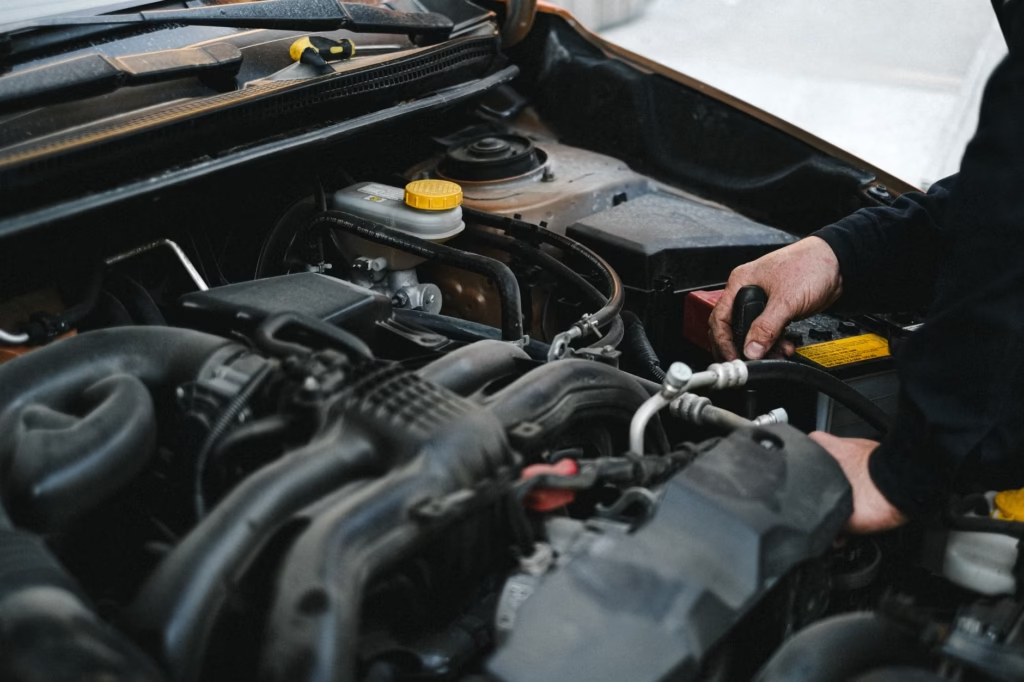
- Never looking at belts, hoses, and fresh drips between shop visits. AAA points out that some basic inspections can be done between services, including tires, belts, and hoses. A small seep, a soft hose, or a cracked belt is much cheaper to handle early than after a breakdown or overheating event. (autoclubsouth.aaa.com)
- Ignoring a new vibration, pull, or change in how the car feels on the road. NHTSA advises drivers to pay attention not just to visible tire condition but also to changes in performance such as noise or vibration. Cars often give subtle clues before they give a major invoice. The expensive mistake is deciding to wait for the symptom to become obvious. (nhtsa.gov)
A five-minute monthly check that catches many of these problems early
- Check the owner’s manual, not your memory. If most of your driving is short trips, traffic, towing, dust, or harsh weather, review the severe-service schedule instead of assuming the normal one applies. (autoclubsouth.aaa.com)
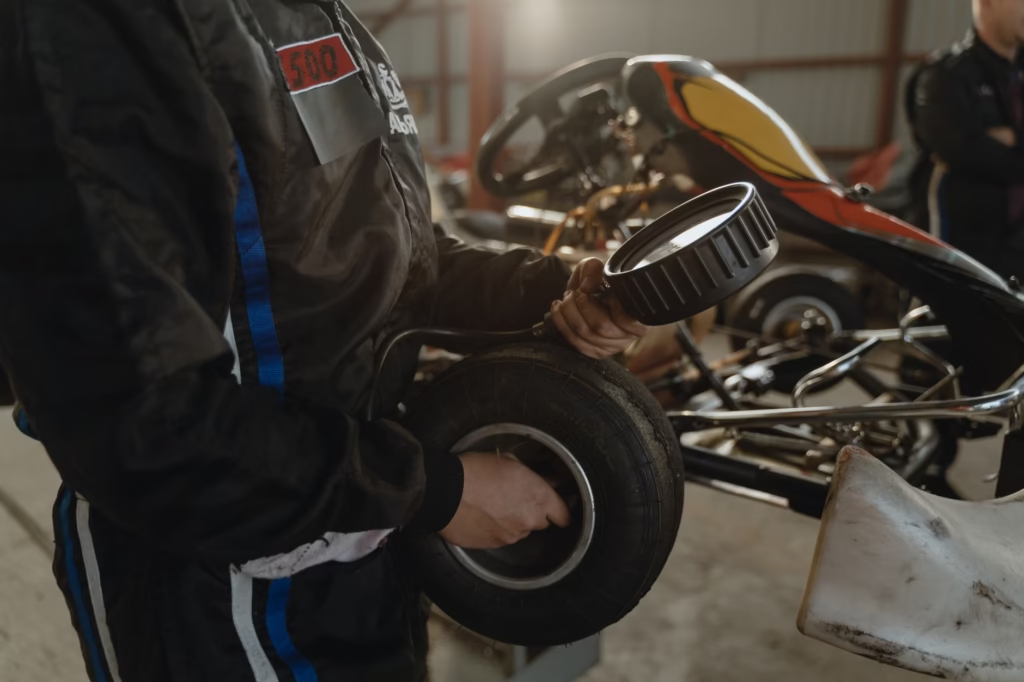
- With the tires cold, use a gauge to check pressure and glance at the tread and sidewalls. TPMS is helpful, but NHTSA says it is not a substitute for regular tire maintenance. (nhtsa.gov)
- On a cool engine, look for new drips under the car and inspect visible fluid levels as your manual allows. Never open a hot coolant cap or reservoir. (ownersmanual.hyundai.com)
- When you start the car, pay attention to warning lights before you tune them out. A flashing malfunction indicator is the one not to “monitor for a few days.” (vehicleinfo.mopar.com)
- During one normal drive each month, notice anything new: vibration, pulling, unusual heat, or a sudden change in how the tires feel. That observation is often what catches a cheap fix before it becomes a repair order with extra parts. (nhtsa.gov)
There is a useful nuance here. Over-maintaining a car based on random folklore can waste money, but under-maintaining it because everything is labeled “lifetime” or “probably fine” is usually more expensive. The middle ground is vehicle-specific maintenance: follow the manual, adjust for severe service when it honestly applies, and react quickly to warnings involving heat, emissions misfire, or tire pressure. (autoclubsouth.aaa.com)
Cars usually offer small hints before they hand out large bills. The drivers who avoid the worst repair costs are rarely the ones doing complicated DIY work; they are the ones who stop ignoring the schedule, the tires, and the first serious warning light. (autoclubsouth.aaa.com)
References
- AAA: Car Maintenance Guide – https://autoclubsouth.aaa.com/Automotive/auto_maintenance_text.aspx?section=MaintenanceSchedule
- NHTSA Tire Safety Ratings and Awareness – https://www.nhtsa.gov/vehicle-safety/tires
- Hyundai Owner’s Manual: Engine Coolant Temperature Gauge – https://ownersmanual.hyundai.com/full_webhelp/LX3/2026/en_US/topic_hhy_dlq_zcc.html
- Ram Owner’s Manual: Engine Check/Malfunction Indicator Warning Light – https://vehicleinfo.mopar.com/assets/publications/en-us/Ram/2022/2500_3500/om_html/GUID-F1C2D92A-05FC-41AF-B9A0-287CE3AC362F.html