

A strange noise usually feels more mysterious than it really is. Cars make different sounds when something is rubbing, loosening, leaking, vibrating, or rotating out of line. The hard part is that the same driver might describe three very different problems as a “weird noise.” One squeal might be a damp brake pad on the first stop of the morning. Another could be a worn pad chewing into a rotor. A third might be a slipping accessory belt that has nothing to do with the brakes at all.
The fastest way to narrow it down is not to guess the part. It is to match the sound to the moment it happens: startup, braking, turning, bumps, steady highway speed, or acceleration. That pattern usually tells you more than the sound name itself. Just as important, some noises can wait for a scheduled inspection, while others mean you should stop driving as soon as it is safe.
TL;DR
- If the noise happens only when braking, start by thinking about brake pads, rotors, and brake hardware.
- If it rises with road speed rather than engine rpm, think tires, wheel bearings, or suspension-related tire wear.
- A high-pitched chirp or squeal under the hood often points to the belt drive system, not just the belt itself.
- Grinding, exhaust fumes, an oil-pressure warning, or a new knock from the engine move the problem into the “don’t wait” category.
- A short recording plus notes about speed, temperature, turning, braking, and warning lights can save time and reduce misdiagnosis at the shop.
Start with urgency, not the sound name
Stop driving and arrange immediate help if the noise comes with weak braking, a red oil-pressure warning, overheating, heavy steering, a tire thump after impact, smoke, or exhaust fumes inside the cabin. Those are not just noise complaints. They can signal safety problems or fast-moving mechanical damage.
There is also a middle ground. A car that still drives normally but suddenly develops a new hum, rhythmic click, or clunk should not be ignored just because it still moves. Many expensive repairs begin as minor-sounding symptoms. Brake pad wear starts as a squeal. Tire wear starts as a hum. Loose suspension hardware often starts as a single knock over bumps before it becomes a handling problem.
Use the Five-Clue Listening Check before guessing
A practical way to think about noise diagnosis is to gather five clues before you look up parts. This is not a professional repair procedure. It is a driver’s triage method that helps separate likely causes and communicate clearly to a technician.
- When does it happen? Note whether it appears at cold start, during the first few minutes of driving, only during braking, only on turns, only over bumps, or only at highway speed.
- What changes it? Does the noise follow engine rpm, road speed, steering input, brake pedal pressure, acceleration, or A/C load?
- What kind of sound is it? Squeal, chirp, grind, click, clunk, hum, hiss, rattle, or knock each suggest different kinds of motion or contact.
- Where does it seem to come from? Under the hood, one front corner, under the floor, the rear suspension area, or inside the cabin all matter.
- What else changed? Watch for warning lights, vibration, pulling, reduced braking, odd smells, or a recent tire, brake, or suspension repair.
One distinction is especially useful: if the sound changes when the engine revs but the car is not moving, the source is usually in the engine bay or exhaust. If it changes with vehicle speed instead, the source is more likely the tires, wheels, wheel bearings, brakes, or driveline. That rule will not solve every case, but it quickly narrows the field.
Common noise patterns and what they usually point to
| Sound pattern | Often points to | Look for these extra clues | Typical urgency |
|---|---|---|---|
| Brief squeal on the first stop of a damp morning | Brake pad surface rust or normal brake noise on some vehicles | Goes away after a few stops; braking feels normal | Usually monitor |
| High-pitched squeal or chirp at startup or with A/C on | Belt drive issue, tensioner, pulley, or contamination | Follows engine speed; heard under the hood | Schedule inspection soon |
| Squeal only when the brake pedal is pressed | Brake wear indicator, pad glazing, or hardware issue | May become constant as pads wear thinner | Inspect soon |
| Grinding or scraping during braking | Brake pads worn into the rotor | Possible reduced stopping performance, vibration, or a metal-on-metal feel | Do not delay |
| Rapid clicking on tight turns | CV joint or axle issue | More obvious while accelerating through a turn | Inspect soon |
| Clunk over bumps or when braking or accelerating | Suspension mount, sway bar link, shock/strut, bushing, or loose exhaust | May come from one corner; often paired with handling changes | Soon, faster if steering feels loose |
| Hum or roar that rises with road speed | Irregular tire wear or wheel bearing | Not tied to engine rpm; may change on different pavement | Soon |
| Hiss, tick, or extra exhaust roar | Exhaust leak, vacuum leak, or loose heat shield | Possible fumes; louder on cold start or acceleration | Urgent if fumes or cabin symptoms |
| Deep knock or heavy tapping from the engine bay | Lubrication problem or internal engine wear | Oil-pressure warning, misfire, or stronger noise under load | Stop driving |
The table is a starting point, not a verdict. Tires can mimic wheel bearings. Brake dust shields can mimic rotor damage. Loose cargo can mimic suspension trouble. That is why the trigger matters so much.
High-pitched squeal or chirp: separate belt noises from brake noises first
A sharp squeal is one of the most common complaints, and it gets misread all the time. Start by asking whether the brake pedal has to be pressed for the noise to happen. If yes, the brake system moves to the top of the list. If no, and the sound is strongest around startup, idle, or acceleration, the belt drive system becomes more likely.
When it sounds more like a belt or pulley problem
A serpentine belt chirp tends to be rhythmic and repeat quickly. A squeal tends to last longer and can get louder with accessory load. Dayco notes that belt noise is often caused by pulley misalignment, worn pulley bearings, low tension, or fluid contamination rather than by the belt alone. That matters because replacing only the belt may not solve the problem. In fact, a brand-new belt that starts making noise can be a clue that an underlying tensioner or pulley issue was never addressed.
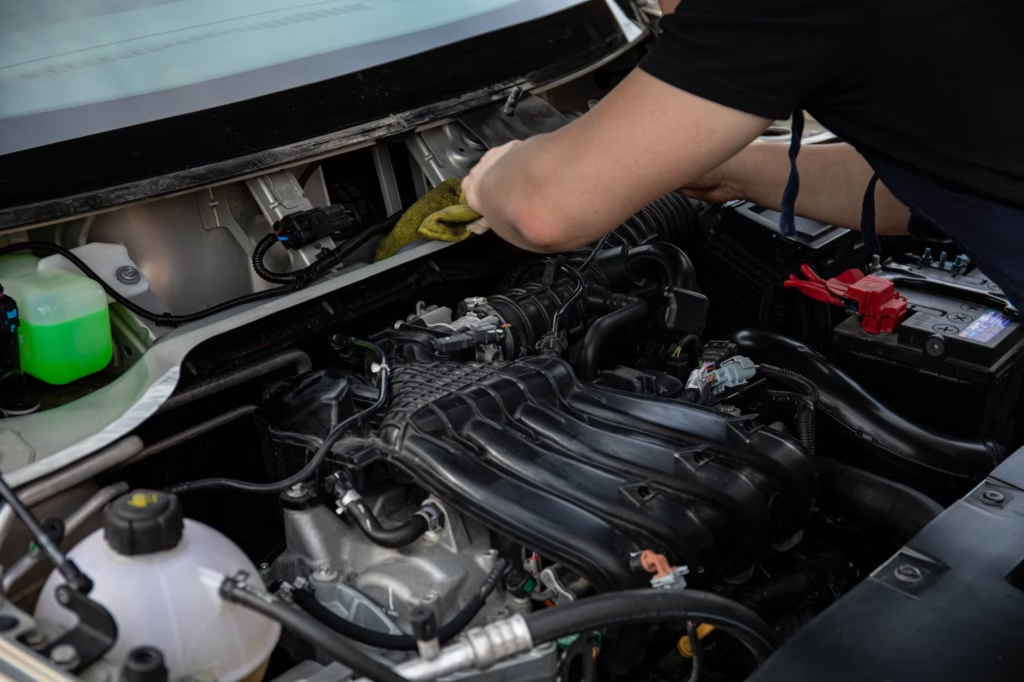
Do not treat spray-on belt dressing as a real fix. If the system is misaligned, contaminated, or losing tension, the noise is warning you about a condition that needs inspection.
When it sounds more like brakes
Brake squeal has more nuance. Toyota notes that worn brake pads often squeal because a small metal wear indicator contacts the rotor when pad material becomes too thin. But not every squeal means the pads are worn out. Honda owner information also notes that brake squeal can occur under certain conditions such as speed, deceleration, and humidity. In practice, a brief squeal on the first stop of a wet morning can be very different from a recurring, sharper screech that appears every time the brakes are applied.
What should raise concern is persistence or a change in performance. If the squeal is now constant, the pedal feels rough, stopping distance seems longer, or vibration has joined the noise, stop treating it as a harmless annoyance and book a brake inspection.
Grinding or scraping noises deserve more respect than most drivers give them
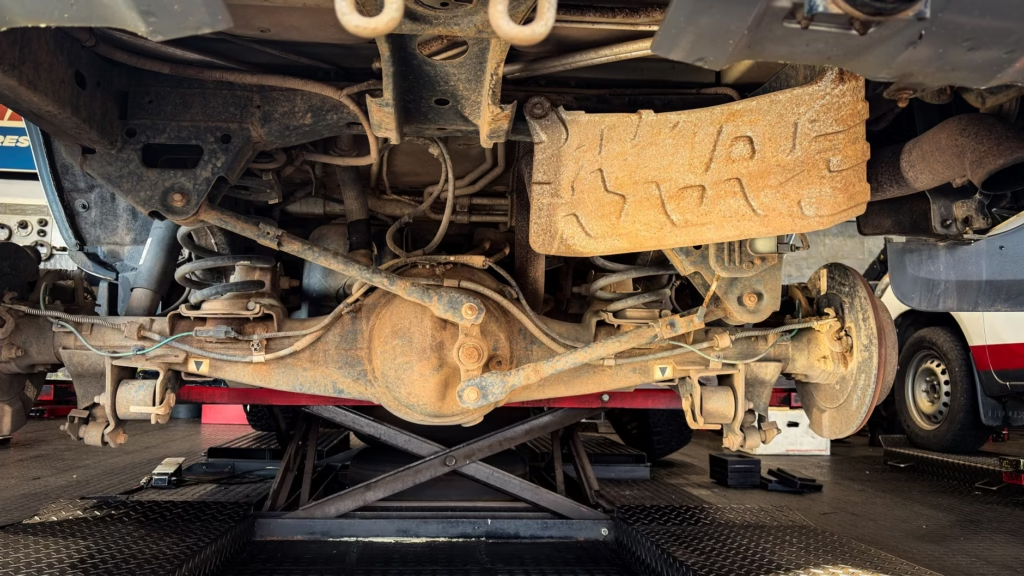
Grinding while braking is one of the clearest do-not-wait sounds. Once the pad friction material is gone, the metal backing can contact the rotor and quickly turn a pad job into a pad-and-rotor job. Toyota specifically warns that grinding or scraping during braking can indicate severely worn pads and rotor damage.
There are less severe versions of scraping, though. A thin brake dust shield can bend and lightly rub the rotor after a pothole, curb contact, or brake work. A small stone can also get trapped near the rotor and make an unpleasant scraping sound. Those problems still deserve attention, but they usually sound lighter and more tinny than true brake grinding. If the noise is strongest with the brake pedal and the car’s stopping behavior has changed, assume the more serious possibility until proven otherwise.
Clicks, pops, and clunks usually need context: turning versus bumps changes the story
A rapid clicking noise on tighter turns, especially while accelerating, often points toward a worn outer CV joint on front-wheel-drive or many all-wheel-drive vehicles. A single pop when steering reaches full lock can be something different, and an occasional driveline clunk when shifting between drive and reverse can be another category again. This is why “it clicks” is not enough. The shop needs to know whether it clicks once, repeatedly, only under power, or only with the wheel turned.
Clunks over bumps, on the other hand, push the diagnosis toward suspension parts, mounts, or even something loose in the trunk area. Monroe notes that worn shocks and struts can create clunking or knocking sounds, often along with excessive bouncing, nose dive under braking, steering-wheel vibration, or uneven tire wear. That combination matters. A clunk by itself could be a sway bar link or a loose exhaust hanger. A clunk plus bouncing and cupped tires suggests the suspension deserves a closer look.
Before assuming the worst, rule out the simple things: a loose spare tire, jack, cargo organizer, hitch accessory, or seat latch can sound surprisingly mechanical. But do not let that possibility become an excuse to ignore a noise that is growing louder or affecting handling.
Humming, roaring, or a helicopter-like thump often comes from the rotating parts
A low hum or roar that builds with road speed is where many drivers jump straight to wheel bearings. Sometimes they are right. Often they are not. Tire wear is one of the biggest impostors in noise diagnosis. NHTSA advises drivers to pay attention to tire performance changes such as noise or vibration, and Michelin notes that loud tire noise is commonly caused by irregular wear patterns. Cupping or scalloping can produce a repeating helicopter-like sound that gets more obvious as speed rises.
Look at the tread before you buy a wheel bearing. Michelin points out that cupping can be related to balance problems, worn suspension parts, or alignment issues, and that once irregular wear is established, the tire may continue to sound noisy even after the root cause is corrected. Timken’s hub-bearing guidance also warns that road surface, tread design, poor alignment, and worn suspension parts should be ruled out before blaming the bearing itself.
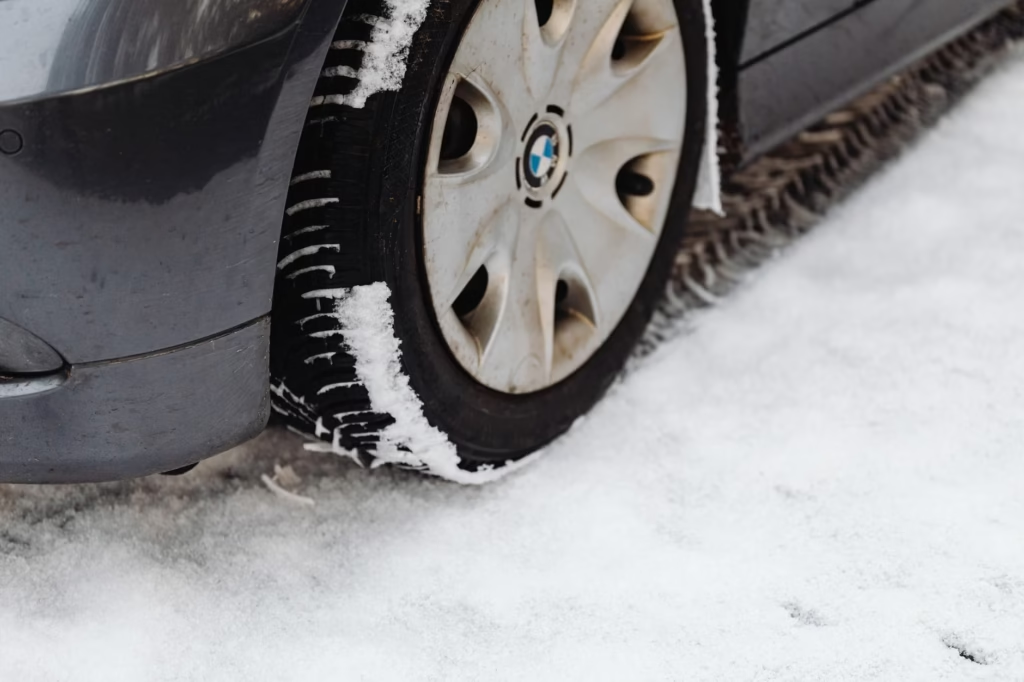
A useful clue is pavement sensitivity. If the roar changes a lot between coarse and smooth asphalt, tires move higher on the suspect list. If the sound stays consistent across surfaces and only changes with vehicle load in a gentle curve, a bearing becomes more plausible. Even then, that is still a clue, not proof.
One harmless noise sometimes mistaken for a fault is window buffeting. Many owner manuals describe a booming or throbbing “helicopter” sound when one window is open at speed. Cracking another window often fixes it immediately. It sounds dramatic, but it is just cabin air pressure pulsing.
Hissing, ticking, or extra exhaust noise can be more than an annoyance
A hissing sound can mean a vacuum leak on the intake side of the engine, especially if idle quality has changed. A ticking noise that speeds up with engine rpm can point to an exhaust leak near the engine. A deeper roar from under the floor can mean a rusted or damaged exhaust section, loose clamp, or failed joint. Heat shields can also rattle or buzz at certain rpm ranges and make a solid engine sound worse than it really is.
What raises the stakes is cabin exposure. The CDC warns that even a small exhaust-system leak can allow carbon monoxide to build up inside a vehicle. If an exhaust noise is paired with fumes, headache, dizziness, weakness, nausea, chest discomfort, or confusion, stop treating it as a simple sound complaint. Open the windows, get the car out of enclosed spaces, and have the exhaust system inspected before normal driving continues.
Knock, heavy tapping, or a deep rattle from the engine bay is the expensive category
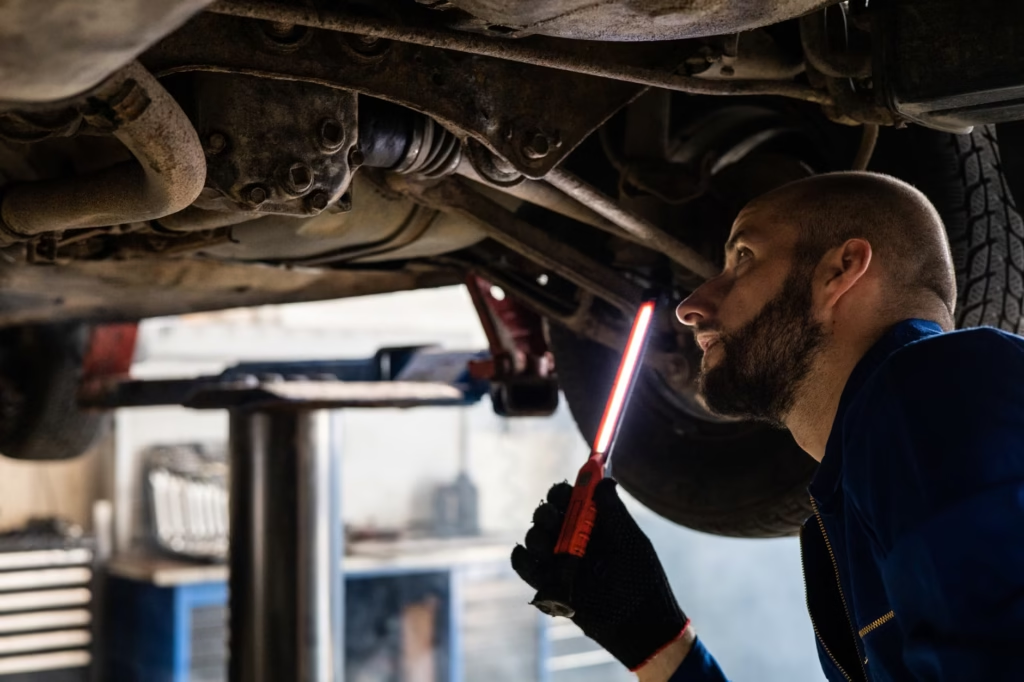
Not every engine tick means disaster. Some direct-injection systems make a normal ticking sound. Some engines make a brief startup noise when cold. Hybrids and newer vehicles can also produce unfamiliar pump, motor, or self-check sounds that are normal for that model. Honda, for example, notes that certain hybrid-system sounds can be unfamiliar but are not a cause for concern.
What should not be brushed off is a new, deep knock; a hard metallic tap that grows louder under load; or any engine noise accompanied by an oil-pressure warning, overheating, or a noticeable loss of power. Honda’s owner information is blunt on one point: running an engine with low oil pressure can cause serious damage almost immediately. If that warning is on and the engine suddenly sounds rougher, shut it down and check the oil according to the owner’s manual rather than trying to drive it home.
What to do before you book the repair
- Record a short audio or video clip if you can do it safely. A parked-idle clip is useful for engine-bay noises. A passenger-recorded clip helps for road noises.
- Write down the exact trigger: first start, right turn, left turn, over potholes, 45 mph cruise, light braking, heavy braking, A/C on, rainy weather, and so on.
- Check for simple visual clues: low tire pressure, uneven tread wear, fluid on the ground, a loose heat shield, or a warning light on the dash.
- Remove loose cargo and make sure the spare tire, jack, and trunk panels are secured.
- If the issue began soon after tire, brake, or suspension work, say that up front. Recent repairs can change what parts move, rub, or were left slightly out of position.
- Avoid hands-on testing around moving belts, fans, or under a vehicle supported only by a jack. Basic observation is helpful. Risky improvisation is not.
A clear description can save real money. “There’s a humming noise from 40 to 65 mph that does not change when I rev the engine in neutral, and the front tires look scalloped” is far more useful than “my car sounds weird.” It also reduces the odds of replacing the wrong part first.
Mistakes that send people toward the wrong repair
- Assuming the loudest symptom is the root cause. A noisy tire can be the result of worn suspension, and a noisy belt can be the result of a bad pulley or tensioner.
- Ignoring whether the sound follows engine speed or road speed. That distinction is often more useful than the sound itself.
- Replacing a belt without checking alignment, tension, and pulley condition.
- Waiting until a brake squeal turns into a grind, which usually means more parts and more cost.
- Blaming wheel bearings before looking closely at tread wear, tire age, inflation, and recent alignment or rotation history.
A short example of how the clues work together
Consider a hypothetical example: a driver hears a low roar beginning around neighborhood-to-main-road speeds. The noise gets louder by highway speed, but it does not change when the engine is revved in park. Braking does nothing to it. A quick tread inspection shows cupping on the front tires, and the car has started to feel slightly busier over small bumps. In that case, tire wear and a suspension or alignment issue should move ahead of wheel-bearing failure on the suspect list.
Now change one clue: the tires look even, but the roar changes slightly in long, gentle curves as weight transfers side to side. That does not prove a bearing, but it makes a rotating hub issue more plausible. The lesson is that one sound name rarely gives the answer. The pattern does.
Not every strange sound means failure
Modern cars can make unfamiliar but normal noises. Brief brake squeal in humid conditions can be normal on some vehicles. Hybrids can make pump or regenerative sounds that conventional cars might mask with engine noise. Open windows can create a booming pressure pulse. Some systems also run self-checks or emissions-related checks after shutdown. The key question is whether the sound is new, getting worse, or paired with a change in how the car drives.
The practical next step
When a car starts making a strange noise, the goal is not to become a mechanic overnight. It is to sort the sound into the right level of urgency, gather a few useful clues, and avoid turning a small repair into a larger one. Squeals, grinds, hums, clicks, hisses, and clunks all have patterns. Listen for when the sound appears, what changes it, and whether braking, steering, tire wear, warning lights, or fumes have joined the conversation. That will tell you whether to monitor it, book service soon, or stop driving and get help.
Can low oil make a car noisy?
Yes. Low oil level or low oil pressure can lead to ticking, tapping, or knocking because moving engine parts are not being lubricated properly. If an oil-pressure warning appears with new engine noise, shut the engine off and follow the owner’s manual rather than continuing to drive.
Why does the noise only happen when the car is cold?
Cold-only noises often point to clearances, moisture, or materials behaving differently before they warm up. That can include brief brake squeal, exhaust leaks that seal slightly as metal expands, or belt noises that change once the engine bay warms. Cold-only does not automatically mean harmless, but it is a useful clue.
Can bad tires sound like a bad wheel bearing?
Absolutely. Irregular wear such as cupping, scalloping, or feathering can create humming and roaring that drivers often mistake for a bearing problem. Tire inspection is one of the first steps before replacing hub components.
Is it safe to diagnose the noise by revving the engine in the driveway?
Only in a limited way. It can help you tell whether a noise follows engine rpm while stationary, but it will not reproduce tire, wheel-bearing, or most suspension noises. Avoid standing near moving belts and fans, and never crawl under a running vehicle.
Should I keep driving if the noise is annoying but the car still feels normal?
That depends on the category. A brief normal-type brake squeal or window buffeting can wait. Grinding brakes, exhaust fumes, a sudden tire thump, or engine noise with a warning light should not. If the sound is new and repeating, scheduling an inspection sooner is usually cheaper than waiting for a clearer failure.
References
- NHTSA – Tire Safety Ratings and Awareness – https://www.nhtsa.gov/vehicle-safety/tires
- CDC – Carbon Monoxide Poisoning Basics – https://www.cdc.gov/carbon-monoxide/about/index.html
- Dayco – How to Fix Serpentine Belt Noise – https://www.dayco.com/na-en/techhub/how-to-fix-serpentine-belt-noise/
- Toyota – Signs You May Need New Brake Pads – https://www.toyota.com/car-tips/signs-new-brake-pads/
- Honda Owners Manual – Brake squeal under certain conditions – https://techinfo.honda.com/rjanisis/pubs/OM/AH/A3BM2626IOM/enu/details/661635d7737606-70617612.html
- Michelin – Symptom: Cups – https://www.michelinman.com/auto/auto-tips-and-advice/tire-damage/tread-problems/symptom-cups
- Michelin – FAQs on tire noise, cupping, and vibration – https://www.michelinman.com/auto/assistance/michelin-faqs
- Monroe – Signs of Bad Shocks & Struts – https://www.monroe.com/technical-resources/shocks-101/symptoms-worn-shock-struts.html
- Timken – Checking a Hub Bearing Assembly – https://www.timken.com/wp-content/uploads/2017/08/LV3-Checking-Hub-Assembly.pdf
- Honda Owner’s Manual – If the Engine oil pressure low Warning Appears – https://techinfo.honda.com/rjanisis/pubs/OM/AH/A3V02525IOM/enu/details/131237047-15984.html
- Honda Owners Manual – SPORT HYBRID i-MMD sounds – https://techinfo.honda.com/rjanisis/pubs/om/ah/a3d42525iom/enu/details/driving_i-mmd.html