

Checking fluids is one of the few car-maintenance jobs that is both simple and genuinely useful. For most drivers, the four fluids worth monitoring at home are engine oil, engine coolant, brake fluid, and windshield washer fluid. The exact procedure and fluid specification still come from the owner’s manual, but the overall routine is straightforward once you know what should be checked cold, what should be checked on level ground, and what should not be treated like a casual top-off. (fordservicecontent.com)
Set the car up correctly before you check anything
- Park on level ground, switch the engine off, and set the parking brake. Accurate oil and brake-fluid readings depend on the vehicle sitting level. (fordservicecontent.com)
- Let the engine cool before dealing with coolant. A hot cooling system is pressurized and can cause burns if the cap is opened too soon. (fordservicecontent.com)
- Confirm the reservoir or fill point before opening it. Ford’s manual explicitly warns that automotive fluids are not interchangeable. (fordservicecontent.com)
- Use a clean rag and, if needed, a clean funnel. Ford advises cleaning around the oil fill cap, and brake fluid must be protected from contamination. (fordservicecontent.com)
- Add small amounts, then recheck. Overfilling can be just as unhelpful as running low, especially with engine oil and brake fluid. (fordservicecontent.com)
The most important habit is matching the fluid to the vehicle, not just the reservoir. Engine oil, coolant, and brake fluid all need the correct specification, and brake fluid should come from a sealed container. Windshield washer fluid is the most forgiving of the group, but even there it makes sense to use a product suited to the season instead of pouring in whatever happens to be nearby. (fordservicecontent.com)
How to check the four fluids most drivers can handle themselves
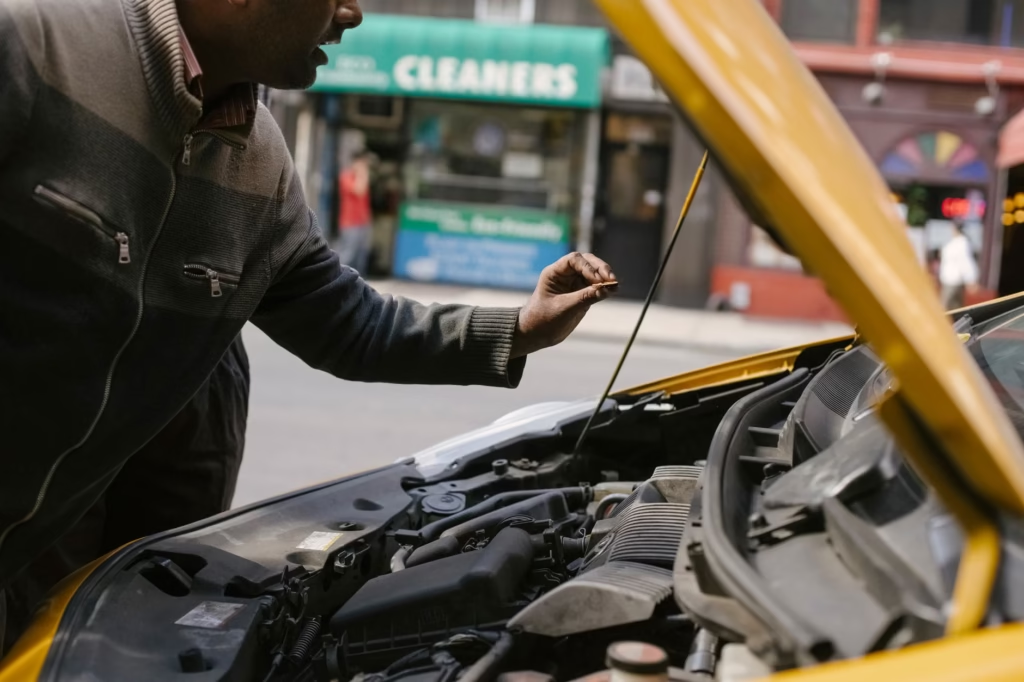
- Engine oil: Check it on level ground before starting the engine, or after shutdown once the oil has had time to drain back into the pan. Pull the dipstick, wipe it clean, reinstall it fully, then remove it again to read the level. If the oil is at the minimum mark, add the specified oil a little at a time and recheck. If it is already between the marks, leave it alone. Ford warns that filling past the maximum mark can cause engine damage. (fordservicecontent.com)
- Engine coolant: Check the coolant reservoir when the engine is cold. The level should sit between the MIN and MAX marks, and Ford notes that the level can read higher when hot because coolant expands. If the reservoir is at or below MIN, add coolant that matches the vehicle specification. Never remove the cap when the engine is hot, and never confuse the coolant reservoir with the washer reservoir. (fordservicecontent.com)
- Brake fluid: This is the fluid to approach with the most caution. On a level surface, look at the reservoir and read the level against the MIN and MAX marks. If the level is between them, it is acceptable. If it is below MIN or above MAX, Ford says the vehicle should be checked as soon as possible. Use only the specified brake fluid, and use fluid from a sealed container because contamination can damage the system. (fordservicecontent.com)
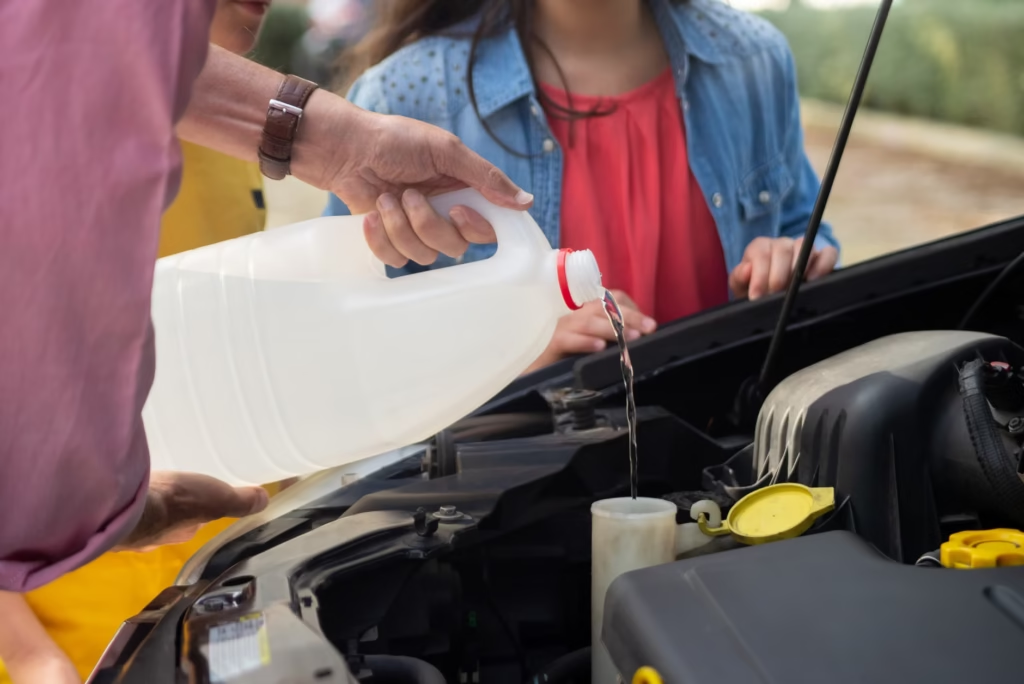
- Windshield washer fluid: This is the easiest refill of the group. Toyota notes that washer fluid does not need scheduled replacement the way oil does; it simply needs to be topped off when low. Find the washer reservoir, remove the cap, and add the appropriate washer fluid. Toyota suggests topping it off when the tank is getting low, and notes that many drivers switch between all-season and seasonal blends depending on conditions. (toyota.com)
The useful distinction: some low fluids are routine, others are warning signs
Never remove a hot coolant cap. Ford warns that the cooling system can release steam and hot liquid forcefully if opened before it cools down. (fordservicecontent.com)
The big nuance is that not every low fluid means the same thing. Low washer fluid is normal upkeep. Brake fluid is different, because a level outside the marked range can affect braking. Coolant also deserves more respect than a quick splash-and-go because the system runs hot and under pressure. A practical rule, based on those differences, is to top off only what you can clearly identify and what the manual treats as a routine refill; if a level is out of range or quickly drops again, move from topping off to diagnosis. (fordservicecontent.com)
A simple example shows the difference. If the washer bottle is nearly empty before a rainy commute, topping it off is ordinary maintenance. If the brake reservoir sits below MIN, that is not the same kind of problem, and Ford says the vehicle should be checked as soon as possible. If the coolant reservoir is at or below MIN, refill it with the correct coolant, then pay attention to whether the level stays stable afterward. (fordservicecontent.com)
Once the four main fluids are familiar, this becomes a five-minute habit instead of a mystery. Check oil on level ground, check coolant only when cold, treat brake fluid carefully, and keep washer fluid topped up before weather or road grime turn visibility into a problem. Keep the owner’s manual close, and let it settle the exact fluid type every time. (fordservicecontent.com)
References
- Ford Owner’s Manual: Engine Oil Check – https://www.fordservicecontent.com/Ford_Content/vdirsnet/OwnerManual/Home/Content?ProcUid=G1562149&Uid=G2102446&buildtype=web&countryCode=USA&div=f&languageCode=en&moidRef=G539653&userMarket=USA&vFilteringEnabled=False&variantid=7983
- Ford Owner’s Manual: Engine Coolant Check – https://www.fordservicecontent.com/Ford_Content/vdirsnet/OwnerManual/Home/Content?ProcUid=G2007603&Uid=G2084305&buildtype=web&countryCode=USA&div=f&languageCode=en&moidRef=G539654&userMarket=USA&vFilteringEnabled=False&variantid=7983
- Ford Owner’s Manual: Brake Fluid Check – https://www.fordservicecontent.com/Ford_Content/vdirsnet/OwnerManual/Home/Content?ProcUid=G2015700&Uid=G2067372&buildtype=web&countryCode=USA&div=f&languageCode=en&moidRef=G539655&userMarket=USA&vFilteringEnabled=False&variantid=7983
- Toyota: Changing Your Windshield Washer Fluid – https://www.toyota.com/car-tips/change-windshield-washer-fluid/