
A car that will not start is not one single problem. The first useful distinction is whether the vehicle is electrically dead, refuses to crank, or cranks normally but never fires. Owner’s manual troubleshooting pages and roadside guidance separate no-start problems that way because each pattern points to a different group of causes. (techinfo.honda.com)
Stop and call for help if you smell strong fuel, see smoke, hear grinding, or find a battery that is leaking, swollen, or frozen. Incorrect jump-starting can cause injury and vehicle damage, and automatic-transmission vehicles should not be push-started. (fordservicecontent.com)
Use the lights-crank-fire sequence before you touch anything
The fastest way to narrow down a no-start is a simple diagnostic habit: check the lights, listen for the crank, then decide whether the engine is actually trying to fire. It is not a lab test, but it is practical enough to tell you whether to inspect the battery, try a safe jump-start, use the backup key procedure, or stop guessing and arrange a proper diagnosis. (techinfo.honda.com)
- No lights or only very weak lights usually point to a discharged battery, poor battery connections, or another electrical supply problem. (fordservicecontent.com)
- Lights on but no crank, or one solid click, shifts suspicion toward the starter, interlock conditions, or key and anti-theft problems. (aaa.com)
- A normal crank with no start usually means the starter is doing its job and the problem is more likely related to fuel, fuses, immobilizer logic, or engine management. (techinfo.honda.com)
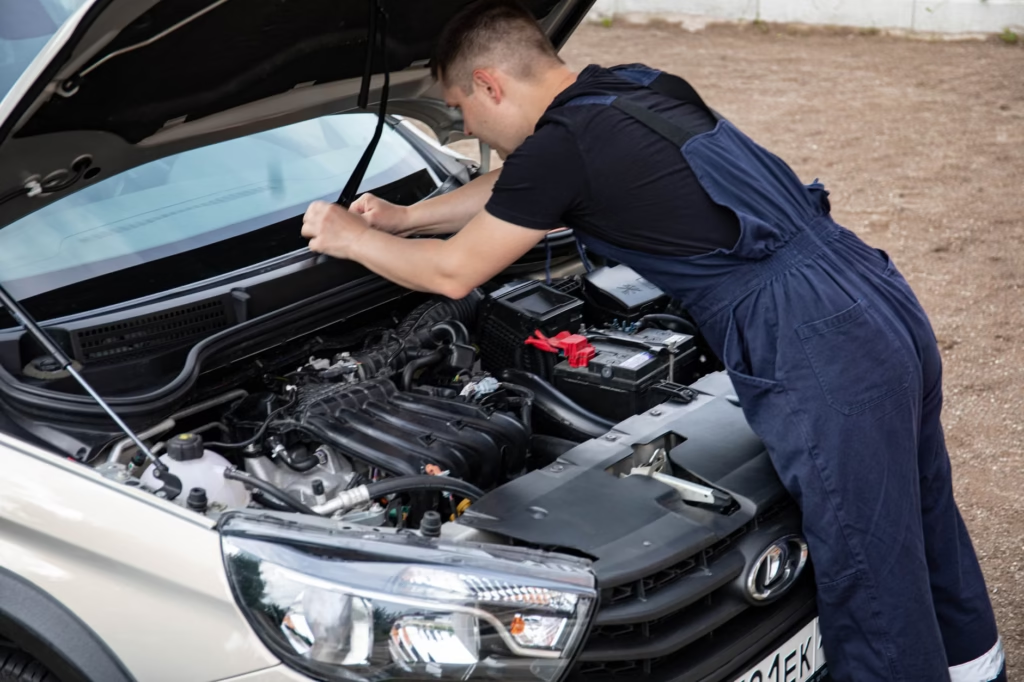
What to check in the first two minutes
- Confirm the transmission is fully in Park or Neutral, then press the brake or clutch firmly. Many vehicles will not crank unless those conditions are met. (fordservicecontent.com)
- Turn off the headlights, climate control, rear defogger, and other accessories before trying again, especially in cold weather or with a weak battery. (techinfo.honda.com)
- Watch the dash and listen closely. No sound, rapid clicking, one solid click, slow cranking, and normal cranking all point in different directions. (aaa.com)
- Look for a weak-key or key-not-detected message, or a flashing security indicator. Many push-button vehicles have a backup starting procedure when the remote battery is weak. (techinfo.honda.com)
- Check the fuel gauge before assuming a complicated failure. If the vehicle recently ran out of fuel, some models need extra cranking time or several ignition cycles after refueling. (fordservicecontent.com)
- If it is safe to open the hood, inspect the battery posts and cable ends for looseness, cracks, swelling, or white, green, or blue corrosion. Do not jump-start a visibly damaged, leaking, or frozen battery. (cluballiance.aaa.com)
| What happens when you try to start it | Most likely area | Check first | Best next move |
|---|---|---|---|
| Dash is dark or barely lit | Dead battery, loose cable, or heavy corrosion (fordservicecontent.com) | Interior lights, battery terminals, obvious damage (cluballiance.aaa.com) | Try a jump only if the battery is not swollen, leaking, or frozen (fordservicecontent.com) |
| Rapid clicking or slow crank | Weak battery or high resistance at the battery or ground connection (aaa.com) | Corrosion, loose clamps, accessory load, recent battery age or history (cluballiance.aaa.com) | Jump-start or charge, then test the battery and charging system (aaa.com) |
| One solid click with a bright dash | Starter motor, starter solenoid, or start-interlock issue (aaa.com) | Park or Neutral position, brake or clutch input, battery condition (fordservicecontent.com) | If a proper jump does not help, arrange repair rather than repeated cranking (aaa.com) |
| Engine cranks normally but never catches | Fuel, fuse or relay, immobilizer, or ignition and engine-management problem (techinfo.honda.com) | Fuel level, fuses, immobilizer indicator, owner’s manual start procedure (techinfo.honda.com) | Stop repeated attempts and move toward a systematic diagnosis (fordservicecontent.com) |
| Push-button car says key not detected | Weak key fob battery or key-detection issue (techinfo.honda.com) | Use the manual’s backup start method (fordservicecontent.com) | Replace the remote battery and inspect further if the warning continues (techinfo.honda.com) |
| Starts with a jump but dies again soon after | Charging-system problem, not just a flat battery (aaa.com) | Battery and charging warning signs, recent electrical oddities (aaa.com) | Have the charging system tested promptly (aaa.com) |
A simple hypothetical example shows why the sequence matters. If the cabin lights stay bright and the engine gives one hard click but never turns, a brand-new battery is not the most convincing first guess. If the dash fades, the crank drags, or you get rapid clicking, battery charge and terminal condition move much higher on the list. (aaa.com)
When the engine barely responds
1. Dead or deeply discharged battery
This is the most common starting point. A battery can go flat because the car sat too long, a light stayed on, repeated short trips never fully recharged it, or heat and cold weakened it enough that a marginal battery finally quit. Typical clues include dim dashboard lights, slow cranking, or rapid clicking when you turn the key or press the button. (cluballiance.aaa.com)
A jump-start may get the vehicle moving, but it does not explain why the battery was dead. If the car starts after a jump, the next job is testing, not celebrating. A weak battery, a bad alternator, or a resistive connection can all produce the same morning-after failure. (aaa.com)
2. Loose or corroded battery terminals or ground connection
Corrosion is easy to underestimate because the car may still have enough power for the radio or cabin lights. That chalky white, blue, or green buildup adds resistance where the starter needs clean, heavy current. Loose clamps or a poor ground can create the same symptom set as a dead battery: slow crank, dim lights, or a total no-start. (cluballiance.aaa.com)
If the buildup is minor and the battery itself is healthy, cleaning and tightening the connections may solve the problem. If corrosion returns quickly, or the battery still will not hold a charge afterward, treat the corrosion as a clue rather than the whole diagnosis. (cluballiance.aaa.com)
3. Failed starter motor or starter solenoid
If the dashboard stays bright and you hear one solid click, or the car goes silent even though the battery seems to have power, the starter becomes a prime suspect. AAA’s roadside guidance notes that a single click with bright dash lights often points to the starter rather than the battery itself. (aaa.com)
The important tradeoff here is not to overinterpret one clue. A starter diagnosis still assumes the battery and connections are reasonably sound. That is why battery voltage, terminal condition, and Park or Neutral status should be checked before deciding the starter has failed. (fordservicecontent.com)
4. Alternator or charging-system trouble
An alternator problem often disguises itself as a battery problem. The battery supplies the energy to crank the engine, but the alternator is what keeps that battery charged while the engine runs. If the vehicle started with a jump and then dies again soon after, or electrical behavior has been getting strange, the battery may be the victim rather than the root cause. (aaa.com)
5. Park, Neutral, brake, or clutch interlock issue
Modern vehicles deliberately block starting unless certain conditions are met. Ford’s owner guidance, for example, lists several reasons an engine may not crank, including a transmission not in Park or Neutral and a brake or clutch pedal that is not pressed. That means a car can feel mysteriously dead even though the real issue is the start-interlock logic. (fordservicecontent.com)
Before assuming a failed starter, seat the shifter positively in Park, then try Neutral if the owner’s manual permits and it is safe to do so. On a manual, make sure the clutch is fully depressed. These are basic checks, but they save unnecessary towing more often than people admit. (fordservicecontent.com)
6. The key fob battery is weak or the vehicle does not detect the key
Push-button cars add a separate failure point: the vehicle has to detect a valid key. Honda and Ford owner materials both note that a no-crank or no-start can happen when the passive key battery has no charge or the system does not detect the key. In practical terms, the doors may still unlock, yet the car refuses to start. (techinfo.honda.com)
This is one of the easiest no-start causes to miss because it feels electronic and random. Many models provide a backup method, such as touching the remote to the start button or placing it in a backup slot. The exact procedure is model-specific, so follow the owner’s manual rather than improvising. (techinfo.honda.com)
7. Anti-theft or immobilizer system problem
Sometimes the vehicle is doing exactly what it was designed to do: blocking a start attempt with an unrecognized or incorrectly coded key. Ford describes its passive anti-theft system as preventing someone from starting the vehicle with the wrong key, and Honda’s engine-check guidance says a blinking immobilizer indicator means the engine cannot be started. (fordservicecontent.com)
If the security light is flashing, a spare programmed key is worth trying before anything else. If the warning stays on, or the car still refuses to start after the backup key procedure, this usually moves beyond driveway troubleshooting and into dealer or qualified locksmith territory. (fordservicecontent.com)
When the engine cranks but will not fire
8. The tank is empty, or fuel is too low to restart easily
Running out of fuel sounds too obvious, which is why it gets missed. Honda’s no-start checklist tells drivers to check the fuel level, and Ford notes that after running out of fuel, some vehicles may need several ignition cycles or longer-than-normal cranking after refueling. On a steep slope, some models may need more fuel than expected before they restart. (techinfo.honda.com)
9. Blown fuse or failed relay in a critical circuit
When the starter turns the engine normally but the engine will not catch, a blown fuse or failed relay can cut power to something the engine needs, such as the fuel pump, ignition, or engine-control system. Honda’s owner-manual checklist explicitly tells drivers to check fuses during no-start diagnosis. (techinfo.honda.com)
The limitation matters: a blown fuse is sometimes the symptom, not the cause. Replacing it once may get the car moving, but if it blows again, stop there and have the circuit diagnosed rather than treating fuses as disposable solutions. (techinfo.honda.com)
10. Fuel delivery problem
If the tank has fuel and the immobilizer is not complaining, the next broad category is fuel delivery. AAA notes that a broken fuel pump or clogged filter can prevent a vehicle from starting, and that fuel-pump, relay, or fuse failures can leave an engine cranking normally but not starting. Hard starts, sputtering, or loss of power before the full no-start are useful clues. (cluballiance.aaa.com)
11. Ignition or engine-management fault
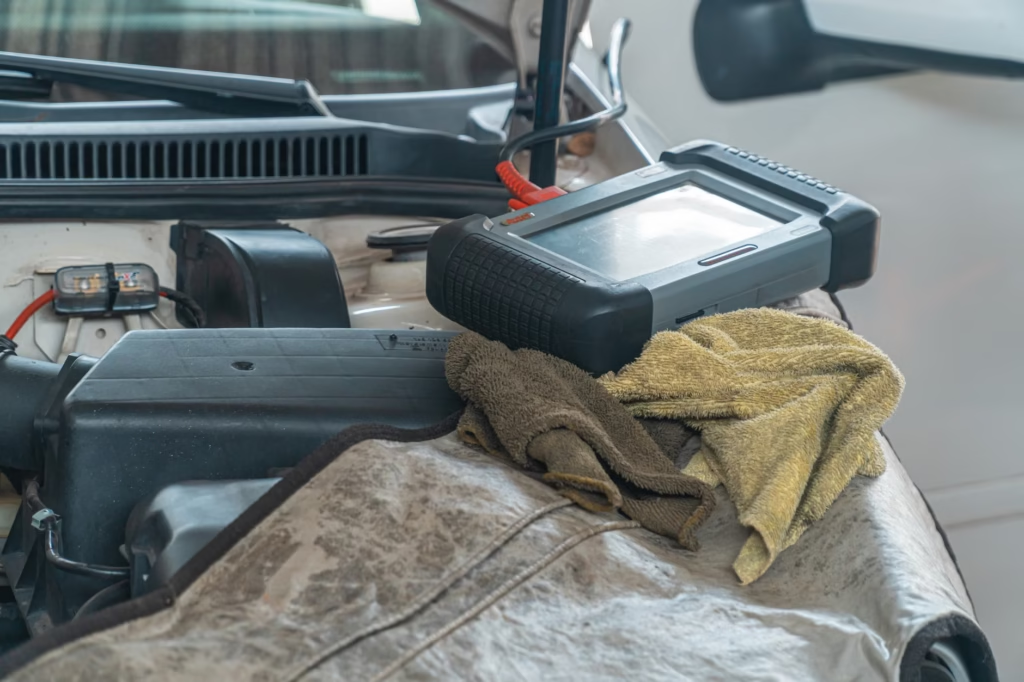
Battery and fuel are not the whole story. Modern no-starts can also come from spark plug or coil faults, crankshaft or camshaft position sensor problems, bad power or ground connections in the control system, or other engine-management failures. At this point, random part swapping usually costs more than a systematic diagnosis with scan data and proper testing. (aaa.com)
12. Too many start attempts, a flooded condition, or a temporary start-system lockout
One overlooked cause is what happens after the original problem. Repeated cranking can drain the battery, and some vehicles temporarily disable further start attempts after a set number of tries. Ford’s current owner guidance says some models may require a wait period before another attempt, and it also provides a specific procedure after three failed starts rather than telling drivers to keep cranking endlessly. (fordservicecontent.com)
If the car suddenly stalled while driving and now will not restart, treat it as more serious than a routine morning no-start. Battery, alternator, fuel delivery, and engine-management failures can all behave differently once the vehicle has already shut down in motion. (aaa.com)
Common mistakes that waste time or make the problem worse
- Replacing the battery before checking the terminals, ground, and charging system. The symptom overlap is real. (cluballiance.aaa.com)
- Ignoring the difference between rapid clicking and one solid click. That sound clue often separates battery-side trouble from starter trouble. (aaa.com)
- Trying to jump-start a damaged, leaking, or frozen battery, or using the wrong procedure. That is a safety issue, not a shortcut. (fordservicecontent.com)
- Overlooking key and security warnings because the doors still unlock. Start authorization and door unlocking are not the same thing. (techinfo.honda.com)
- Cranking over and over after the engine clearly will not catch. That can flatten the battery and, on some vehicles, trigger a temporary start disable. (fordservicecontent.com)
When DIY stops making sense
- A proper jump-start does nothing, even with clean, solid connections. (aaa.com)
- The vehicle starts with a jump but dies again soon after, suggesting a charging problem rather than a one-time low battery. (aaa.com)
- The immobilizer or security light keeps flashing, or the car still says key not detected after using the backup procedure. (fordservicecontent.com)
- You smell raw fuel, see melted wiring, or notice a damaged battery case. (fordservicecontent.com)
- The engine cranks normally, fuel is in the tank, the fuses look fine, and the car still will not start. At that point, scan-tool diagnosis is usually the smarter move. (techinfo.honda.com)
The practical goal is not to become a driveway diagnostician for every possible failure. It is to sort the obvious from the serious, avoid unsafe guesses, and stop replacing parts blindly. If you use the lights-crank-fire sequence, check the key conditions, verify fuel, and inspect the battery connections before anything else, you will usually know whether the next step is a jump-start, a battery and charging test, or a tow to someone with the right tools. (techinfo.honda.com)
Frequently asked questions
Can a battery be too weak to start the car even if the headlights still turn on?
Yes. The starter needs far more current than the lights or radio. A battery can still power small accessories and still be too weak to crank the engine reliably. (autoclubsouth.aaa.com)
If the car starts with a jump, is the battery definitely bad?
Not necessarily. A jump-start only proves the car started with outside help. The real issue could still be an aging battery, corroded connections, or an alternator that is not recharging the battery properly. (aaa.com)
Why will a push-button car unlock but still refuse to start?
Because start authorization can fail even when the remote still has enough power to unlock the doors. A weak fob battery or a key-detection problem can leave you with a key-not-detected or weak-remote message. Many vehicles have a backup start procedure in the owner’s manual. (techinfo.honda.com)
Is clicking always a battery problem?
No. Rapid clicking commonly points toward a weak battery or poor connection, while one solid click with a bright dash often suggests a starter issue. It is a useful clue, but not a complete diagnosis by itself. (aaa.com)
Should I keep trying to start the car after several failed attempts?
Usually no. Repeated attempts can drain the battery, and some vehicles temporarily disable the starting system after too many tries. If your owner’s manual provides a specific recovery or emergency-start procedure, use that exact method rather than endless cranking. (fordservicecontent.com)
Do hybrids have the same no-start issues?
Many hybrids still depend on a 12-volt battery to wake up the control systems, so a discharged 12-volt battery can prevent the hybrid system from starting. Follow the model-specific jump-start or recovery instructions in the owner’s manual. (toyota.com)
References
- AAA Automotive: 13 Common Car Problems Explained – https://www.aaa.com/autorepair/articles/13-common-car-problems-explained
- AAA Automotive: How to Jump a Battery and Get Yourself Back on the Road – https://www.aaa.com/autorepair/articles/how-to-jump-a-battery-and-get-yourself-back-on-the-road
- AAA Club Alliance: How to Clean Battery Corrosion – https://cluballiance.aaa.com/the-extra-mile/advice/car/how-to-check-for-car-battery-corrosion
- Ford Owner’s Manual: Starting and Stopping the Engine FAQ – https://www.fordservicecontent.com/Ford_Content/vdirsnet/OwnerManual/Home/Content?ProcUid=G2135488&Uid=G2162044&buildtype=web&countryCode=USA&div=f&languageCode=en&moidRef=G2022706&userMarket=usa&vFilteringEnabled=False&variantid=9537
- Ford Owner’s Manual: Accessing the Passive Key Backup Position – https://www.fordservicecontent.com/Ford_Content/vdirsnet/OwnerManual/Home/Content?ProcUid=G2162236&Uid=G2162235&buildtype=web&countryCode=USA&div=f&languageCode=en&moidRef=G2161977&userMarket=usa&vFilteringEnabled=False&variantid=9537
- Ford Owner’s Manual: Passive Anti-Theft System – https://www.fordservicecontent.com/Ford_Content/vdirsnet/OwnerManual/Home/Content?ProcUid=G2128609&Uid=G2128592&buildtype=web&countryCode=USA&div=f&languageCode=en&moidRef=G2127943&userMarket=usa&vFilteringEnabled=False&variantid=9537
- Ford Owner’s Manual: Running Out of Fuel – Gasoline – https://www.fordservicecontent.com/Ford_Content/vdirsnet/OwnerManual/Home/Content?ProcUid=G1728449&Uid=G1728447&buildtype=web&countryCode=USA&div=f&languageCode=USA&moidRef=G539551&userMarket=USA&vFilteringEnabled=True&variantid=7241
- Honda Owner’s Manual: If the Keyless Remote Battery Is Weak – https://techinfo.honda.com/rjanisis/pubs/om/ah/a3v02525iom/enu/details/131237047-42949.html
- Honda Owner’s Manual: Checking the Engine – https://techinfo.honda.com/rjanisis/pubs/OM/AH/A3V02323IOM/enu/details/131237047-15661.html
- Honda Owner’s Manual: Starting the Engine – https://techinfo.honda.com/rjanisis/pubs/om/ah/a3a02424iom/enu/details/131240047-386505.html
- Toyota Owners: If the Vehicle Battery Is Discharged – https://www.toyota.com/owners/warranty-owners-manuals/digital/article/corolla/2025/om02688u/ch07se020410/
- Toyota Owners: Highlander Hybrid 12-Volt Battery – https://www.toyota.com/owners/warranty-owners-manuals/digital/article/highlander%20hv/2025/om0e260u/ch06se030405/