

Most car batteries do not fail without warning. The problem is that the warning signs can be easy to dismiss until the morning the engine will not start. A slightly slower crank, headlights that dip more than they used to, a dashboard battery light, or a battery that suddenly needs a second jump-start in a short period can all be early clues that the battery is running out of margin.
The tricky part is that battery problems overlap with charging-system faults, corroded connections, and starter issues. That is why the useful question is not just, “Is the battery dead?” It is, “What pattern is the vehicle showing, and how urgent is it?” If that pattern is read correctly, many breakdowns can be avoided.
The warning signs that deserve attention before a no-start
Not every symptom means immediate replacement, but some signs should move the battery from “I’ll deal with it later” to “test this now.” The table below is a practical way to sort what you are seeing.
| What you notice | What it often suggests | What else could be involved | How fast to act |
|---|---|---|---|
| Engine cranks noticeably slower than usual | Battery is losing starting power | Cold-weather drag, cable resistance, or starter wear | Schedule a battery and charging-system test soon |
| Rapid clicking or a single click with no start | Weak battery or poor battery connection | Starter or ground-connection problem | Same day if it repeats |
| Headlights or dash lights dim sharply during startup | Voltage is dropping heavily under load | Charging-system or connection issue | Test soon, especially if this is new behavior |
| Battery or charging light stays on while driving | Charging system is not maintaining battery power | Alternator or related electrical fault | High urgency; do not ignore |
| Vehicle needs repeated jump-starts | Battery may no longer hold an adequate charge | Parasitic drain or charging-system fault | High urgency; diagnose before driving far |
| White or bluish buildup on terminals | Corrosion is increasing resistance at the connection | Loose connection or battery venting | Inspect, clean or service, then test |
| Battery case is swollen, cracked, leaking, or smells strongly of sulfur | Internal failure, overheating, or overcharging | Charging fault may be the cause behind the damage | Treat as urgent and handle cautiously |
| Battery is several years old and first symptoms appear during heat or cold | Battery may be nearing the end of its service life | Climate and driving habits affect timing | Plan testing now rather than waiting |
Two signs deserve especially serious treatment: a battery or charging light that stays on while the engine is running, and any battery that is physically swollen, cracked, leaking, or giving off a strong rotten-egg odor. Those are not “watch and wait” symptoms.
Slow cranking is still the classic early sign for a reason
When a battery is weakening, one of the earliest clues is often a change in the way the engine turns over. It still starts, but the crank sounds heavier, longer, or less confident than normal. Many drivers notice it first in the morning, after the car has been parked overnight, or during the first serious cold snap.
That symptom matters because the battery’s main job is to deliver a large burst of current to start the engine. As the battery ages, it may still show enough surface charge to power lights and accessories, yet no longer have the same reserve under starting load. A battery can look fine in casual use and still be weak where it matters most.
Clicking is common, but it is not a perfect battery diagnosis
A rapid clicking sound when the key is turned or the start button is pressed often points to a battery that does not have enough power to crank the engine. A single click can also be battery-related, especially if connections are loose or corroded. But clicking is one of the easiest symptoms to oversimplify. A starter problem or poor ground can create a similar experience. That is why repeated clicking should lead to testing, not assumption.
Dim lights and glitchy electronics tell you voltage is dropping
If headlights dip dramatically when starting, interior lights fade more than they used to, windows seem sluggish, or the infotainment system, radio presets, or clock occasionally reset after startup, low voltage may be part of the story. Those clues do not prove the battery is the only fault, but they do suggest the electrical system is struggling somewhere.
The timing of those symptoms matters. If they happen mainly during cranking, the battery becomes more suspect. If they happen while the vehicle is already running, the charging system or wiring deserves equal attention.
Use the symptom-context-test sequence before blaming the battery
A useful way to think about battery trouble is with a simple diagnostic sequence: symptom, context, then test. It is not a formal industry standard, just a practical way to avoid throwing a battery at the wrong problem.
- Start with the symptom. Identify the exact change: slow crank, click-no-start, dimming lights, charging warning light, a jump-start need, or a smell or bulge under the hood.
- Add the context. Note when it happens: after sitting overnight, after short trips, after the car has sat unused, only in heat or cold, or while driving normally.
- Check what can be verified quickly. If the battery date label is readable, note the age. Look for corrosion, loose terminals, a battery that shifts in its tray, or physical damage to the case.
- Get a proper test. A battery test is much more useful when paired with a charging-system check. That helps separate a weak battery from an underlying electrical problem that would kill a replacement too.
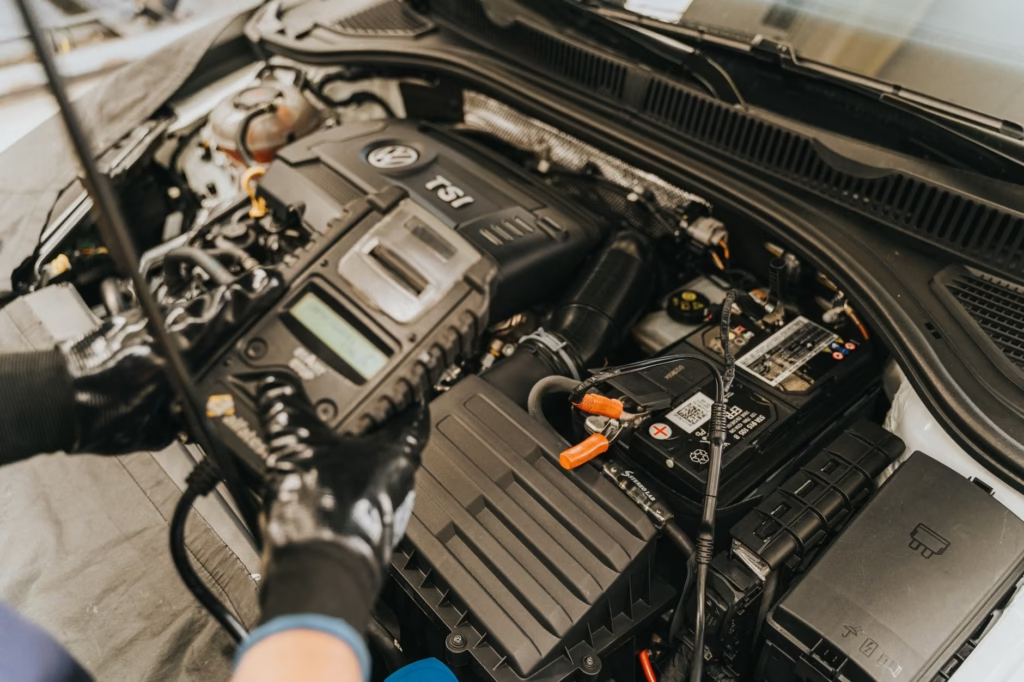
Here is a realistic hypothetical example. A four-year-old crossover starts a little slower every morning for a week. Headlights dip during cranking, but once the engine is running, everything behaves normally. The battery light never comes on. That pattern leans toward a battery nearing the end of its service life. By contrast, if the battery light turns on while driving and the vehicle begins losing electrical function, the charging system jumps much higher on the suspect list.
Physical clues under the hood can say a lot
Corrosion around the terminals is more than a cosmetic problem
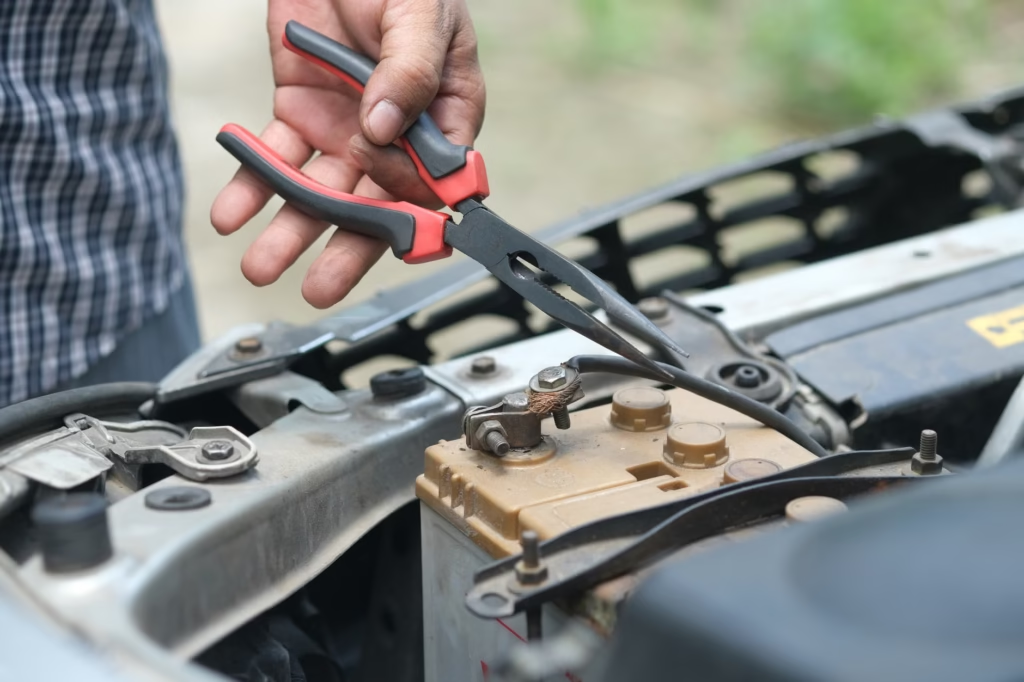
Crusty white, blue, or greenish buildup around the posts or cable ends increases resistance at the connection. That can make a healthy battery act weak, and it can make a weak battery look completely finished. Corrosion is a clue worth taking seriously because it interferes with charging and starting, but it does not automatically mean the battery itself is beyond saving. It does mean the connection needs attention and the battery should be tested afterward.
A swollen case, leaks, or sulfur smell are much more serious
A bulging case often points to overheating or overcharging. A crack or visible leak means the battery is no longer just weak; it may be unsafe to handle casually. A strong rotten-egg smell can also suggest venting or internal damage. In those situations, the battery is not a routine maintenance item anymore. It becomes a safety issue as well as a reliability issue.
Lead-acid batteries contain corrosive sulfuric acid, and hydrogen gas can build up during charging. If a battery is damaged, leaking, or being charged, avoid sparks, smoking, and open flame. Eye protection matters, and a physically damaged battery is usually better handled by a trained technician than treated as a normal DIY swap.
A battery that can move in its tray should not be ignored
A loose hold-down does not get the same attention as a no-start, but it matters. Vibration shortens battery life and can contribute to internal damage over time. If the battery wiggles in its mounting, that is a condition worth correcting even if the vehicle still starts.
What pushes a car battery toward early failure
Batteries are wear items, but they do not all age at the same speed. Many last roughly three to five years, yet climate, charging conditions, and basic maintenance can move that window earlier or later. Several factors show up again and again when a battery dies sooner than expected.
- Heat accelerates internal chemical wear. In hot climates, batteries often age faster even if the obvious failure does not show up until later.
- Cold weather reduces starting performance and exposes weakness that a battery could hide in milder weather.
- Corrosion at the terminals can interfere with recharging and current flow.
- Repeated power drain, including leaving lights or accessories on long enough to flatten the battery, can reduce starting capability over time.
- Chronic charging problems can ruin a battery early, which is why replacing the battery alone does not always solve the real issue.
- A loose battery or poor mounting adds vibration, which can shorten service life.
One of the more misunderstood patterns is seasonal failure. Drivers often say winter killed the battery. Sometimes winter did finish it off, but summer heat may have done much of the aging work first. Cold weather then exposed a battery that no longer had enough reserve to hide its decline.
When the battery may not be the real problem
It is common to blame the battery for any no-start or electrical oddity, but some symptoms point elsewhere. That distinction matters because installing a new battery into a vehicle with an unresolved charging or drain problem often means the new battery will be stressed immediately.
- If the engine cranks normally but will not fire, the problem may not be the battery at all.
- If the battery or charging light stays on while driving, think charging-system fault first, not just battery age.
- If a battery keeps going dead soon after replacement, look for a charging issue, excessive drain, or connection problem.
- If symptoms are intermittent and the battery tests well, inspect cable condition, terminal tightness, and grounds before assuming replacement fixed anything.
This is also why a proper test result matters. A battery may need a recharge and retest rather than immediate replacement, or it may show a bad cell and clearly be done. The test result is more informative than guessing from age alone.
What to do when you notice the signs
- Do not wait for a full no-start if the pattern is getting worse. A battery that is cranking slower this week can leave the vehicle stranded next week.
- Check the age if the battery date is available. After about three years, yearly testing becomes a smart habit, especially before long trips or seasonal temperature extremes.
- Treat a battery or charging warning light while driving as urgent. The vehicle may be running on stored battery power and can eventually shut off when that power is gone.
- If the battery is bulging, leaking, cracked, or strongly smells of sulfur, avoid casual charging or jump-start attempts and arrange professional service.
- Ask for a battery test and a charging-system test together. That is the fastest way to avoid replacing the wrong part.
- If replacement is needed, match the owner’s-manual specifications for group size, cold cranking amps, reserve capacity, and battery type.
- Keep the old symptoms in mind even after replacement. If a new battery does not change the behavior, the original diagnosis was incomplete.
The replacement step deserves more care than many drivers expect. On some newer vehicles, the battery is tied into more complex electronics, and disconnecting or replacing it improperly can create additional problems. Even when replacement is straightforward, choosing the correct battery specifications matters more than buying whatever physically fits in the tray.
A practical replacement rule that avoids both panic and procrastination
A single accidental drain does not automatically mean the battery is finished. If the battery was left dead because of an interior light, hatch, or accessory, a full recharge and retest may show it is still serviceable. On the other hand, repeated jump-starts in a short period, recurring slow cranking, or a failed battery test usually mean the battery is past the point where “one more season” is a smart bet.
- Replace now if the battery has a bad cell, fails testing, or shows physical damage.
- Plan prompt replacement if the battery is older, symptoms are recurring, and the car is relied on daily or for longer trips.
- Monitor only after a recharge if the drain was clearly accidental and follow-up testing says the battery remains healthy.
That is the real decision point. A battery does not have to be completely dead before replacement becomes the rational choice. Once reliability becomes unpredictable, the cost of inconvenience, missed appointments, towing, or being stranded in bad weather starts to outweigh the cost of replacing a battery that is clearly nearing the end.
Conclusion
The most useful signs of a failing car battery are not dramatic. They are small changes that repeat: slower cranking, more voltage drop during startup, a jump-start that becomes a pattern, corrosion that worsens, or a warning light that does not behave normally. Notice the pattern early, verify it with proper testing, and the battery usually stops being a roadside surprise and becomes a scheduled repair instead.
Can a battery test “good” and still fail soon after?
Yes. A battery can pass one test and still be near the end of its useful life, especially if symptoms are already showing. A “good” result is more reassuring when it is combined with normal starting behavior, clean connections, and a healthy charging system.
Does one jump-start mean I need a new battery?
Not necessarily. One accidental drain can sometimes be corrected with a full recharge and retest. Repeated jump-starts, though, usually mean the battery is weak or another electrical problem is draining it.
How urgent is the battery warning light while driving?
Very. When that light stays on with the engine running, the vehicle may no longer be charging normally. The battery can be depleted while you drive, which can eventually leave the vehicle unable to continue.
Can cold weather kill a battery overnight?
Cold weather often exposes a battery that was already weakened. Low temperatures reduce starting performance, so a battery that seemed acceptable in mild weather may suddenly struggle or fail when it gets cold.
Should I replace an older battery before a road trip even if it still starts?
If the battery is older, the car has shown early symptoms, or testing suggests declining health, proactive replacement before a long trip is often sensible. The more inconvenient a failure would be, the less value there is in waiting for a definitive no-start.
References
- AAA Automotive – Know When to Replace the Car Battery: 8 Key Warning Signs
- AAA – What’s Wrong if Battery or Charging System Light Comes On
- AAA – Interpreting Your Car Battery Test Results
- Ford Owner Support – When should I have my battery tested?
- Ford Owner Support – Choosing the right battery
- Volkswagen – Battery service
- OSHA – Powered Industrial Trucks eTool: Electric Power Sources
- CDC NIOSH Pocket Guide to Chemical Hazards – Sulfuric acid