

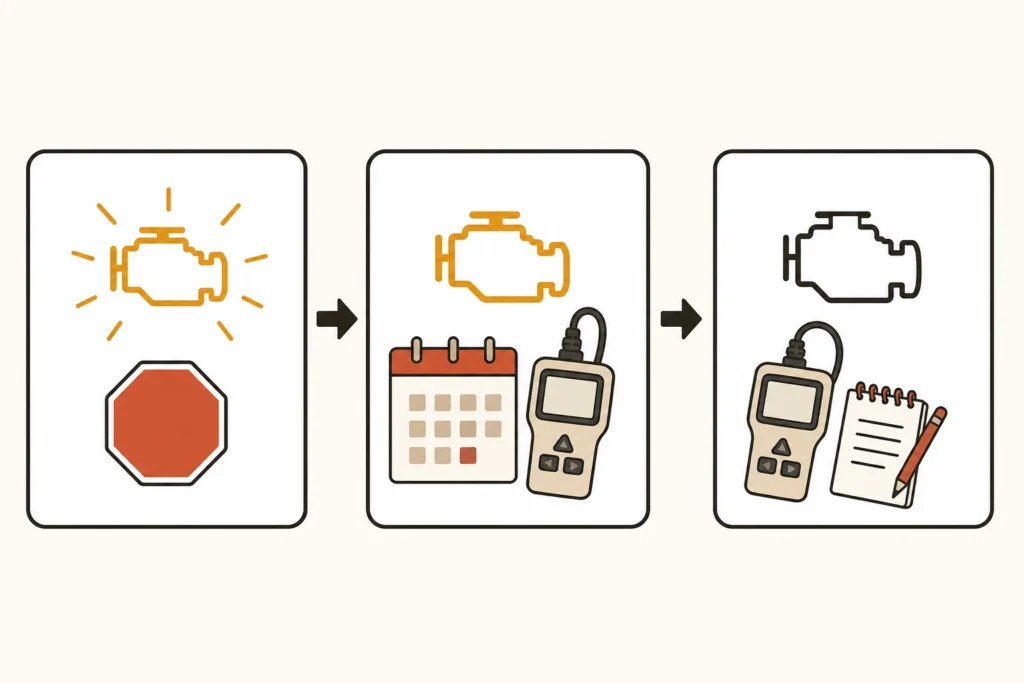
When the check engine light switches itself off, the car is not necessarily announcing that it fixed itself, and more often, the vehicle has simply stopped detecting the fault under the conditions needed to run that particular test, so the dashboard message changes even though a diagnostic record may remain. I once watched the light disappear after a restart and caught myself closing the note app I had opened to record it, which brought a little wave of relief at exactly the wrong moment to stop collecting clues.
The light went out, but the useful question changed
An intermittent fault often depends on temperature, engine load, speed, moisture, fuel level, or another condition that is not present during every drive. If the relevant monitor later sees acceptable operation, the lamp may go out, but that only describes what the computer sees now, not whether a loose connection, marginal sensor signal, misfire, or emissions fault will return under the same conditions.
First, separate a flashing light from a steady one
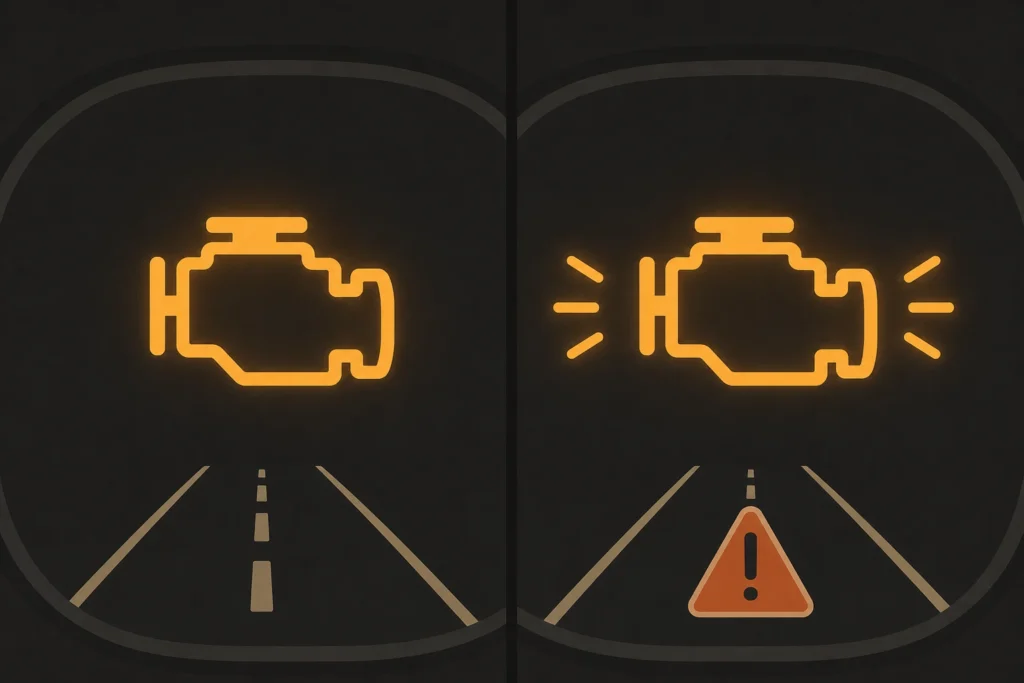
The distinction matters more than whatever part name appears in a search result. Lamp behavior plus drivability tells you how quickly to respond, while the code and operating conditions help narrow down why it happened.
What the scanner may know after the lamp goes dark
Code status is easy to overlook, yet it changes the meaning of a scan. I find the exact status far more useful than a vague report that the car “had a code.”
| Scanner status | What it means | How to use it |
|---|---|---|
| Pending | The system detected a problem, but that fault has not met its confirmation logic. | Treat it as an early clue, not proof of a failed part. |
| Stored or confirmed | The fault met the vehicle’s criteria and may have commanded the light. | The record can remain after the lamp goes out. |
| History or previously MIL on | The fault commanded the lamp before but may not be doing so now. | Save the scanner’s exact label because names and retention vary. |
| Permanent | An emissions-related record that a normal clear command cannot simply erase. | It remains until the relevant monitor reruns and accepts the result. |
A basic reader may not expose every category, freeze-frame data, or manufacturer-specific information, so a screen saying “no codes” is only as complete as the tool and menu used. Whatever it displays, treat a code as a diagnostic lead rather than a parts order.
Preserve the pattern before you clear it
What annoys me about clearing codes “to see if the light comes back” is that it throws away context before the test has even begun. Capture the evidence in this order instead.
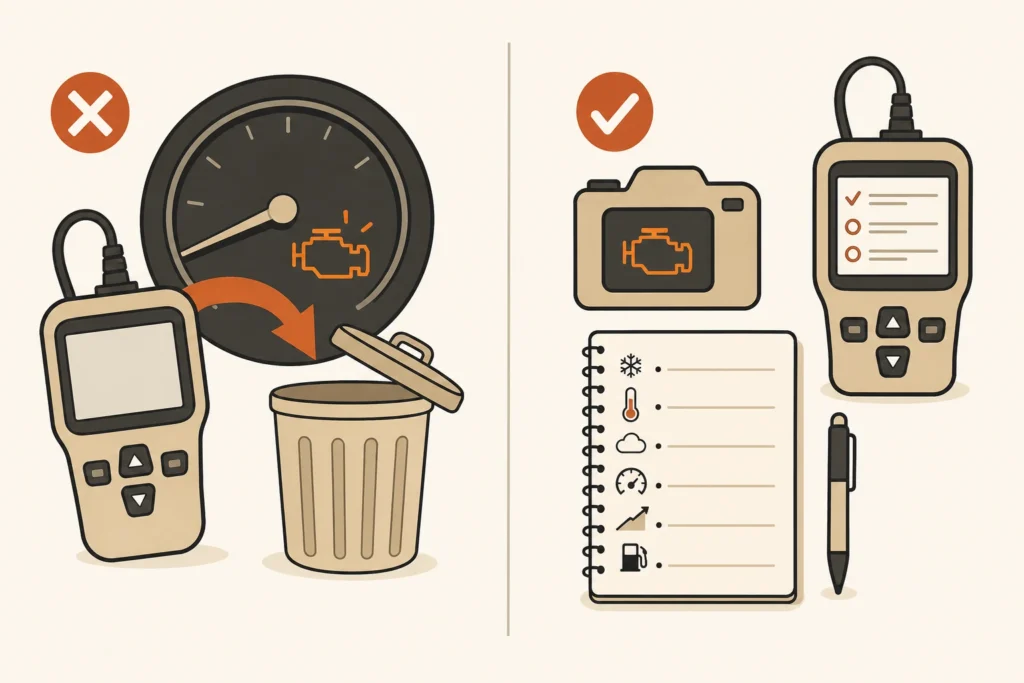
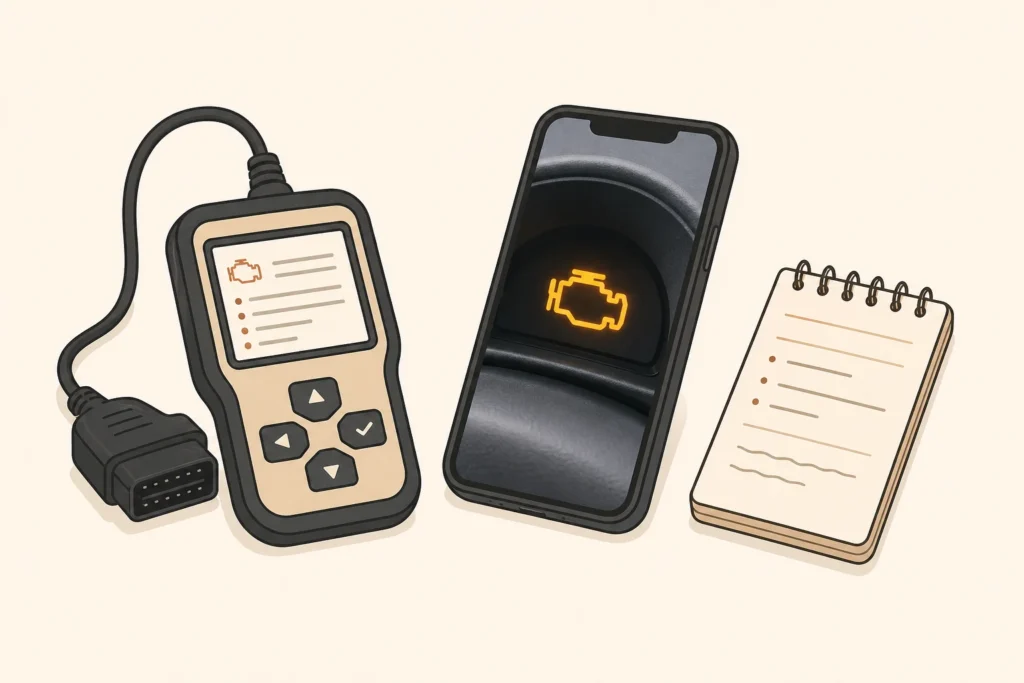
- Once parked, photograph the dashboard if the lamp is still visible and note whether it was flashing or steady. Do not attempt to photograph it while driving.
- Before clearing anything, scan for stored or confirmed, pending, and permanent codes where supported. Save the exact alphanumeric codes and the status shown beside each one.
- Write down when it happened: cold or warm engine, weather, speed, hill or acceleration, fuel level, recent refueling, recent work or battery disconnection, and any roughness, hesitation, odor, or fuel-economy change.
- Save readiness status and freeze-frame information if available. Freeze-frame data can preserve a snapshot of operating conditions from when a code was set.
Clearing fault memory or disconnecting the battery can reset readiness monitors to “not ready” and remove useful context, which complicates diagnosis and may affect an upcoming emissions inspection until the vehicle completes its checks again. There is no universal number of drives required because the monitor and vehicle strategy matter.
Use the next symptom to decide how soon to act
- Stop driving if the lamp flashes repeatedly or the engine shakes, runs roughly, loses substantial power, or produces a strong raw-fuel or exhaust odor.
- Arrange a prompt scan and diagnosis for a steady light, a recurring on-off pattern, a code that returns, or a noticeable change in starting, idling, acceleration, or fuel use.
- If the lamp is off and the car feels normal, scan and document it soon, then watch for the conditions that trigger it again. Do not deliberately stress the car to reproduce the fault.
A light going out can lower the immediate urgency, but it should raise the value of careful observation. “Off” describes the lamp, while “resolved” requires the relevant checks to keep passing and the symptom not to return.
Sources and references
- Ford Motor Company: 2024 Ford F-150 Owner's Manual, Malfunction Indicator Lamp
- California Air Resources Board: California OBD II Regulation, Permanent and Confirmed Fault-Code Requirements
- U.S. Environmental Protection Agency: Performing Onboard Diagnostic System Checks as Part of a Vehicle Inspection and Maintenance Program (June 2001)
- Texas Department of Public Safety: Emissions Testing, OBDII Testing (2020-09-04)
- SAE International: SAE J1979 E/E Diagnostic Test Modes (1997-09-01)
- California Air Resources Board: Clean Truck Check OBD Testing Background