

Maybe, but the odometer cannot decide this by itself. If the transmission shifts normally and its factory maintenance schedule supports fluid replacement, overdue service can still be reasonable when the exact fluid and level-setting procedure are used, while slipping, delayed engagement, leaks, a burnt odor, or milky fluid change the job from routine maintenance to diagnosis first.
I once caught myself nodding along when someone proposed a “flush,” then realized that one tidy word had told me almost nothing about the work. I don't like either popular answer, “flush it immediately” or “never touch it,” because both turn vague service-counter shorthand into an irreversible-feeling decision.
The Odometer Is Not the Decision
“No service records” means the history is unknown, not necessarily that the fluid has never been changed. The useful decision rests on three things: what the factory schedule calls for on the exact vehicle, how confident you are in the records, and whether the transmission’s present behavior is normal.
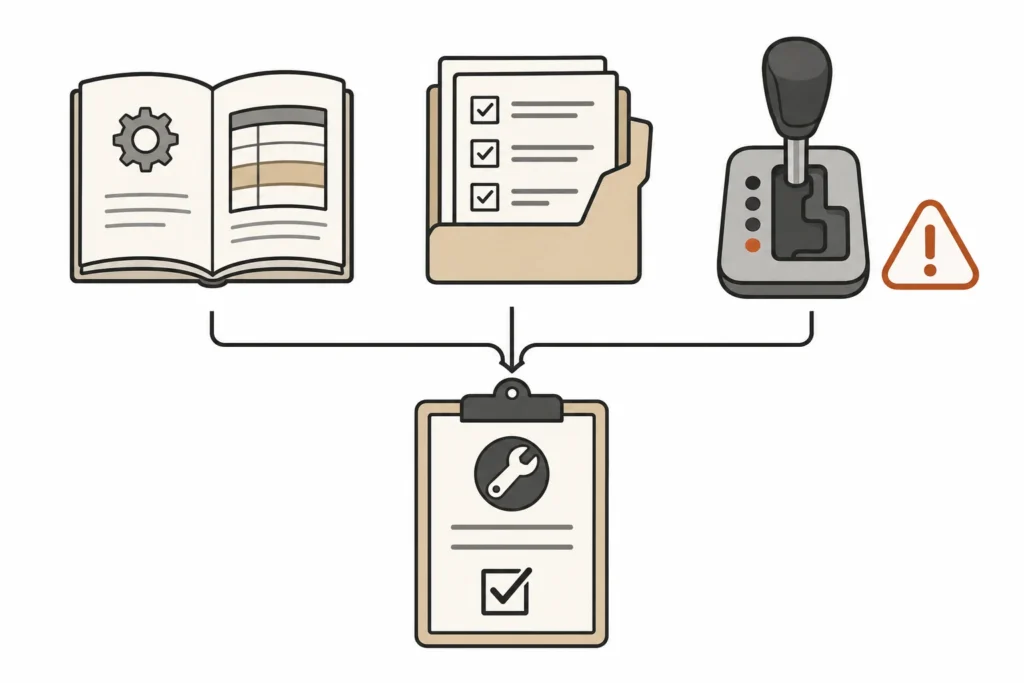
Manufacturers do not share one interval, as Honda can tie replacement to its Maintenance Minder while Toyota schedules may connect the work to a specific model and operating conditions. That makes a universal 100,000-mile rule precise-sounding but useless.
Fresh Fluid Is Maintenance, Not a Repair
Transmission fluid lubricates, carries heat, protects components, and supports hydraulic operation, but replacing it cannot restore worn clutch surfaces, repair damaged internal parts, or correct a failed solenoid or control fault. If the transmission already slips or shifts badly, selling fresh fluid as the cure is optimistic in the expensive sense of the word.
I don't love the blanket claim that old fluid is “holding the transmission together,” because a failure noticed after service may reflect wear that was already present, though that does not make every procedure wise. A high-mileage power flush raises a different concern from an ordinary drain-and-fill because it may dislodge accumulated material that can contribute to clogs.
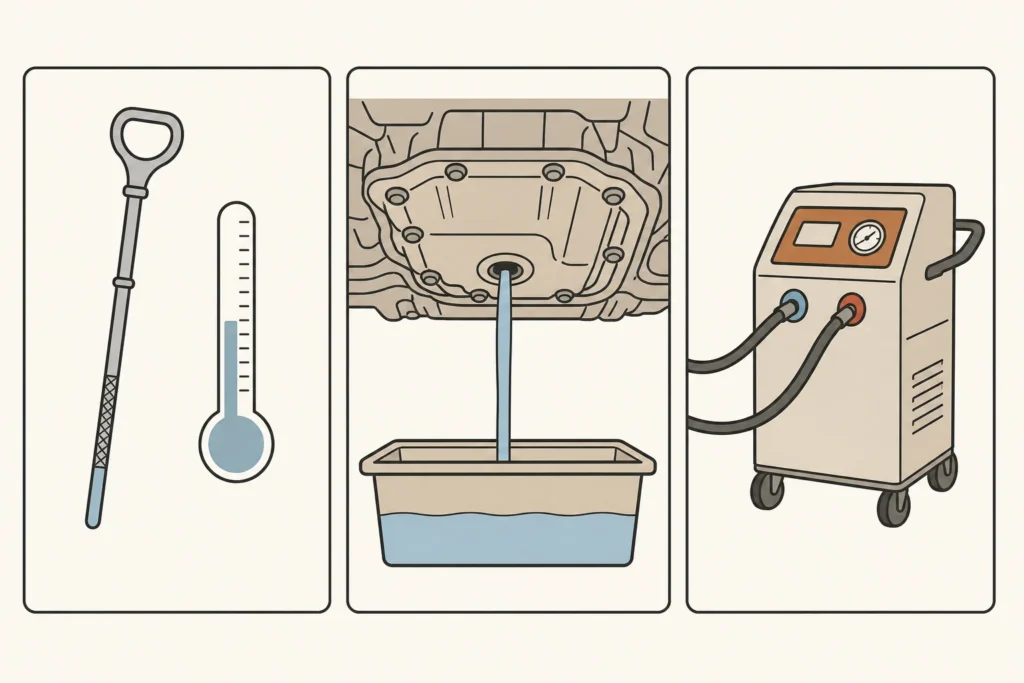
A Level Check, Drain-and-Fill, and Flush Are Different Jobs
The most annoying authorization mistake is agreeing to a “transmission service” without learning what the phrase means at that shop. These jobs answer different questions, and none is the automatic winner for every vehicle.
| Job | What it does | What must be defined |
|---|---|---|
| Fluid-level inspection | Verifies the amount under specified conditions and may reveal useful condition clues. | Required temperature, level ground, engine state, and measurement method. Many vehicles do not offer a simple dipstick check. |
| Drain-and-fill or pan service | Drains the fluid available through the plug or pan, so it generally replaces only that portion. | Whether pan removal, gasket, or filter work is included, plus the refill and level-setting procedure. |
| Machine exchange or power flush | Uses circulation or equipment to replace more of the fluid, but methods and terminology vary. | The actual method, not merely the word “flush.” High-mileage power flushing can dislodge sludge or particles that may cause clogs. |
Ask for the procedure in writing, including the exact fluid specification. Transmission fluids are not generic red liquids with interchangeable labels, and because both the wrong specification and an incorrect level can affect operation, the proposal should explain how the final level will be set when that process depends on fluid temperature.
Symptoms Put Diagnosis Ahead of Routine Service
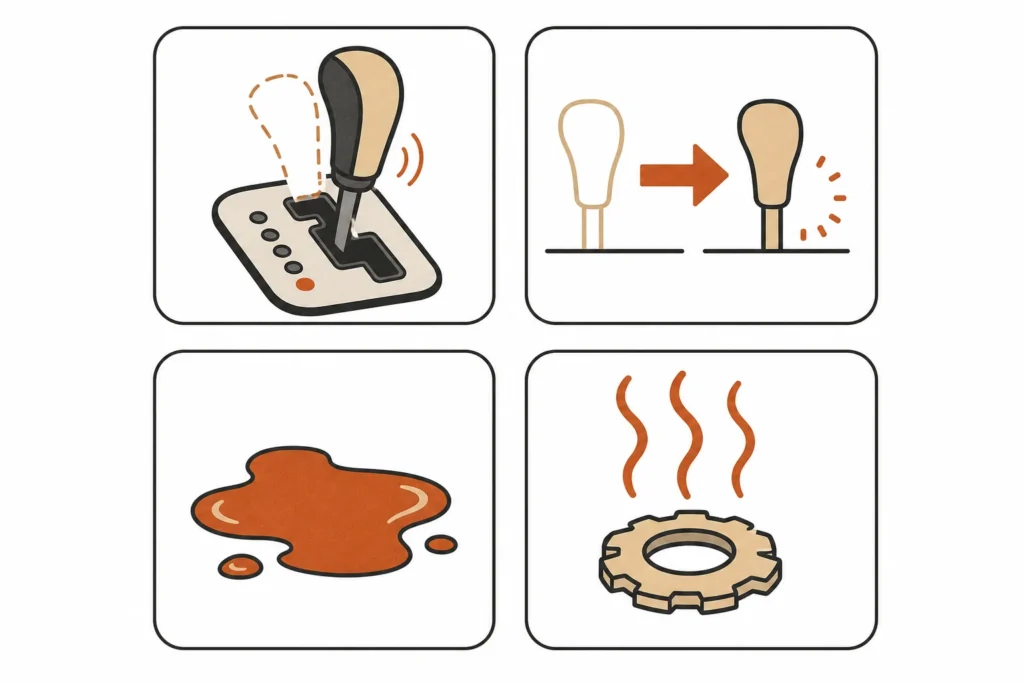
Those clues do not identify one failed part, but they make fluid replacement alone an incomplete answer. Before service is presented as a cure, the work should include a road-test assessment, leak inspection, correct fluid-level verification, and any relevant scan or factory diagnostic process, with the original symptom written down clearly enough to compare afterward.
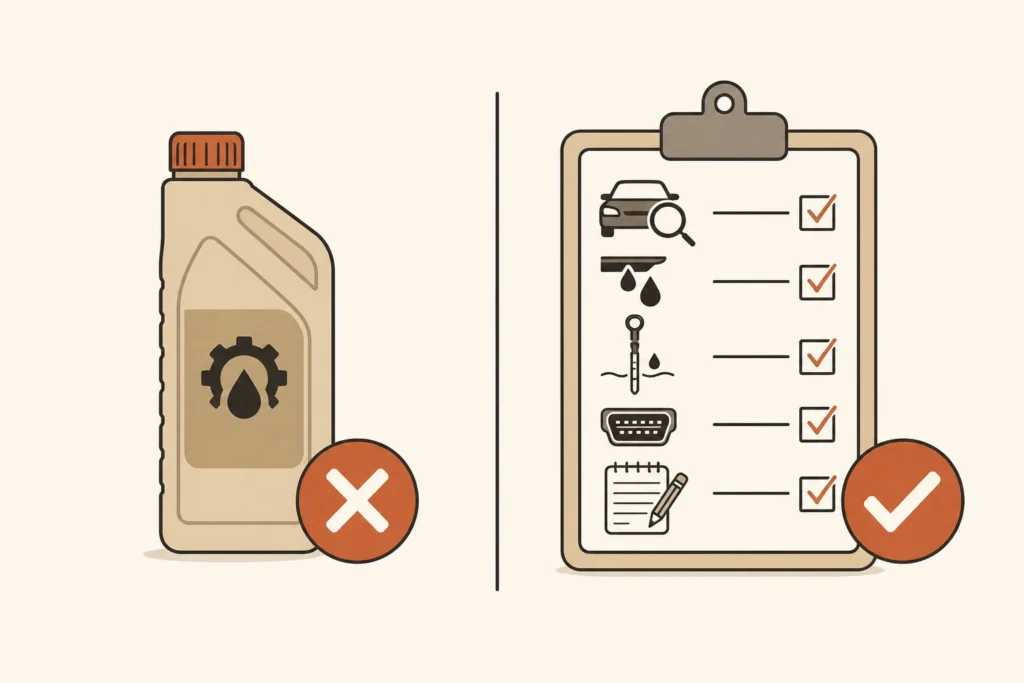
Fluid color by itself is not a verdict, either. Odor, contamination, behavior, level, and how quickly debris returns matter more, and repeated metal contamination over a short period points toward a larger internal problem rather than an ordinary overdue service.
Use This Order Before You Approve the Work
- Identify the exact year, make, model, engine, drivetrain, and transmission, then match that combination to its factory maintenance schedule. Similar model names can use different transmissions and fluid requirements.
- Gather invoices and maintenance records, separating confirmed neglect from merely missing paperwork. Unknown history deserves care, but it is not proof that no service occurred.
- Describe the current behavior before discussing a procedure. Record whether an issue appears cold or warm, during engagement or a particular shift, and whether a leak, odor, warning light, or delay accompanies it.
- Require an itemized proposal naming the factory recommendation, exact fluid specification, service method, fluid quantity, included filter or pan work, and final level-setting process.
- Approve maintenance when the proposal matches the vehicle’s requirements and no symptom needs diagnosis first. If abnormal behavior is already present, require evidence about the fault before buying fluid service as the solution.
The goal is not to make an old transmission feel new, and it is not to preserve old fluid out of fear. It is to match the right maintenance to a normally operating transmission, while refusing to turn an existing fault or an undefined “flush” into an expensive guess.
Sources and references
- Toyota Motor Sales, U.S.A., Inc.: Toyota 2025 Crown Warranty and Maintenance Guide (2025)
- American Honda Motor Co., Inc.: 2023 Honda Odyssey Maintenance Minder System (2023)
- Ford Motor Company: Ford Owner's Manual: Automatic Transmission Fluid Check
- AAA Automotive: Automatic Transmission Fluid Service
- Consumer Reports: How to Maintain Your Car's Transmission and Avoid Costly Repairs (2026-04-12)
- Jiffy Lube International, Inc.: Transmission Fluid Change vs Flush