
Most overheating starts the same way: the car seems normal, then the temperature gauge climbs, the warning light appears, or the air conditioner suddenly stops cooling well. What matters next is not guessing the exact failed part from the driver’s seat. It is recognizing that overheating is a system problem that can escalate fast. A minor coolant leak can turn into a warped cylinder head or a blown head gasket if the engine is kept running hot.
This article focuses on engine overheating in gas, diesel, and hybrid vehicles with conventional engine cooling systems. The goal is practical: understand the warning signs, narrow down the likely cause, know what is reasonable to check yourself, and avoid the mistakes that turn a repairable problem into an expensive one.
TL;DR
- A hot warning light, gauge in the red, steam, a sweet coolant smell, or a heater that suddenly blows cold all deserve immediate attention.
- The most common causes are low coolant, leaks, a failed cooling fan, thermostat trouble, radiator restriction, water-pump problems, air trapped in the system, or an internal engine leak.
- The pattern matters: overheating at idle points more toward airflow problems; overheating at highway speed points more toward coolant flow, low level, or restriction.
- Turn off the A/C, get to a safe place, use hazard lights, and never remove a radiator or pressurized reservoir cap while the system is hot.
- Adding coolant is not a repair if the level keeps dropping. Repeated top-offs usually mean a leak or another fault that still needs diagnosis.
Start with the warning signs, not the cause
Many drivers wait too long because the car still moves, the warning disappears after a stop, or the issue only shows up in traffic. That is risky thinking. Some vehicles will reduce engine power, cycle the air conditioning, or flash a message before the gauge ever reaches the red zone. Others do not have a traditional gauge at all, only a temperature light or a dashboard message. In all of those cases, the car is telling you the cooling system is running out of margin.
- Temperature gauge climbing above normal or moving into the red
- Engine coolant temperature warning light or an “engine too hot” message
- Steam or spray from under the hood
- Sweet smell from leaking coolant, or visible puddles under the front of the car
- Cabin heater suddenly blowing cool air when the engine is hot, which can point to low coolant or poor circulation
- Loss of power, rough running, or the A/C cutting out during hot operation
- Repeated need to add coolant, even if the car is not obviously overheating on every trip
Why engines overheat in the first place
An engine creates a huge amount of heat. The cooling system’s job is to move that heat out of the engine and release it through the radiator. Coolant carries heat through passages in the engine block and cylinder head. The thermostat regulates when coolant circulates through the radiator. The water pump keeps coolant moving. Fans pull or push air through the radiator when road speed alone is not enough. The pressure cap raises the boiling point of the coolant by helping the system stay pressurized.
Overheating happens when one of three things fails: the system loses coolant, the coolant stops circulating properly, or the radiator cannot shed enough heat. Sometimes heavy towing, mountain driving, very high ambient temperatures, or stop-and-go traffic only expose a system that was already weak.
Use the “when it overheats” rule before replacing parts
A useful driveway method is the “when it overheats” rule. Instead of jumping straight to “bad thermostat” or “bad radiator,” look at the exact condition that makes the temperature rise. The pattern often points you toward airflow, circulation, coolant loss, or a recent repair error. It is not a final diagnosis, but it is far more useful than replacing parts at random.
| When it happens | Likely suspects | Best first check | How urgent it is |
|---|---|---|---|
| Idle, traffic, drive-through lines | Cooling fan, fan relay/fuse, airflow blockage | Look for fan operation when hot and check for debris in front of the radiator | High |
| Highway speed | Low coolant, thermostat, water pump, internal radiator restriction | Check coolant level when cold and look for leaks or poor circulation symptoms | High |
| Long grades, towing, very hot weather | Marginal radiator, weak fan clutch, low coolant, system with little reserve capacity | Note whether it only happens under load and inspect the cooling system thoroughly | Moderate to high |
| Very quickly after a cold start | Severe coolant loss, thermostat stuck closed, broken belt or pump problem | Do not keep driving; inspect for obvious failure once cool | Very high |
| Soon after cooling-system work | Air trapped in the system, loose clamp, incomplete refill or bleeding procedure | Recheck level cold and inspect for seepage around the repaired area | High |
| With white exhaust, coolant loss, or bubbles with no obvious external leak | Internal engine leak such as a head-gasket failure | Professional pressure and combustion-gas testing | Very high |
The table does not replace a proper diagnosis, but it helps separate a fan-related overheat in city traffic from a circulation problem on the highway. That distinction alone can save time, money, and a lot of unnecessary parts swapping.
The most common causes, from simple to serious
Low coolant and external leaks
This is the most common starting point. If the system is low, there is simply not enough coolant to absorb and carry heat away. The tricky part is that the leak may be small. A hose clamp can seep only when hot. A radiator end tank can crack slowly. A water pump can leak only under certain conditions. Look for dried coolant residue, damp hose connections, puddles, or a sweet smell after parking. A heater that starts blowing cool air while the engine gets hot is another classic clue because the heater core may no longer be getting steady hot coolant.
A cooling fan that is not doing its job
If the car runs at normal temperature on the open road but gets hot in slow traffic, while idling, or with the A/C on, the fan is high on the suspect list. Modern cars rely heavily on electric fans at low speed. If the fan motor, relay, fuse, wiring, temperature sensor, or control logic fails, the radiator loses airflow when it needs it most. On some vehicles, the A/C performance also suffers because the same airflow cools the condenser.
Thermostat trouble or restricted coolant flow
A thermostat that sticks closed can cause a fast temperature climb because hot coolant stays trapped in the engine instead of circulating through the radiator. A partially restricted system can create a milder version of the same problem, especially at highway speed or under load. Drivers often blame the thermostat first because it is a known failure point, but the symptom is broader than the part. Low coolant, air pockets, and pump problems can all imitate thermostat failure.
Radiator blockage inside or outside
A radiator can lose efficiency two ways. Outside, fins can be blocked by dirt, leaves, bugs, or damage that limits airflow. Inside, old coolant, corrosion, or contamination can reduce flow through the small passages. This is one reason a neglected cooling system may work fine for months, then begin overheating in summer traffic or on uphill grades. The engine is not suddenly producing more heat than normal; the radiator just cannot reject it as effectively as before.
Water pump or drive-belt problems
The water pump keeps coolant moving. If the pump fails, circulation drops and the engine temperature can rise quickly. Belt-driven pumps can also be affected by a slipping, broken, or misrouted belt. Possible clues include coolant leaking near the pump, grinding or wobbling from the pulley area, or overheating accompanied by poor heater performance. On some engines, the pump is driven by the timing system, which moves the repair well beyond normal DIY territory.
A bad pressure cap, weak hose, or air trapped after service
Cooling systems do not rely on coolant alone. They also rely on pressure. If the cap cannot hold pressure, the coolant can boil sooner than it should. Air trapped in the system after a repair can also create hot spots and erratic gauge behavior. This is a common failure pattern after hose, radiator, thermostat, or water-pump work. A driver may think the new part was defective when the real problem is an incomplete fill or bleeding procedure.
Internal engine trouble, including head-gasket failure
This is the cause drivers fear, and it is real, but it is not the first answer to every overheating complaint. A head-gasket failure or other internal leak can force combustion gases into the cooling system, push coolant out, or let coolant enter the cylinders. Signs can include repeated coolant loss with no visible leak, persistent overheating after other repairs, white exhaust after warmup, bubbles in the reservoir, or contaminated oil. This kind of problem needs professional testing, not guesswork.
What to do the moment your car starts overheating
Never remove a radiator cap or a pressurized coolant reservoir cap while the engine is hot. Hot coolant can spray out under pressure and cause serious burns.
- Turn off the air conditioning and reduce engine load. If you need a short-term way to buy a little time getting to a safe place, turning the cabin heat on high can sometimes pull some heat out of the engine through the heater core. It is uncomfortable, and it is not a fix.
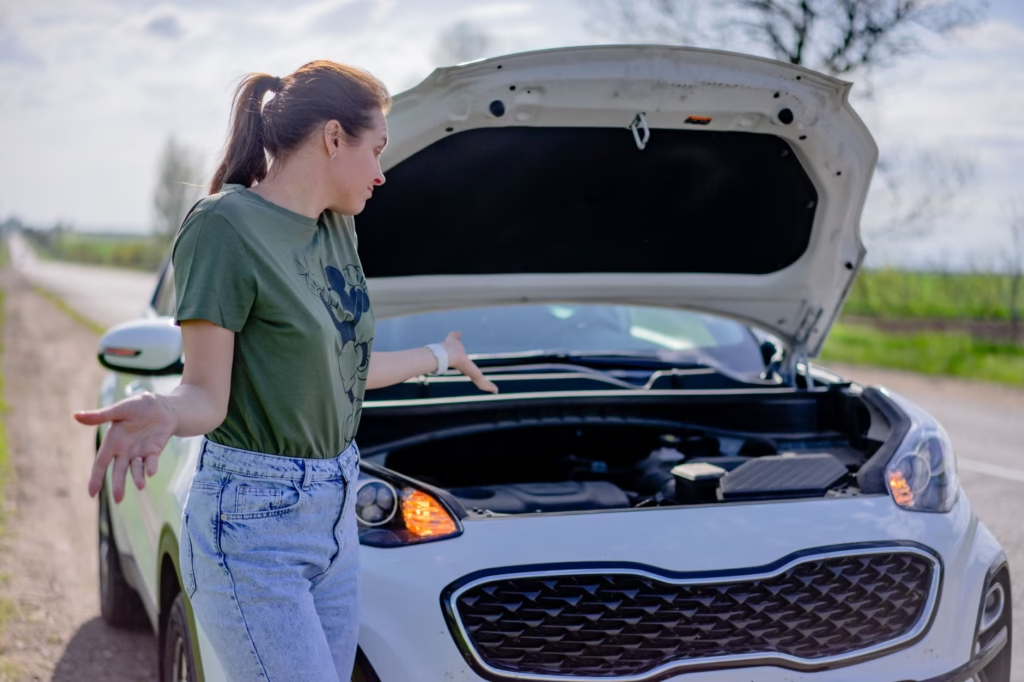
- Pull over as soon as it is safe. Use hazard lights and choose a shoulder, parking lot, or other protected area. If you are stopped roadside, stay mindful of traffic around you.
- If you see steam, shut the engine off and do not open the hood until the steam subsides. If there is no steam, follow your owner’s manual. Some vehicles allow a short idle period to see whether the temperature drops before shutdown.
- Wait for the system to cool. Do not rush this step. A cooling system that looks calm can still be under pressure.
- Once cool, check the coolant reservoir level if your vehicle’s manual permits it. Look for obvious leaks, a loose hose, coolant sprayed around the engine bay, or a broken belt. Do not put your hands near a fan unless you are sure it cannot start unexpectedly.
- If the reservoir is empty, the car overheated severely, steam was present, the warning returns, or there is no clear simple explanation, arrange a tow. Driving an overheated engine farther is often the most expensive choice.
If you must add fluid after the system has cooled, use the coolant type specified in the owner’s manual. Do not assume any coolant with the same color is correct. Water may be usable only as a short emergency measure to reach service, but it is not a substitute for the proper coolant mix and should be corrected as soon as possible.
What is reasonable to check yourself, and what belongs in a shop
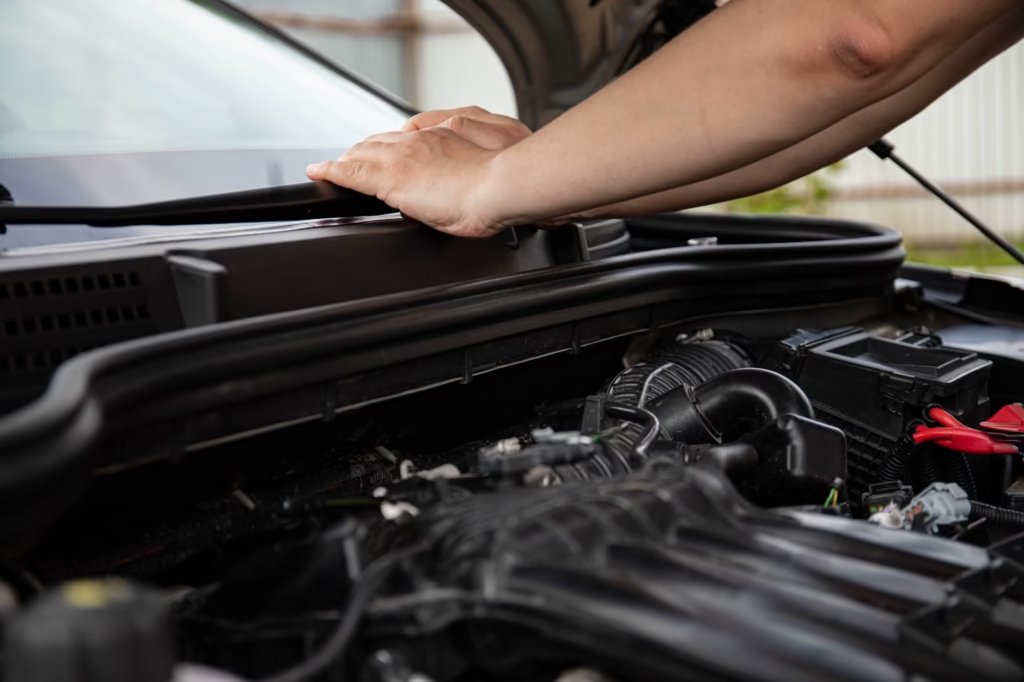
A careful owner can do some useful screening. Checking the coolant reservoir level when the engine is cold, looking for obvious leaks, inspecting the front of the radiator for debris, and noting whether the problem happens at idle or highway speed are all reasonable first steps. If the car recently had cooling-system work, rechecking for seepage or a slowly falling coolant level is also sensible.
Beyond that point, diagnosis gets more technical. A shop can pressure-test the system, verify fan command and electrical operation, confirm coolant circulation, test for combustion gases in the cooling system, and compare live temperature data from sensors. That is how you separate a leak, fan failure, thermostat issue, pump problem, or internal engine fault without replacing parts blindly.
A realistic example of how the pattern helps
Consider two hypothetical cars. Car A runs perfectly at 65 mph but gets hot in a drive-through with the A/C on. That pattern leans toward a fan or airflow problem. Car B overheats on the highway, and the cabin heat fades at the same time. That points more toward low coolant or poor circulation. Neither example proves the final diagnosis, but each one helps narrow the field before money is spent.
Mistakes that make an overheating problem worse
- Continuing to drive because the warning went away after a stop. Intermittent overheating is still overheating.
- Opening the cap too soon or trying to cool the engine aggressively with cold water from the outside.
- Assuming a top-off solved the problem. If coolant was low, the next question is why.
- Mixing coolant types based only on color or using universal additives without checking the owner’s manual.
- Using stop-leak products as the first response. They may hide the real problem and can create new cooling-system issues.
How to reduce the odds of another overheating episode
- Check coolant level occasionally when the engine is fully cold, especially before summer trips, towing, or mountain driving.
- Fix minor leaks early. A small seep is cheaper than an overheated engine.
- Use the coolant specified for the vehicle and follow the maintenance schedule in the owner’s manual.
- Keep the radiator and condenser area free of packed leaves, plastic debris, and heavy dirt buildup.
- Pay close attention after any cooling-system repair. Air pockets and loose connections often show up only after a few heat cycles.
- If the car repeatedly runs hot under load, do not treat that as normal just because it cools down later.
An overheating car is not giving you a vague warning. It is telling you that the engine is losing its ability to control heat. The smart response is simple: stop the damage first, notice the pattern, check the basics safely, and escalate quickly when the cause is not obvious. Catching a cooling-system problem early often turns a major repair story into a manageable service visit.
Frequently asked questions
Can I drive a short distance if the car is overheating but there is no steam?
Treat it as risky. Some vehicles can cool down briefly once load is reduced, but a hot warning light or red-zone gauge means the engine may already be beyond its safe margin. Driving farther can turn a small repair into engine damage. Get to a safe stopping place and follow the owner’s manual for your vehicle.
Why does my car overheat only when idling?
That pattern often points to an airflow problem rather than a coolant-flow problem. Common suspects include a failed electric fan, fan motor, relay, fuse, fan clutch on older setups, or debris blocking the radiator and condenser. If the car cools once it gets moving, road airflow may be compensating for a fan issue.
Is it okay to add water instead of coolant?
Only as a temporary emergency measure after the system has cooled and only if the vehicle manual allows it. Water alone does not provide the same boil protection, corrosion protection, or freeze protection as the correct coolant mixture. It should be replaced with the proper fluid as soon as possible.
Can low oil make a car overheat?
Low oil can contribute to excess engine heat and should never be ignored, but it is not the most common reason for coolant-temperature overheating. Most true overheating events still come back to coolant level, circulation, airflow, or an internal cooling-system problem.
If I top off the coolant and the car seems fine, am I done?
Usually not. Cooling systems are closed systems. If the level dropped enough to matter, there is a reason. It may be an external leak, air entering the system, a weak cap, or an internal problem. A stable level afterward is encouraging, but repeated checks are still important.
References
- Ford Owner’s Manual: Managing the Coolant Temperature
- Ford Owner’s Manual: Engine Coolant
- Honda Owner’s Manual: How to Handle Overheating
- Toyota Owners Manual: If Your Vehicle Overheats
- Toyota Car Tips: How Often to Change Engine Coolant
- Chevy Support: Warning Lights and Signals
- Chevrolet Parts: GM Genuine Parts Auxiliary Water Pump
- Chevrolet Parts: ACDelco GM Original Equipment Radiator Cap
- Chevrolet Parts: GM Genuine Parts Engine Coolant Thermostat
- NHTSA: Move Over, It’s the Law