

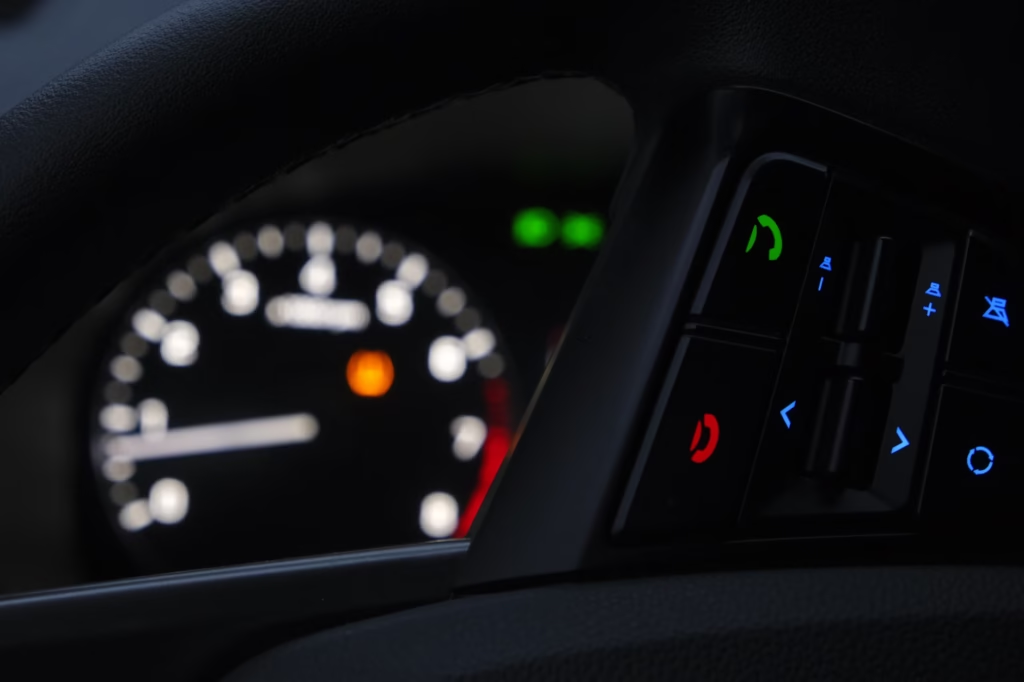
A dashboard warning light is not just an illuminated icon. It is the car’s fastest way of telling the driver that a system is overheating, losing pressure, running out of electrical support, or dropping a safety feature that may matter in the next few seconds. Exact symbols vary by make and model, but the basic hierarchy is fairly consistent: red usually means immediate attention, yellow or amber means caution and prompt follow-up, and the owner’s manual is the final authority for the vehicle in front of you. (toyota.com)
- Red brake, oil-pressure, coolant-temperature, and charging warnings are usually stop-the-car issues, not finish-the-trip issues. (toyota.com)
- A flashing check-engine light is more urgent than a steady one because it can point to a misfire that may damage emissions hardware. (nissanusa.com)
- A TPMS light that flashes after startup often means the monitoring system has a fault; a steady TPMS light usually means one or more tires are underinflated. (nhtsa.gov)
- ABS, airbag, and stability-control warnings may not stop the car immediately, but they can leave key safety systems unavailable when you need them. (nissanusa.com)
- If a warning light appears with smoke, a burning smell, rough running, a soft brake pedal, heavy steering, or a climbing temperature gauge, the symptoms matter as much as the icon. (nissanusa.com)
Use the essential-systems triage before you decide to keep driving
The fastest way to react well is to ignore the brand-specific wording and ask a simpler question: Does this warning involve an essential system the car needs right now to stay safe or avoid serious damage? That means brakes, steering assist, engine lubrication, cooling, charging, tire condition, and high-voltage propulsion on hybrids or EVs. If the answer is yes, the safe default is to get off the road and reassess before continuing. (toyota.com)
- First question: Is the light red, flashing, or paired with another warning? That combination usually moves the issue up the urgency scale. (toyota.com)
- Second question: Has the car also changed behavior? Heavy steering, weak braking, vibration, reduced power, or a rising temperature reading matter immediately. (nissanusa.com)
- Third question: Is this a system that can fail gradually but still leave the car movable, such as ABS or SRS? If so, the car may still drive, but it is driving with part of its safety margin missing. (nissanusa.com)
If the oil-pressure light, red brake warning, or high-temperature light comes on and stays on while driving, assume that continuing to drive could quickly turn a repairable problem into engine damage or unsafe braking. Pull over safely and shut the vehicle down. (nissanusa.com)
15 dashboard warning lights that deserve immediate respect
“Never ignore” does not mean every light requires an instant tow. It means every light below deserves a deliberate response, not a shrug. Some are stop-now warnings. Others mean drive only as far as needed to reach a safe place or a repair shop. (toyota.com)
| Warning light | What it usually means | Can you keep driving? | First safe move |
|---|---|---|---|
| Brake system warning light (red/BRAKE) | Low brake fluid, parking brake applied, or a brake system fault. | Not if it stays on with the parking brake released. If braking feels wrong or ABS joins it, stop. (toyota.com) | Pull over safely, check for obvious brake issues only if safe, and tow if pedal feel is abnormal. (toyota.com) |
| Low engine oil pressure | Oil pressure is too low; this is not the same as an oil-change reminder or low-oil-level message. (nissanusa.com) | No. Shut the engine off as soon as it is safe. (nissanusa.com) | Stop, shut down, and check oil only after the vehicle is safely parked. (nissanusa.com) |
| High coolant temperature / high temperature light | The engine is overheating or operating at an unsafe temperature. (toyota.com) | Only long enough to get out of traffic safely. (toyota.com) | Pull over, shut down if directed by the manual or display, and let the system cool before further checks. (toyota.com) |
| Charging system / battery light | The charging system is not working properly; it is not always just a weak battery. (nissanusa.com) | Usually only far enough to reach a safe stopping point, because the car may lose electrical support as the battery drains. (nissanusa.com) | Stop safely and arrange diagnosis, especially if other electronics begin acting strangely. (nissanusa.com) |
| Check engine light / malfunction indicator lamp | An engine, emissions, throttle-control, or on some vehicles a hybrid-system fault. Flashing is more urgent than steady. (toyota.com) | Steady: maybe briefly, after basic checks. Flashing: reduce load and stop as soon as practical. (nissanusa.com) | Check for a loose fuel cap if the light is steady and the car feels normal; if flashing or running rough, back off and get service immediately. (nissanusa.com) |
| Tire pressure warning / TPMS | One or more tires are significantly underinflated, or the TPMS itself has a fault if the light flashes and then stays on. (nhtsa.gov) | Only after inspecting the tires and only if none appears dangerously low or damaged. (nhtsa.gov) | Pull over, inspect all four tires, and correct pressure or fit the spare if needed. (nhtsa.gov) |
| ABS warning light | The anti-lock braking system is not functioning properly. Base braking may still work, but without anti-lock assistance. (nissanusa.com) | Sometimes, cautiously, if braking feels normal and the red brake warning is off. (nissanusa.com) | Drive conservatively and get it checked promptly; stop if the brake warning light is also on. (toyota.com) |
| Airbag / SRS warning | A fault in the airbag or seatbelt pretensioner system. (techinfo.subaru.com) | Usually yes, but not casually. The car may be missing crash-protection features. (techinfo.subaru.com) | Schedule immediate repair and avoid postponing it just because the car still starts and drives. (techinfo.subaru.com) |
| Electric power steering warning | Power steering assist is reduced or lost, or the EPS system has a fault. Some vehicles distinguish yellow reduced assist from red lost assist. (toyota.com) | Only if steering effort remains manageable and traffic conditions allow. (nissanusa.com) | Slow down, avoid tight maneuvering, and stop if steering becomes unexpectedly heavy. (nissanusa.com) |
| Stability control / slip / VDC warning that stays on | If blinking during traction intervention it can be normal; if it stays on unexpectedly, the stability/traction system may be off or faulty. (nissanusa.com) | Usually yes, but with a smaller safety margin on wet, icy, or loose surfaces. (nissanusa.com) | Drive more conservatively and have the system checked if you did not intentionally disable it. (nissanusa.com) |
| Electronic parking brake system warning | A fault in the electronic parking brake system, not merely the parking brake being applied. (nissanusa.com) | Not something to ignore, especially on hills or if other brake warnings are present. (nissanusa.com) | Confirm the parking brake has actually released and arrange prompt service. (nissanusa.com) |
| Transmission temperature / AT OIL TEMP | Transmission fluid is too hot, or the transmission control system has a fault if the light flashes after startup. (techinfo.subaru.com) | Not under load. Heat is what damages transmissions. (techinfo.subaru.com) | Pull over, let the vehicle idle or cool as directed, and avoid hills, towing, or stop-and-go strain. (techinfo.subaru.com) |
| AWD / drivetrain warning | Low tire pressure, mismatched tires, AWD malfunction, or drivetrain heat on some vehicles. (techinfo.subaru.com) | Only long enough to inspect tires or reach a safe spot. Continued driving can damage the powertrain on some systems. (techinfo.subaru.com) | Slow down, inspect tire condition and size match, and stop if the warning specifically mentions high temperature. (nissanusa.com) |
| Master warning light | A general alert telling you that another warning or message needs attention in the information display. (nissanusa.com) | Depends entirely on the message, but it should never be ignored. (nissanusa.com) | Read the warning screen before cycling the ignition, then respond to the underlying fault. (nissanusa.com) |
| Hybrid / EV system warning | A fault in the hybrid system or, on EVs, the traction motor, inverter, battery, charging, cooling, or emergency shutoff system. (toyota.com) | Sometimes briefly, but not as a wait-and-see problem, especially if power is reduced. (nissanusa.com) | Reduce load, pull over if performance changes, and arrange immediate inspection. (nissanusa.com) |
The table makes an important distinction: not every serious warning threatens the car in the same way. Oil pressure, charging, brake-system, and overheating warnings can escalate quickly into breakdown or damage. ABS, airbag, and stability-control warnings are different. They may still let the car move, but they reduce the safety systems that help in a panic stop, skid, or crash. (nissanusa.com)
Why the same icon can mean different levels of urgency
The icon matters, but the pattern matters too. A steady light, a flashing light, and a light that appears together with noise, smell, or drivability changes are not the same event. That is why owner manuals often separate “warning light on,” “warning light flashing,” and “warning plus message or buzzer” into different instructions. (nissanusa.com)
A useful example is the tire-pressure warning. On a cold morning, a marginally low tire can dip below the threshold overnight and then rise again as the tire warms up. NHTSA says that can happen, and it still means the tire pressure should be checked. But a TPMS light that appears with a thump, steering pull, or visibly sagging tire is a very different situation, because the tire may be rapidly losing air. (nhtsa.gov)
The same goes for the check-engine light. A steady light can be caused by a loose fuel cap or another fault that allows the engine to keep running normally for the moment. A flashing light is treated much more seriously because manufacturers commonly tie it to a misfire condition that can damage emissions components. (nissanusa.com)
And some combinations deserve special caution. Toyota and Subaru owner guidance both warn that when ABS and the brake-system warning stay on together, braking stability can be seriously affected and the vehicle should be stopped in a safe place right away. (toyota.com)
What to do when one of these lights comes on
- Ease off the throttle, turn off cruise control, and notice whether the car still brakes, steers, shifts, and cools normally. Secondary symptoms often tell you more than the icon alone. (nissanusa.com)
- Move to a safe, flat place out of traffic. If the warning involves oil pressure, overheating, or braking, do not keep driving just to reach home or the next exit you prefer. (nissanusa.com)
- Read the center-display message before cycling the ignition. Master warning lights are meant to direct you to a more specific warning screen. (nissanusa.com)
- Check only what is safe to check: an obvious flat tire, a loose fuel cap after a steady check-engine light, or a visible leak after the vehicle has cooled. (nissanusa.com)
- If the light is red, flashing, paired with another critical light, or accompanied by smoke, a burning smell, severe vibration, a soft brake pedal, or heavy steering, shut the vehicle down and call for a tow. (nissanusa.com)
- If the light is amber and the car still feels normal, drive only as far as necessary to get it diagnosed, and avoid towing, steep grades, or hard acceleration until you know what failed. (techinfo.subaru.com)
The mistakes that most often make a warning light more expensive
- Treating the battery icon like a simple dead-battery light. On many vehicles, that light points to a charging-system problem, which can involve the alternator, belt, or related circuitry. (nissanusa.com)
- Assuming the oil-can icon just means the engine is a little low on oil. Pressure and level are not the same warning, and low pressure is the dangerous one. (nissanusa.com)
- Dismissing a flashing check-engine light because the car still moves. Manufacturers often treat flashing MIL behavior as a possible misfire severe enough to damage emissions hardware. (nissanusa.com)
- Ignoring TPMS because the tire looks normal. NHTSA notes that underinflation is visually hard to detect, and driving on a significantly underinflated tire can overheat it and lead to failure. (nhtsa.gov)
- Forcing an AWD vehicle onward after an AWD warning starts flashing. Some manuals specifically warn that continued driving in that condition can damage the powertrain. (techinfo.subaru.com)
- Assuming a slip or stability light always means a broken system. Blinking during traction-control intervention can be normal; a light that stays on unexpectedly is the one that deserves diagnosis. (nissanusa.com)
A little prevention makes these warnings easier to interpret
You cannot prevent every dashboard warning, but you can make the serious ones easier to recognize. NHTSA recommends checking tire pressure monthly when the tires are cold, because TPMS is not a substitute for regular checks. Manufacturers also note that many warning lights should illuminate briefly at startup as a system check. A light that never appears during startup can be as informative as one that stays on while driving. (nhtsa.gov)
- Know where the owner’s manual is, or keep a digital version saved on your phone. Exact symbols and color behavior vary. (toyota.com)
- If the same light comes on, goes off, and returns repeatedly, treat that as a real warning, not a glitch. Toyota specifically notes that a recurring warning event still deserves inspection even if the light does not stay on. (toyota.com)
- After recent refueling, a steady check-engine light is one of the few cases where checking the gas cap first is reasonable. (nissanusa.com)
Frequently asked questions
Can I keep driving with the check-engine light on?
Sometimes, but it depends on how the light behaves and how the car feels. A steady light on an otherwise normal-running car can sometimes justify a short trip after checking the fuel cap. A flashing light is more urgent and is commonly treated as a possible misfire condition, so heavy acceleration, towing, and continued driving are poor bets. (nissanusa.com)
Why did my tire-pressure light come on and then turn off later?
Cold ambient temperatures can drop a marginal tire below the warning threshold overnight and let it recover as the tire warms up. NHTSA says that can happen, but it still means the pressure should be checked and corrected rather than ignored. (nhtsa.gov)
If my ABS light is on, do I still have brakes?
Often yes, but not full anti-lock assistance. Nissan’s guidance says that if an ABS malfunction occurs, the conventional brake system operates normally but without anti-lock help. That matters most in hard braking or slippery conditions. If the red brake warning is on too, the situation is more serious. (nissanusa.com)
What should I do with a master warning light if the car feels normal?
Read the information display immediately. The master warning light is an umbrella alert, not the diagnosis itself. Nissan says it is there to tell you that a warning item or message requires attention, and on some vehicles the master warning can be yellow or red depending on severity. (nissanusa.com)
The practical bottom line
The safest habit is simple: do not rank dashboard warnings by annoyance. Rank them by what they threaten. If a light involves brakes, oil pressure, engine temperature, charging, steering assist, tire integrity, or a hybrid/EV drive system, act first and diagnose second. If it involves a safety system like ABS, SRS, or stability control, assume the car has lost part of its protective margin and get it checked promptly. That mindset will save more engines, transmissions, tires, and bad roadside decisions than memorizing icons ever will. (toyota.com)
References
- NHTSA Tire Safety Ratings and Awareness – https://www.nhtsa.gov/vehicle-safety/tires
- Toyota Owners: Warning Lights – https://www.toyota.com/owners/warning-lights/?msockid=3e0d9839aa876338193a8ed1ab0062f5
- Toyota 2023 Tundra Hybrid Owner’s Manual: If a warning light turns on or a warning buzzer sounds – https://www.toyota.com/owners/warranty-owners-manuals/digital/article/tundra-hv/2023/om0c052u/ch07se020403/?_x_tr_hl=th&_x_tr_pto=sge&_x_tr_sl=en&_x_tr_tl=th
- Nissan USA: Dashboard Indicator Lights – https://www.nissanusa.com/parts-service/en/service-maintenance/dashboard-warning-lights?msockid=16028bdf45c66b87117d9d2a44436a10
- Subaru Owner’s Manual PDF – https://techinfo.subaru.com/stis/doc/ownerManual/MSA5M2101B_STIS-Opt.pdf
- Nissan 2026 LEAF Owner’s Manual – https://www.nissanusa.com/content/dam/Nissan/us/manuals-and-guides/leaf/2026/2026-nissan-leaf-owner-manual.pdf
- Nissan Help: Ownership & Finance Questions Answered – https://www.nissanusa.com/owners/support/help-ownership.html
- Nissan 2026 Armada Owner’s Manual – https://www.nissanusa.com/content/dam/Nissan/us/manuals-and-guides/armada/2026/2026-nissan-armada-owner-manual.pdf