

If the question is about the engine air filter, the practical answer for most cars is not “every oil change” and not “whenever it looks dusty.” Many manufacturers land somewhere around 15,000 to 30,000 miles under normal use, but the best answer is the interval in your owner’s manual, adjusted for how and where the vehicle is driven. Ford says many models fall in a 15,000-to-30,000-mile range, Chevrolet places engine and cabin air filter replacement in a broad 12,000-to-30,000-mile maintenance window, and a current Jeep Wrangler handbook lists engine air filter replacement at 30,000 miles while calling for more frequent inspection in dusty or off-road use. Cabin air filters often come due sooner, with Ford listing 15,000 to 20,000 miles for many models and Jeep listing 12,000 miles on the Wrangler. (ford.com)
Table of Contents
- TL;DR
- Start by separating the two filters people mix up
- The owner’s manual matters more than any universal mileage rule
- Use the schedule, conditions, symptoms check
- What a dirty filter actually changes
- How to inspect a filter without creating a new problem
- Common mistakes that lead to bad replacement decisions
- When a shop recommendation makes sense – and when to question it
- DIY or pay for service?
- FAQ
- References
TL;DR
- For most gas, diesel, and hybrid vehicles with an engine, start with the owner’s manual. A common normal-use range for engine air filters is about 15,000 to 30,000 miles, but some manuals use time limits too. (ford.com)
- Cabin air filters are separate from engine air filters and often have shorter intervals, commonly around 12,000 to 20,000 miles depending on the vehicle and conditions. (ford.com)
- Dusty roads, off-road driving, heavy traffic, pollution, and other dirty low-speed environments can shorten filter life enough that inspection matters more than a fixed mileage rule. (ford.com)
- A clogged engine air filter on a modern fuel-injected car may hurt performance more than fuel economy. The cabin filter, by contrast, mainly affects vent airflow and interior air quality. (afdc.energy.gov)
Start by separating the two filters people mix up
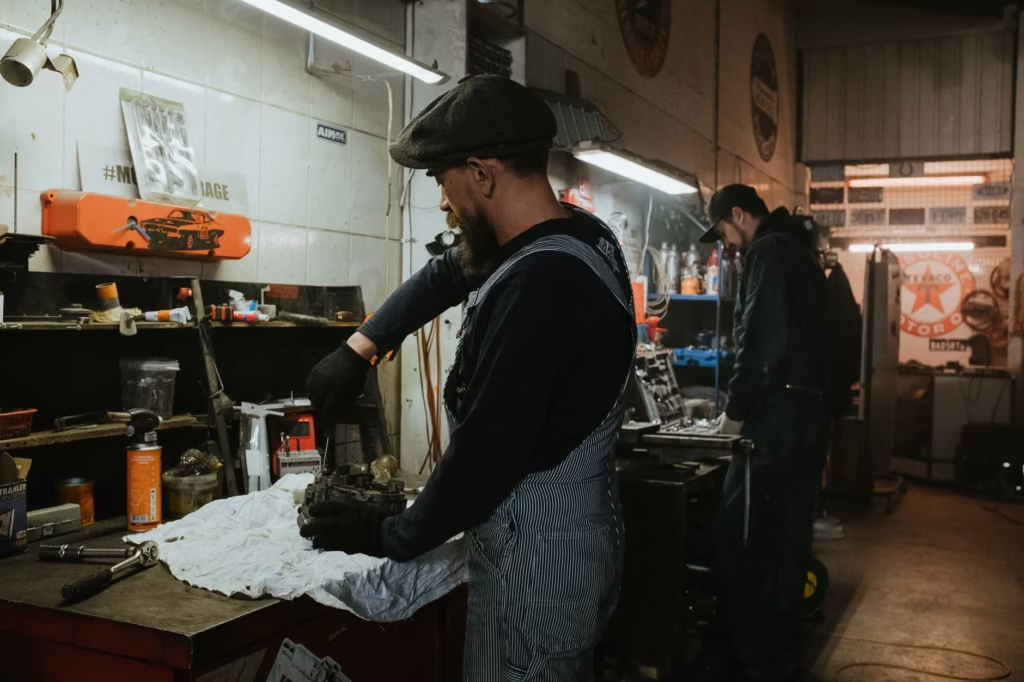
Most cars have at least two air filters that owners casually call “the air filter.” The engine air filter cleans incoming air before it reaches the engine. The cabin air filter cleans air moving through the HVAC system, helping trap dust and pollen before that air reaches the passenger compartment. That distinction matters because the replacement interval, symptoms, and consequences are different. A restricted engine filter can affect airflow to the engine; a clogged cabin filter is more likely to show up as weak vent output, musty airflow, or windows that fog more easily. (autoparts.toyota.com)
If the vehicle is a pure EV, there is no engine air filter to replace. EVs still have cabin air filters, and Chevrolet’s EV guidance specifically notes that EVs do not need engine air filter replacement. (chevrolet.com)
The owner’s manual matters more than any universal mileage rule
There is no hard-and-fast interval that fits every model, engine layout, driving environment, and filter design. The FTC’s consumer guidance tells drivers to follow the manufacturer’s maintenance schedule in the owner’s manual and to question repair-shop schedules that call for more frequent service than the manufacturer recommends. That is especially relevant with air filters, because this is a common area for blanket recommendations that may be too aggressive for one car and too relaxed for another. (consumer.ftc.gov)
| Filter | What it affects | Example normal-use intervals from manufacturer sources | Replace or inspect sooner when |
|---|---|---|---|
| Engine air filter | Engine intake airflow and filtration before combustion. (autoparts.toyota.com) | Ford: 15,000 – 30,000 miles depending on model; one Honda owner manual example: 2 years or 30,000 miles; 2026 Jeep Wrangler: replace at 30,000 miles. (ford.com) | Dusty roads, off-road driving, visible debris, rough idle, sluggish acceleration, or a service-air-filter warning on equipped vehicles. (ford.com) |
| Cabin air filter | Airflow through the heater and A/C system plus dust and pollen reaching the cabin. (vehicleinfo.mopar.com) | Ford: 15,000 – 20,000 miles; 2026 Jeep Wrangler: 12,000 miles; Chevy EV guidance: annually or every 12,000 miles. (ford.com) | Heavy traffic, dusty areas, pollution, reduced vent airflow, or windows fogging more easily in fresh-air mode. (assets.sia.toyota.com) |
| Pure EVs | Cabin air only; no engine intake filter service. (chevrolet.com) | Cabin filter only. Chevrolet says EVs do not require engine air filter replacement. (chevrolet.com) | Low airflow from vents, odor, or the time/mileage interval in the manual. (chevrolet.com) |
The important takeaway from that table is not the exact number from any one brand. It is the pattern. Manufacturer schedules usually give a range or a model-specific interval, and they nearly always include a caveat for severe conditions. If the car spends its life on clean pavement and moderate highway miles, it may reach the normal interval comfortably. If it lives on gravel, construction-zone commutes, dusty rural roads, or trails, mileage alone stops being a reliable guide. (ford.com)
Use the schedule, conditions, symptoms check
A useful way to make the decision is a simple three-part check: schedule, conditions, and symptoms. This is not a formal industry standard. It is a practical editorial method for making a better decision than guessing by color alone.
- Start with the published schedule. Use the owner’s manual first, not a generic sticker or a shop’s default recommendation. Some vehicles use mileage only, while others also use time. For example, one Honda owner manual calls for engine air filter replacement every 2 years or 30,000 miles, and the FTC advises comparing any shop recommendation with the manufacturer schedule. (techinfo.honda.com)
- Adjust for real-world conditions. Ford says dusty roads can justify earlier engine air filter replacement. Toyota notes that heavy traffic and dusty areas can shorten cabin filter life, and Jeep specifically calls for engine air filter inspection in dusty or off-road conditions. (ford.com)
- Use symptoms as a tie-breaker, not the only test. For engine filters, Ford lists signs such as sluggish acceleration or rough idle. For cabin filters, Toyota points to sharply reduced vent airflow or easier window fogging. On some trucks and diesel applications, a “SERVICE AIR FILTER” message means do not wait long. (ford.com)

A simple hypothetical shows why this works better than a single mileage rule. Imagine two owners with the same vehicle and the same 30,000-mile engine-filter interval in the manual. One drives mostly freeway miles on paved roads in a mild climate. The other regularly uses dirt access roads, trailhead parking lots, and construction detours. The second owner should be checking the filter much sooner and may need replacement well before the published interval, because the conditions are harsher even though the odometer reads the same. That is exactly the kind of severe-use adjustment manufacturer schedules call for. (ford.com)
What a dirty filter actually changes
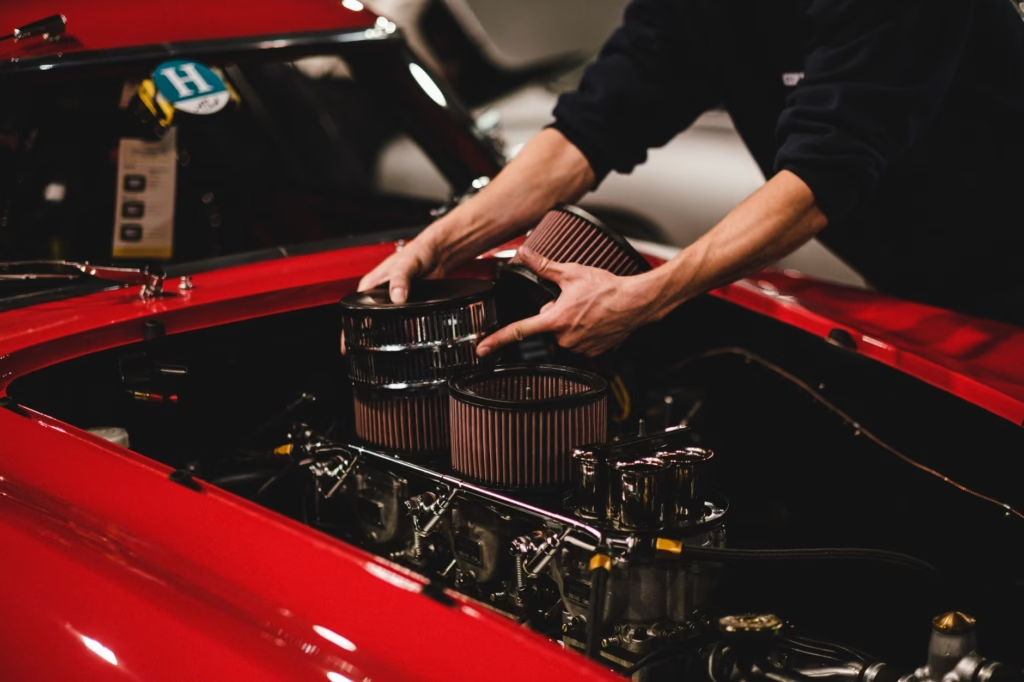
A dirty engine air filter can matter, but not always in the way people think. The Department of Energy says replacing a clogged air filter on modern fuel-injected, computer-controlled gasoline vehicles and diesel engines does not improve fuel economy, though it can improve acceleration. That is a useful correction to the old claim that a fresh filter is an easy MPG fix on every car. On modern cars, the stronger reason to stay on schedule is engine protection and airflow performance, not a guaranteed fuel-economy jump. Older carbureted vehicles are the exception the DOE still notes. (afdc.energy.gov)
The cabin filter is more about comfort, HVAC performance, and what enters the interior. Toyota’s owner-manual guidance says a clogged cabin filter may show up as dramatically reduced airflow from the vents, and it notes that windows may fog more easily in fresh-air mode. Ram’s owner information similarly describes the cabin filter as part of the climate-control system that filters dust and pollen. So if the complaint is weak defrost performance or poor airflow from the dash vents, the cabin filter deserves attention before the engine air filter gets blamed. (assets.sia.toyota.com)
How to inspect a filter without creating a new problem
- Confirm the interval and the access procedure in the manual first. Some filters are simple to reach. Others are buried enough that forcing clips or covers can create new problems. The Jeep handbook cautions owners to do only service work they have the knowledge and equipment to perform. (vehicleinfo.mopar.com)
- Before opening the airbox, clear loose dirt and leaves around the housing. Chevrolet’s owner manual warns that dirt and debris should be kept away from the open housing before the filter is removed. (chevrolet.com)
- Check the filter media and the seal, not just the color. Tears, crushed pleats, water saturation, oil contamination where it should be dry, or a warped seal are stronger reasons to replace than a uniform gray color alone. Some manufacturer instructions also call for cleaning the housing if significant dirt is present. (vehicleinfo.mopar.com)
- Reinstall carefully and make sure the filter sits flush in the housing. Chevrolet warns that using the wrong part or operating with the filter off can damage the vehicle, and Mopar notes correct orientation during installation. (chevrolet.com)
Do not assume every filter should be washed or blown out with compressed air. Chevrolet says not to clean the engine air cleaner/filter with water or compressed air on the Spark, while one Honda manual example allows cleaning under severe conditions, and some Mopar applications specify a dry, non-oiled replacement filter only. Follow the manual for the exact vehicle rather than internet folklore. (chevrolet.com)
Common mistakes that lead to bad replacement decisions
- Replacing filters automatically at every oil change. Some shops suggest this, but manufacturer schedules are often longer, and the FTC advises comparing shop schedules with the owner’s manual. (consumer.ftc.gov)
- Ignoring severe conditions because the mileage looks low. Dust, off-road use, heavy traffic, and dirty urban environments can shorten filter life substantially. (ford.com)
- Blaming the wrong filter. Weak A/C or heater airflow usually points toward the cabin filter, while engine hesitation or sluggish acceleration may point toward the engine side. (assets.sia.toyota.com)
- Treating appearance as the only test. A filter can look dirty but still be within its useful interval, or it can be structurally damaged even before it looks terrible. Schedule and conditions matter as much as appearance.
- Installing the filter crooked, upside down, or with the wrong specification. A badly seated filter or incorrect replacement part can defeat the point of the service. (chevrolet.com)
When a shop recommendation makes sense – and when to question it
An early replacement recommendation is reasonable when there is a condition-based reason behind it: obvious dust loading, off-road use, wildfire smoke exposure on the cabin side, restricted vent airflow, an air-restriction message, or a severe-service schedule in the manual. It is worth questioning when the recommendation is purely automatic and no one can explain why the filter needs service now instead of at the manufacturer interval. The FTC’s advice is straightforward: compare the recommendation with your owner’s manual and ask the shop to explain why it wants more frequent service. (consumer.ftc.gov)
- Say yes sooner if the car regularly sees dirt roads, job sites, desert dust, or off-road use. (ford.com)
- Say yes sooner if the cabin vents have become noticeably weaker or the windshield fogs more easily in fresh-air mode. (assets.sia.toyota.com)
- Say yes sooner if the car shows a service-air-filter warning or the removed filter is physically damaged, wet, or badly misshapen. (vehicleinfo.mopar.com)
- Be skeptical if the only explanation is “we always do filters with oil changes,” especially when the manual interval is much longer. (consumer.ftc.gov)
DIY or pay for service?
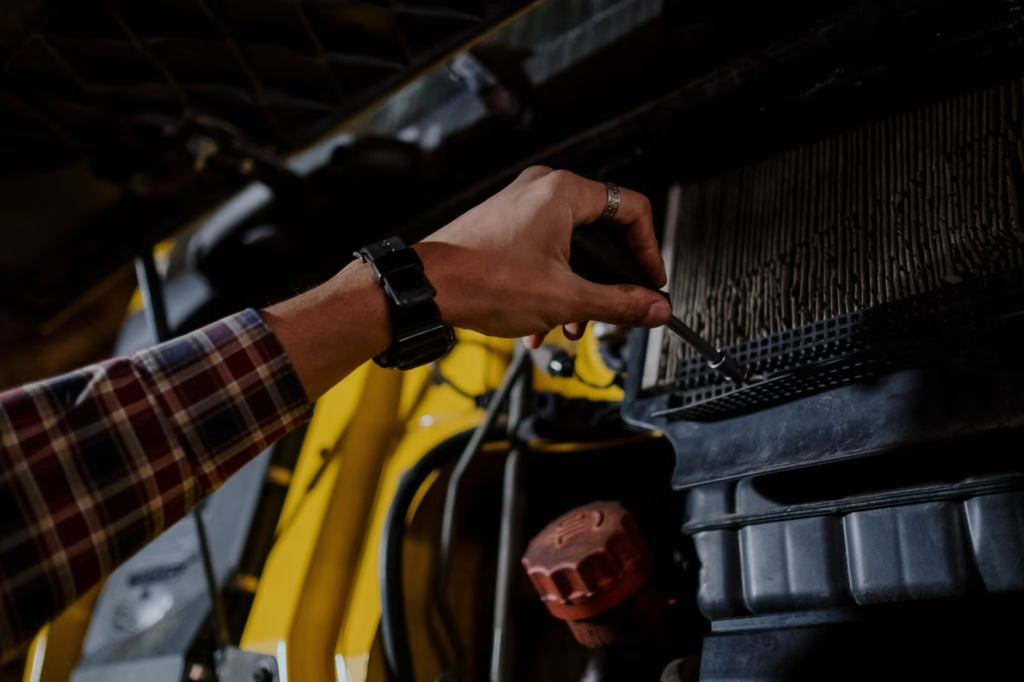
Air-filter replacement is often a reasonable DIY job, but not always. Some engine filters are under a simple cover with clips or screws. Some cabin filters sit behind the glove box and are easy to reach. Others are awkward enough that broken trim clips or a poorly reseated housing become real risks. If the procedure looks straightforward in the manual and access is clean, it can be a satisfying five- to fifteen-minute task. If access is cramped, the housing is packed with debris, or the vehicle uses a model-specific warning system, a shop is a sensible choice. Either way, the best practice is the same: use the correct part and follow the vehicle-specific procedure. (chevrolet.com)
For most drivers, the next step is simple. Check the owner’s manual for both the engine air filter and the cabin air filter, note whether the schedule has a severe-service section, and then inspect based on how the car is actually used. If the vehicle lives in clean conditions, the normal interval is usually fine. If it lives in dust, traffic, or off-road grime, inspect earlier and replace on condition. That is a better answer than any one-size-fits-all mileage sticker.
FAQ
What if I drive very little each year?
Do not assume low mileage means the filter can be ignored indefinitely. Some manufacturer guidance uses time as well as miles. One Honda owner manual example calls for engine air filter replacement every 2 years or 30,000 miles, and Chevrolet’s EV guidance says cabin air filters may be annual or every 12,000 miles. If the manual gives both time and mileage, use whichever comes first. (techinfo.honda.com)
Does replacing the engine air filter improve gas mileage?
Usually not on a modern fuel-injected vehicle. The Department of Energy says a clogged air filter on modern fuel-injected gasoline vehicles and diesels does not improve fuel economy when replaced, though acceleration may improve. Older carbureted vehicles are a different case. (afdc.energy.gov)
Can I clean the filter instead of replacing it?
Sometimes, but only if the vehicle’s instructions allow it. Chevrolet says not to clean the engine air cleaner/filter with water or compressed air on the Spark, while one Honda manual example includes cleaning under severe conditions, and some Mopar applications specify a dry, non-oiled replacement filter only. The safe rule is to follow the manual for the exact vehicle. (chevrolet.com)
How can I tell whether the engine filter or the cabin filter is the problem?
Think about where the symptom shows up. Reduced airflow from the dash vents, poor defrost performance, and easier window fogging point toward the cabin filter. Sluggish acceleration or rough idle can be clues on the engine side, though they are not exclusive to the air filter. (assets.sia.toyota.com)
Do electric cars have air filters?
They still have cabin air filters, but they do not have engine air filters because there is no intake air for a combustion engine. Chevrolet’s EV maintenance guidance explicitly says EVs do not require engine air filter replacement. (chevrolet.com)
References
- Ford Support: How often should I change the engine air filter? – https://www.ford.com/support/how-tos/more-vehicle-topics/engine-and-transmission/how-often-should-i-change-the-engine-air-filter/
- Ford Support: When should I change the cabin air filter? – https://www.ford.com/support/how-tos/more-vehicle-topics/air-conditioning-and-heating/when-should-i-change-the-cabin-air-filter/
- U.S. Department of Energy / Alternative Fuels Data Center: Gas-Saving Tips – https://afdc.energy.gov/files/u/publication/gas-saving_tips.pdf?fbb3c63ad5=
- Federal Trade Commission: Auto Repair Basics – https://consumer.ftc.gov/articles/0211-auto-repair-basics
- Chevrolet Support: About ICE Maintenance Schedule – https://www.chevrolet.com/support/vehicle/maintenance/schedule/about-ice
- 2021 Chevrolet Spark Owner’s Manual – https://www.chevrolet.com/ownercenter/content/dam/gmownercenter/gmna/dynamic/manuals/2021/chevrolet/spark/2021-chevrolet-spark-owners-manual.pdf
- Honda Owner’s Manual page: Air Cleaner – https://techinfo.honda.com/rjanisis/pubs/OM/NS9292/NS9292O00148A.pdf
- Toyota Owner’s Manual PDF: Air conditioning filter guidance – https://assets.sia.toyota.com/publications/en/om-s/OM33840U/pdf/OM33840U.pdf
- 2026 Jeep Wrangler Owner Handbook – https://vehicleinfo.mopar.com/assets/publications/en-us-ca/2026/Jeep/Wrangler/103687_26_JL_OH_EN_USC_DIGITAL_E3.pdf
- Chevy EV Maintenance – https://www.chevrolet.com/certified-service/ev-maintenance?msockid=037e95f98ae263e93355832c8b506228
- Mopar: Engine Air Cleaner Filter Inspection And Replacement – Gasoline Engine – https://vehicleinfo.mopar.com/assets/publications/en-us/Ram/2022/2500_3500/om_html/GUID-4B98CD14-9CD3-41C6-BF05-D82064B810B0.html
- 2019 Ram 2500 Diesel Supplement Owner’s Manual – https://vehicleinfo.mopar.com/assets/publications/en-us/Ram/2019/2500/P133918_19_DJD2P_D_SU_EN_USC_DIGITAL.pdf