
Cars that reach old age usually do not get there because of one miracle product or one expensive repair. They get there because the owner stays on top of plain, repetitive work: the right oil, the right tire pressure, basic fluid checks, working lights, and early attention to wear before one worn part starts damaging another. NHTSA’s consumer maintenance guidance still points to those fundamentals, and its tire guidance adds an important reminder that a dashboard tire warning is not a substitute for checking pressure with a gauge. (nhtsa.gov)
One useful nuance: more maintenance is not automatically the goal. Correct maintenance is. Your owner’s manual should outrank a random windshield sticker, a friend’s rule of thumb, or what worked on a previous car. Some items are mileage-based, but others are condition-based, which is why a quick monthly inspection matters even when the odometer says service is still a while away. (nhtsa.gov)
A 10-minute monthly check catches problems while they are still cheap
- Check tire pressure when the car has been parked for a few hours, and look at the spare too. (nhtsa.gov)
- Walk around the car and look for uneven tread wear, a dead bulb, or wipers that are starting to smear. (nhtsa.gov)
- Open the hood and check the easy items: engine oil, coolant reservoir, brake fluid reservoir, and battery condition. (nhtsa.gov)
- Look at the ground where the car was parked. Fresh drips or a new smell are worth checking early. (carcare.org)
- On the first drive, notice anything new: pulling, shaking, weak braking, or slow cranking. Those are maintenance clues, not background noise. (carcare.org)
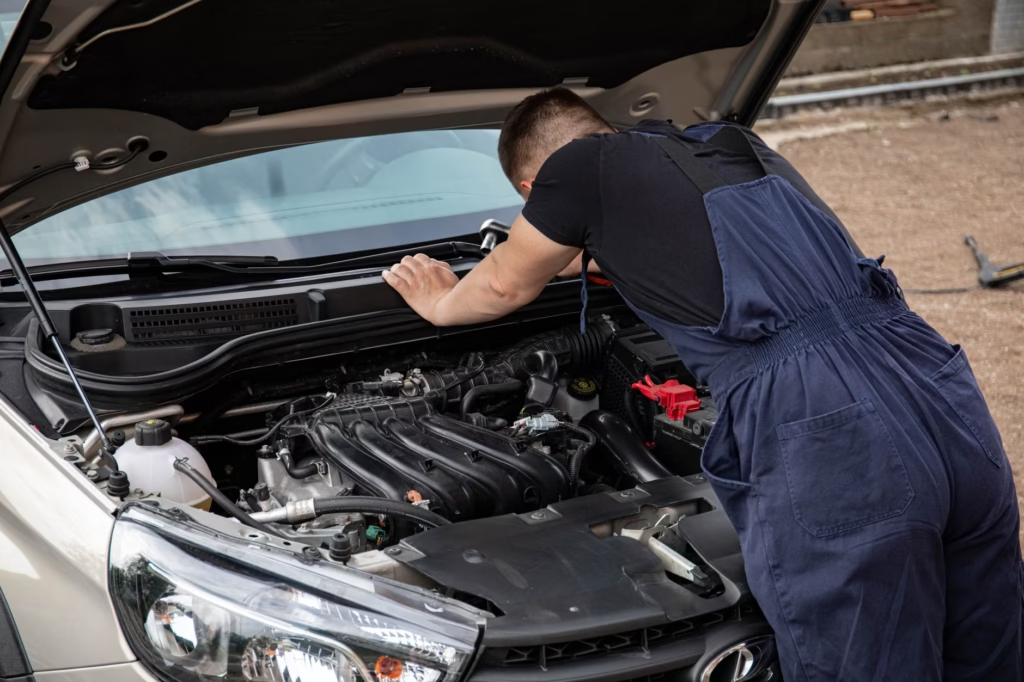
Start with the fluids and service intervals that engines live on
- Follow the maintenance schedule in your owner’s manual. That is the baseline plan for your specific engine, transmission, cooling system, and driving conditions. (nhtsa.gov)
- Change the oil and filter at the recommended interval, even if the car still seems to run fine. Oil failure usually becomes visible only after damage has already started. (nhtsa.gov)
- Use the oil grade the manufacturer specifies. The goal is not “good enough” oil; it is the correct viscosity and specification for that engine. (nhtsa.gov)
- Check visible fluids when you check oil, especially coolant and brake fluid. A low reservoir is often the first easy-to-see sign that something needs attention. (nhtsa.gov)
- Treat drips, odd smells, and unexplained fluid loss as early warnings. Repeated top-offs are not a repair. (carcare.org)
If a fluid level keeps dropping, the real job is diagnosis. Coolant, brake fluid, or oil that repeatedly disappears can point to a leak or another fault that should not be ignored.
Tires, brakes, and alignment quietly shorten a car’s life
- Check tire pressure at least monthly, and do it when the tires are cold. Pressure affects safety, wear, and how hard the whole car has to work. (nhtsa.gov)
- Include the spare in those checks. A forgotten spare is a small problem until the day it becomes the only tire that matters. (nhtsa.gov)
- Use the pressure on the door-jamb label or in the manual, not a guess and not whatever happens to be molded on the tire. (nhtsa.gov)
- Rotate tires on the schedule your vehicle calls for. Rotation is cheaper than replacing a set early because one axle did all the wearing. (nhtsa.gov)
- Replace tires when they are worn out, not just when they finally go flat. NHTSA says tires are not safe at 2/32 inch of tread, and wear indicators or a simple penny check can confirm it. (nhtsa.gov)
- If the car pulls, shakes, or wears tires unevenly, get the alignment checked. Those symptoms usually cost less to fix early than after the tires are ruined. (carcare.org)
- After a hard pothole hit or curb strike, recheck tire pressure and inspect the sidewalls. Tire damage and pressure loss are not always obvious at first glance. (nhtsa.gov)
- Have the brakes checked regularly instead of waiting for a crisis. Brake service is usually cheaper when it happens before wear turns into metal-on-metal damage. (carcare.org)
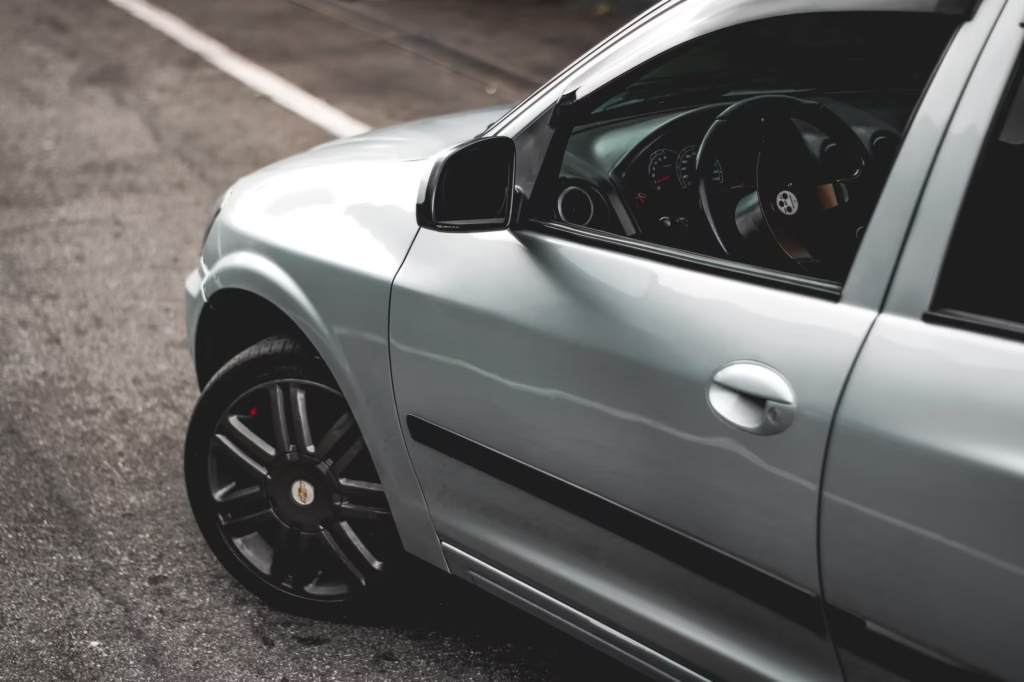
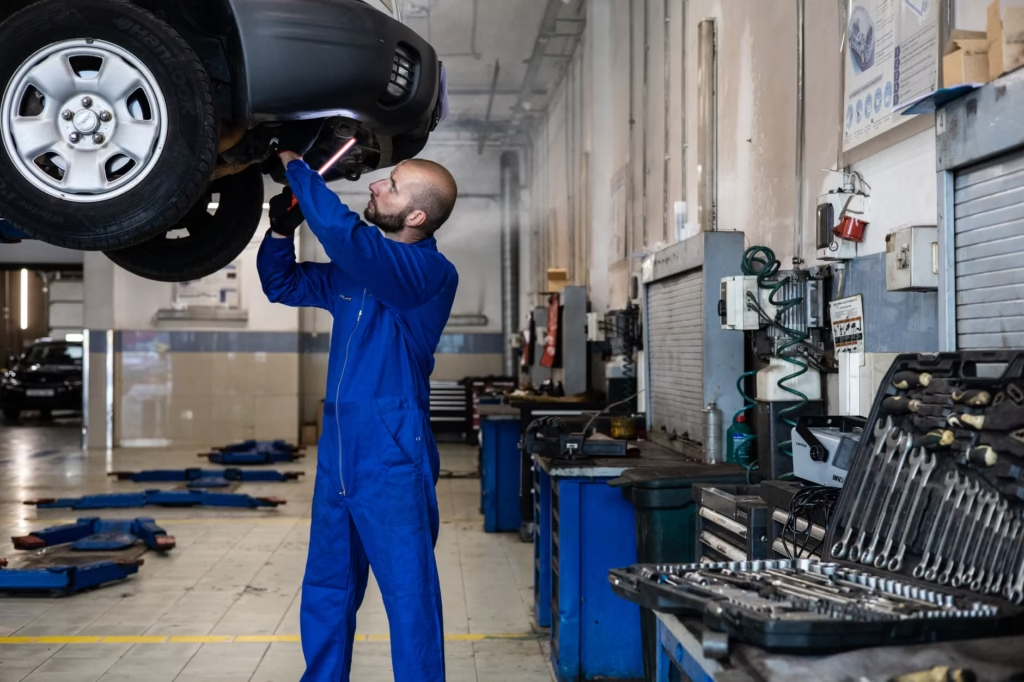
The small stuff is often what separates a durable car from a tired one
- Replace wiper blades about every six months, or sooner if they chatter, skip, or leave streaks. Poor visibility is both a safety problem and a sign of neglected basics. (carcare.org)
- Keep the washer reservoir filled and make sure the wiper system still works properly. It is a tiny maintenance task that pays off the first time the windshield gets covered in grime. (carcare.org)
- Inspect all exterior lights at every oil change. From the driver’s seat, it is easy to miss a bulb that has already failed. (nhtsa.gov)
- Have the battery and charging system checked regularly, especially as the battery gets older. The Car Care Council recommends being more proactive once a battery is three years old or more. (carcare.org)
- Keep the battery top and terminals clean. Corrosion can interfere with current flow, and heat can shorten battery life long before winter exposes the weakness. (carcare.org)
- Do not neglect transmission service. If your manufacturer calls for transmission fluid or filter maintenance, follow that schedule instead of assuming the transmission will take care of itself forever. (carcare.org)
- Treat a flashing check-engine light as immediate business, not something to clear and forget. That warning means the problem is happening now. (carcare.org)
If there is one pattern behind long-lasting cars, it is this: ordinary wear gets handled before it becomes parts damage. A pressure gauge, a flashlight, and a monthly look under the hood will usually do more for a car’s lifespan than any miracle additive or last-minute repair appointment.
References
- NHTSA – Adapted Vehicles: Basic maintenance checklist – https://www.nhtsa.gov/vehicle-safety/adapted-vehicles
- NHTSA – Tire Safety Ratings and Awareness – https://www.nhtsa.gov/vehicle-safety/tires
- Car Care Council – Motorist Checklist for Fall Car Care Month in October – https://www.carcare.org/2020/10/motorist-checklist-for-fall-car-care-month-in-october/
- Car Care Council – Summer Heat Takes a Toll on Your Car’s Battery – https://www.carcare.org/2020/07/summer-heat-takes-a-toll-on-your-cars-battery/