
The best pre-road-trip check is not a full mechanical teardown. It is a focused look at the parts most likely to strand you, make the car unsafe, or turn a small issue into an expensive one after a few hours at highway speed. For most drivers, that means checking tires first, then fluids and leaks, battery condition, lights, wipers, and any warning lights you have been ignoring. NHTSA specifically advises checking tire pressure before long trips, inspecting tires for damage, checking fluid levels, having the battery and charging system checked as needed, and testing exterior lights and wiper blades. (nhtsa.gov)
Start in the driveway, before the car warms up
- Park on level ground and do a slow walkaround before you drive anywhere. Look for fresh drips under the engine area, a tire that looks obviously low, or visible damage around the tread and sidewalls. Leaks and tire damage are much easier to spot when the car has been sitting. (nhtsa.gov)
- Check tire pressure with the tires cold, ideally before the car has been driven for at least three hours. Use the pressure on the driver-side door placard or in the owner’s manual, not the maximum number molded into the tire sidewall. Check all four tires and the spare. (nhtsa.gov)
- Inspect tread depth and the wear pattern. NHTSA says tires should be replaced when tread is worn to 2/32 of an inch, and the penny test is a quick check: if you can see the top of Lincoln’s head, it is time for new tires. Also look for cuts, punctures, bulges, cracks, or uneven wear, which can point to inflation, rotation, or alignment problems. (nhtsa.gov)
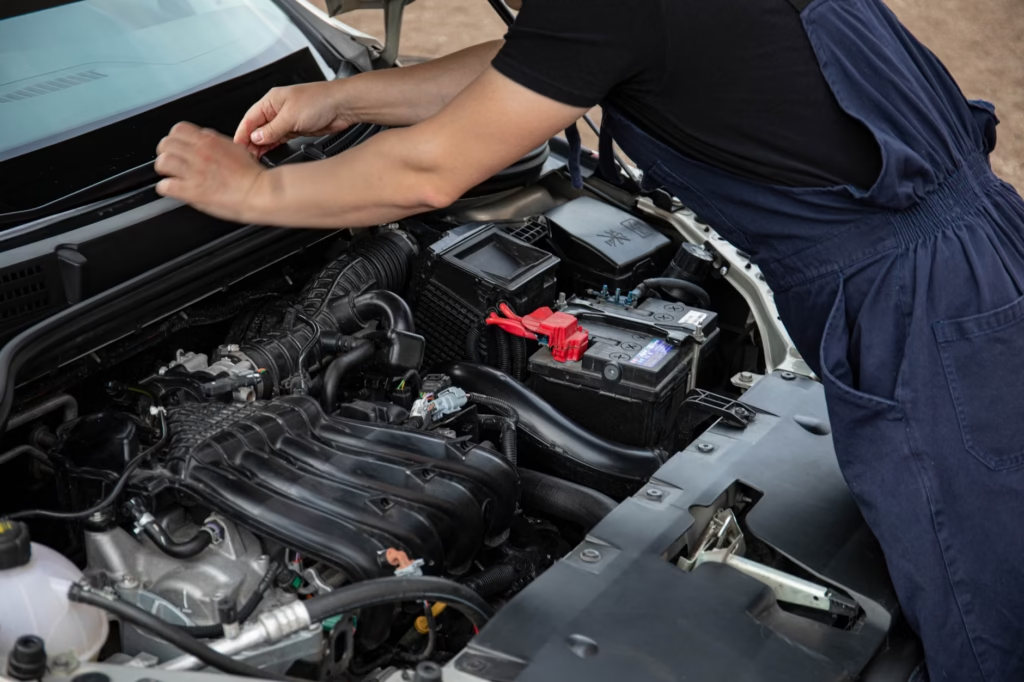
- Open the hood and check the basics: engine oil, coolant level in the proper reservoir, and windshield washer fluid. If a reservoir is low, use the fluid type specified in the owner’s manual rather than guessing. If you see signs of an active leak, treat that as a repair issue, not just a top-off issue. (nhtsa.gov)
- Look at the battery, especially if the car has been slow to start lately. The cables should be clean and tight, the battery should be securely mounted, and the charging system should be tested if there is any doubt about remaining capacity. (nhtsa.gov)
- Test the things you will rely on in bad weather or low light: headlights, brake lights, turn signals, hazard flashers, wipers, and washer nozzles. NHTSA also warns to make sure floor mats are installed correctly so they do not interfere with the pedals. Before closing up, confirm the spare tire, jack, and tool kit are actually in the car. (nhtsa.gov)
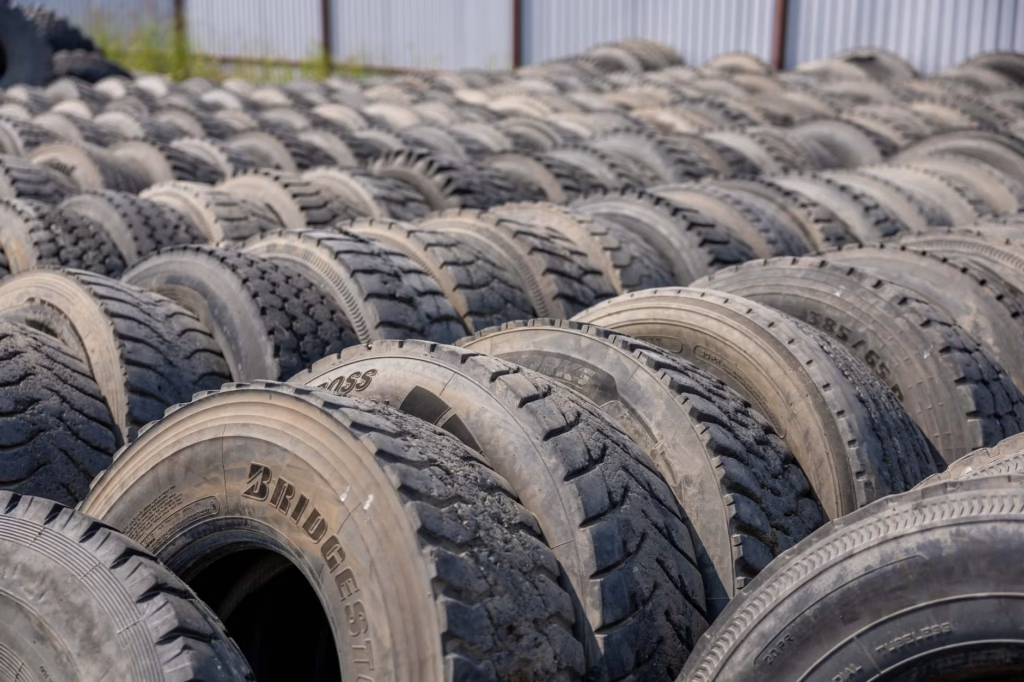
Tires deserve extra attention because they are both easy to neglect and hard to judge by eye. NHTSA notes that underinflated tires can be visually difficult to detect, and the tire-pressure monitoring system is not a substitute for checking with a gauge. A tire can have acceptable-looking tread in the driveway and still be underinflated, wearing unevenly, or approaching replacement. (nhtsa.gov)
Then take a short local drive and pay attention to feel
A parked-car inspection catches only part of the picture. After the driveway check, take the car on a short local drive at neighborhood and faster surface-road speeds. Listen for grinding, squealing, or new humming sounds. Feel for brake vibration, steering pull, or a shake that shows up as speed increases. AAA advises getting a brake inspection if you hear grinding or feel vibration when braking, and NHTSA notes that uneven tire wear or veering can indicate the need for rotation, balancing, or alignment work. (newsroom.acg.aaa.com)
If a warning light stays on after startup, the road trip should not be the experiment. NHTSA says an illuminated TPMS light means at least one tire is already significantly underinflated and should be checked as soon as possible. (nhtsa.gov)
A simple example shows why this second step matters. A car may pass the driveway check with decent tread and correct pressure, but if the steering wheel starts trembling on a faster road or the brakes shudder at a stop, that is information a visual check cannot give you. On the other hand, if the car tracks straight, brakes smoothly, stays at normal temperature, and shows no warning lights, that is a much better sign than a clean driveway check alone. (newsroom.acg.aaa.com)
Know when to stop checking and book service
- Book a shop visit before the trip if any tire is at replacement tread, shows bulges, cuts, punctures, cracking, or uneven wear, or if the spare is missing or unusable. (nhtsa.gov)
- Do not leave with brake grinding, brake vibration, or other obvious braking changes. Those are inspection problems, not road-trip problems. (newsroom.acg.aaa.com)
- If fluid levels keep dropping, you see evidence of leakage, or the car has had cooling-system or overheating concerns, address that before loading the car with passengers and luggage. (nhtsa.gov)
- If the car is close to a scheduled oil change or other routine service, it usually makes more sense to do that work before the trip rather than during it. (nhtsa.gov)
One last step is easy to miss: check for open safety recalls using your VIN or license plate through NHTSA’s recall tools. NHTSA says open recalls can be looked up online and repaired for free at a local dealership. Then, once the car is packed, do one final walkaround for lights, tire condition, and cargo that might shift in the cabin. A 10- to 15-minute pre-trip check will not replace regular maintenance, but it can catch the problems most likely to spoil a long drive. (nhtsa.gov)
References
- NHTSA – Summer Driving & Road Trip Tips – https://www.nhtsa.gov/summer-driving-tips
- NHTSA – Tire Safety Ratings and Awareness (TireWise) – https://www.nhtsa.gov/vehicle-safety/tires
- NHTSA – Vehicle Safety Resources and Recall Lookup – https://www.nhtsa.gov/vehicle-safety-resources
- AAA – Make Sure Your Ride Is Road Trip Ready – https://newsroom.acg.aaa.com/vehicle-neglected-during-the-pandemic–make-sure-your-ride-is-road-trip-ready/