

When a car will not start, the fastest way to waste time is to guess at parts. The more useful first question is simpler: what exactly happens when you try to start it? If the engine does nothing or only clicks, the problem usually lives in the battery, cables, starting circuit, interlocks, or starter. If it cranks normally but never catches, the list shifts toward fuel, ignition, key recognition, or engine-management faults. If it starts and then dies, the charging system or fuel delivery moves higher on the list. That symptom-first approach is what makes a no-start problem manageable instead of random. (aaa.com).
TL;DR
- Start by separating three situations: no crank, cranks but will not start, or starts and dies. That one distinction usually narrows the problem faster than checking parts at random. (aaa.com).
- A weak battery or poor battery connection is still the first place to look, especially if the lights are dim, the horn is weak, or you hear rapid clicking. Cold weather also increases starting demand. (mazdausa.com).
- A single click with bright dash lights often points more toward the starter than the battery. If a jump-start works but the car dies again soon after, the charging system becomes a leading suspect. (aaa.com).
- Push-button vehicles add a few extra failure points: the brake or clutch may not be fully applied, the shifter may not be in the correct position, or the vehicle may not recognize the key. (mazdausa.com).
- Stop troubleshooting and call for help if the battery is frozen, leaking, or badly damaged; if cables are getting hot; if you smell strong fuel; or if you are tempted to keep the vehicle running in an attached garage. (mazdausa.com).
Use the three-signal start check before you touch anything
A practical way to diagnose a no-start problem is to watch for three signals: sound, speed, and staying power. Sound means whether you hear nothing, rapid clicks, a single clunk, or normal cranking. Speed means whether the engine turns slowly, briskly, or unusually fast. Staying power means whether the vehicle starts and keeps running, or starts only briefly. That is not a shop-manual procedure; it is a simple triage method that helps a driver decide whether to try a battery-related fix, check a starting condition, or stop and arrange a tow. (aaa.com).
- No crank: The engine does not turn over at all, or you only get clicking. Think battery charge, battery connections, shifter or clutch interlock, key recognition, fuses, or starter. (aaa.com).
- Cranks but will not start: The engine turns, but combustion never begins. Think fuel delivery, ignition, immobilizer, sensor, or more serious engine problems. (aaa.com).
- Starts and dies: The battery may have enough power to wake the engine up, but the vehicle cannot keep itself running. That pattern often points toward the alternator or another charging problem, though fuel or anti-theft faults can also do it. (aaa.com).
Keep restart attempts short. Owner manuals commonly warn against long, repeated cranking because it drains the battery, overheats the starter, and can make diagnosis less clear. Also, never let a gasoline vehicle idle in an attached garage or other enclosed space while you troubleshoot; carbon monoxide can build up quickly. (techinfo.honda.com).
What your symptoms are really telling you
Before getting into the 10 causes, it helps to map the most common symptom patterns to the most likely systems. This does not replace testing, but it can prevent a lot of bad guesses. (aaa.com).
| What happens when you try to start it | Most likely area | Why it points there | Best next move |
|---|---|---|---|
| Rapid clicking, dim lights, weak horn | Battery or battery connections | Low system voltage is a classic battery or cable clue, especially when lights and horn are weak. (mazdausa.com). | Try one safe jump-start if the battery is not damaged, then test the battery and charging system. (fordservicecontent.com). |
| One heavy click, bright dash lights, no crank | Starter or starter circuit | Power may be present for accessories, but the starter may not be engaging. (aaa.com). | Do not keep retrying; arrange diagnosis or a tow. (aaa.com). |
| Engine cranks normally but never fires | Fuel, ignition, key recognition, or engine management | The engine is turning, so the problem is often not basic battery power. (aaa.com). | Check fuel level, try a spare key if available, and move toward professional diagnosis if nothing obvious changes. (aaa.com). |
| Starts with a jump but dies soon after, or battery light is on | Alternator or charging system | A brief recovery followed by another shutdown often means the battery is not being recharged. (aaa.com). | Limit driving and head to a shop only if the vehicle is stable and close; otherwise tow it. (aaa.com). |
| “No Key Detected,” “Press Brake + Start,” or no start in P | Keyless system or start interlock | Modern vehicles may refuse to start if the key is not recognized or the brake, clutch, or gear-position condition is not met. (fordservicecontent.com). | Retry with the brake or clutch fully applied, verify P or N, and use the backup key procedure in the owner’s manual if needed. (mazdausa.com). |
10 common reasons a car won’t start, and what to do next
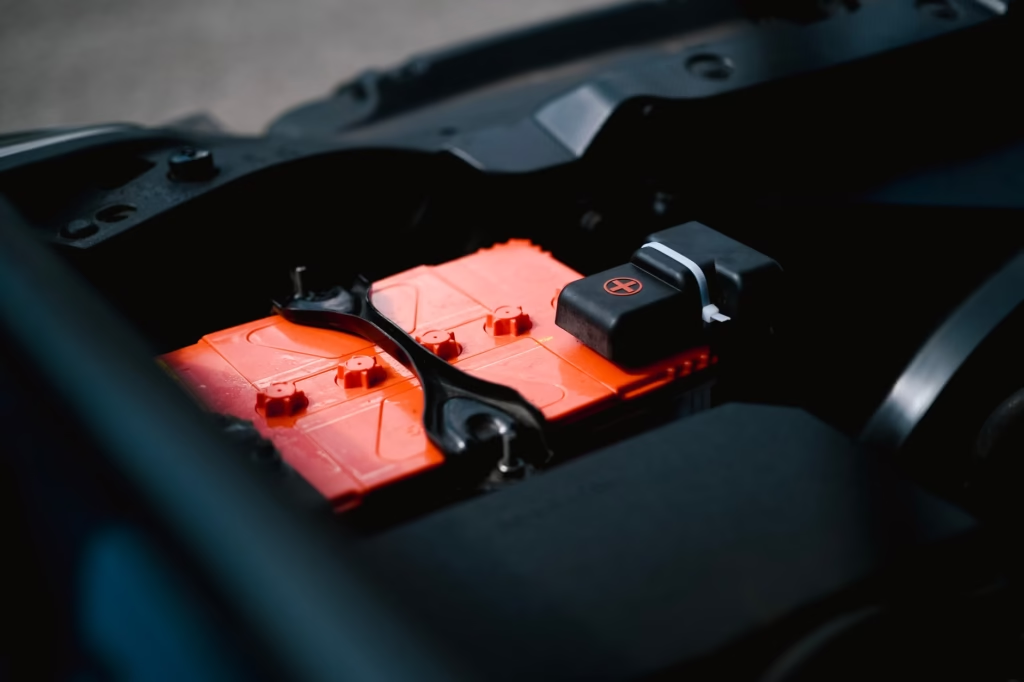
1. The battery is weak or dead
This is still the most common starting problem for everyday drivers. Typical clues include slow cranking, rapid clicking, dim interior lights, or a weak horn. Cold weather makes the problem more obvious because engines need more battery power to start in low temperatures. If the vehicle has been sitting, if lights were left on, or if the battery is older and increasingly inconsistent, a weak battery belongs at the top of the list. (aaa.com).
What to do: Turn off accessories and try one proper jump-start only if the battery case is intact. Do not assume the problem is solved just because the engine starts. A battery that needs repeated jumps usually needs testing and often replacement, and a battery that starts once may still have been drained by another fault. (fordservicecontent.com).
2. The battery terminals or ground connection are loose or corroded
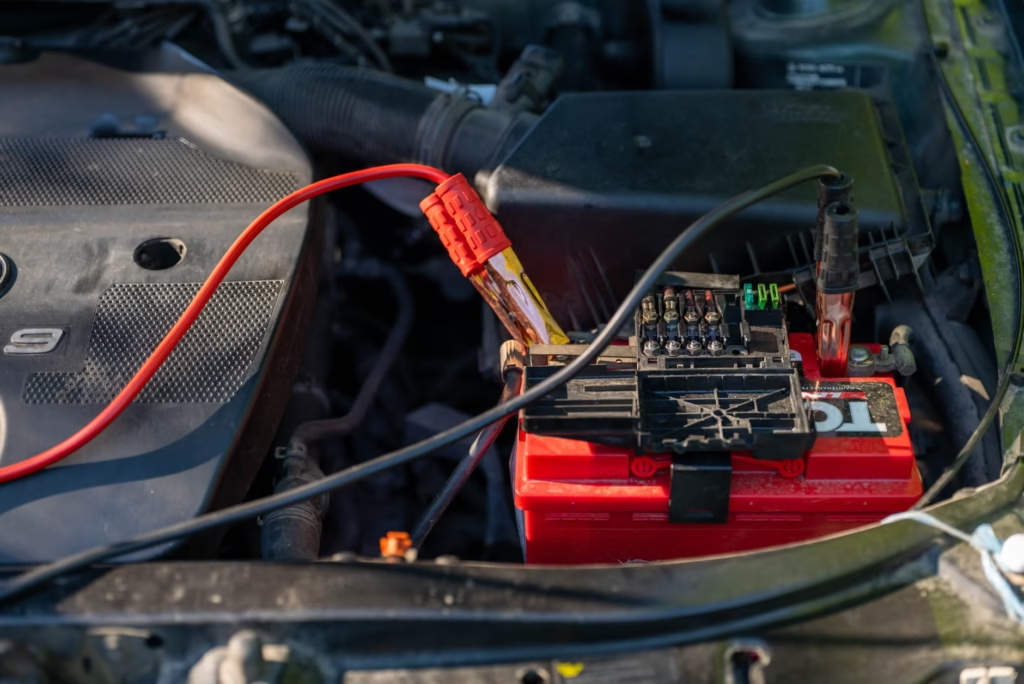
A battery can be healthy and still fail to deliver starting power if the connection is poor. Corrosion often shows up as white, blue, or green buildup around the terminals, and loose clamps can create intermittent starting problems that feel random. This is why some cars light up the dash normally but still refuse to crank with authority. (aaa.com).
What to do: Inspect the terminals visually before assuming the battery itself is dead. If you are comfortable doing it, power the vehicle off, clean the corrosion correctly, and tighten the connections. If the clamps are damaged, the cable ends are frayed, or roadside conditions are poor, this is a good time to stop and get help rather than working around live battery terminals in a parking lot. (aaa.com).
3. The starter motor or solenoid has failed
If the dash lights stay bright but the engine gives you a single click, a grinding noise, or nothing at all, the starter becomes a strong suspect. A failing starter can also crank inconsistently, stay engaged too long, or, in more serious cases, produce smoke. This is one of the classic situations where a healthy-looking battery misleads people. (aaa.com).
What to do: Avoid repeated restart attempts. If the starter is overheating or binding, extra cranking can make things worse and drain the battery at the same time. Starter diagnosis usually requires testing, access under the vehicle, or both, so a tow is often more sensible than another dozen key turns. (aaa.com).
4. The vehicle is not seeing the correct start condition
Some no-starts are not component failures at all. On automatics, the shifter may not be fully in Park, or a park/neutral switch may be acting up. On manuals, the clutch may not be fully depressed. On push-button cars, the brake pedal may not be applied firmly enough. Modern cars deliberately block starting when these conditions are not met. (mazdausa.com).
What to do: Press the brake or clutch fully, confirm the shifter position, and try again once. On some automatics, trying Neutral instead of Park can help confirm an interlock issue, though Park remains the normal starting position. If the problem is intermittent, note exactly when it happens; that pattern helps a technician separate an interlock fault from a dead battery or starter problem. (techinfo.honda.com).
5. The key fob or immobilizer system is not being recognized
Push-button vehicles can refuse to start even when the rest of the car seems alive. Messages such as “No Key Detected” or “Key Battery Low Replace Soon” point toward a recognition problem, not necessarily a dead starter or dead main battery. A weak fob battery, the key being out of range, interference, or a system fault can all cause this. (fordservicecontent.com).
What to do: Try the spare key, replace the coin cell if it is old, and check the owner’s manual for the backup starting procedure. Many vehicles allow a temporary emergency start by holding the fob close to a specific area near the start button, but the location and method vary by model. (mazdausa.com).
6. The alternator or charging system has failed
A bad alternator often masquerades as a bad battery because the battery ends up discharged. The useful clue is timing: the car may jump-start successfully, run for a short stretch, and then fade or die because the battery is no longer being recharged. A battery or charging warning light, flickering electrical accessories, or lights that change brightness with engine speed also fit this pattern. (aaa.com).
What to do: If a jump gets the engine running, treat that as a way to get out of danger, not proof that the battery was the only problem. If the battery light is on or the vehicle begins losing electrical power again, do not count on a long drive to “charge it back up.” A charging-system test or a tow is the safer next step. (aaa.com).
7. A fuse or relay in the starting or fuel circuit has blown
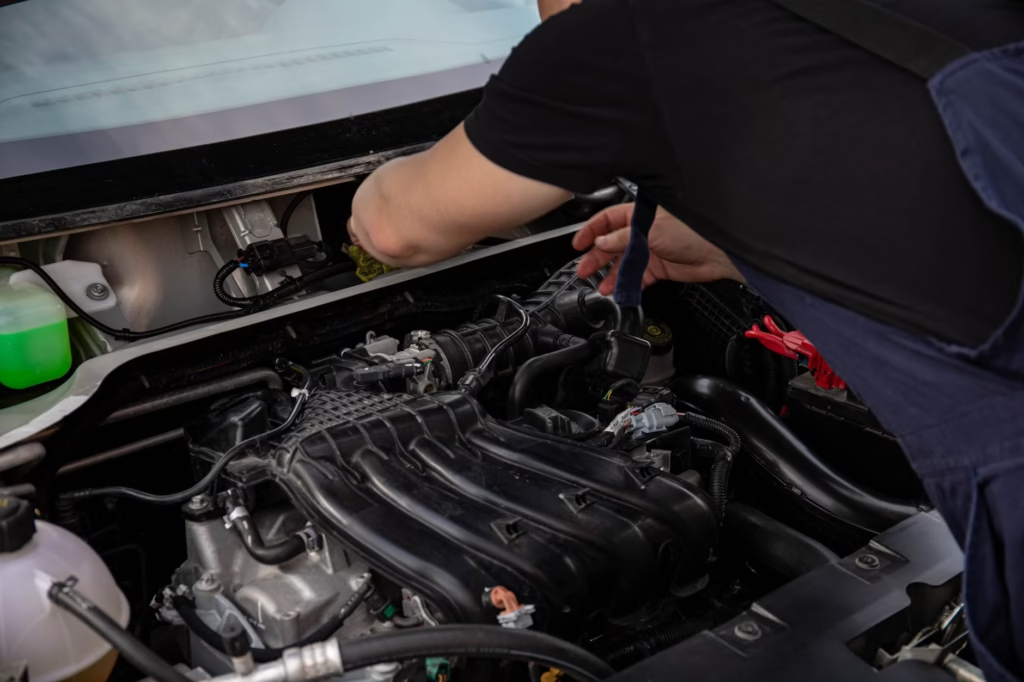
A blown fuse is not the first thing to suspect, but it is common enough to deserve a place on the list, especially if the failure happened suddenly, after recent battery work, or alongside other electrical oddities. Starting and fuel systems both depend on protected circuits, and owner manuals specifically warn against guessing with fuse ratings. (fordservicecontent.com).
What to do: Use the fuse chart for your vehicle, inspect the relevant fuse, and replace it only with one of the same specified amperage. If the replacement blows again, stop there. A recurring blown fuse is evidence of another electrical problem, not bad luck. (techinfo.honda.com).
8. Fuel is not reaching the engine
If the engine cranks normally but never catches, fuel delivery becomes one of the main suspects. Sometimes the explanation is simple: the tank is emptier than expected. Other times it is a failing fuel pump, pump relay, or contaminated fuel. A fuel problem often shows up as normal cranking with no actual start, and some pumps become more troublesome when the tank is very low. (aaa.com).
What to do: Confirm the fuel level before chasing anything more complicated. If the vehicle recently ran out of gas, was filled with questionable fuel, or has been showing sputtering or loss-of-power symptoms, that context matters. Beyond that point, fuel diagnosis usually moves beyond driveway troubleshooting pretty quickly. (aaa.com).
9. There is an ignition or engine-management fault
A car needs more than fuel and battery power to start cleanly. Spark plugs, ignition coils, ignition switches, crankshaft or camshaft position sensors, and other control components can all prevent starting even when the battery seems fine. This category is one reason “the lights come on” is not the same as “the car is healthy.” (aaa.com).
What to do: Look for patterns instead of guessing. Does it fail only when hot, only after sitting overnight, or only in wet weather? Did the check-engine light come on first? Those details matter because this is usually scan-tool territory rather than a visual inspection problem. (aaa.com).
10. A timing or mechanical engine problem is preventing the engine from running
This is not the most common cause, but it is one of the most important to recognize because extra cranking can be expensive. If the engine stopped abruptly while driving and now will not restart, if cranking sounds unusually fast or irregular, or if there was ticking or rattling beforehand, a timing-belt or other mechanical problem has to be considered. (aaa.com).
What to do: Stop trying to force it to start. Mechanical no-starts are tow-and-diagnose situations, not jump-start situations. The goal here is to avoid turning a serious repair into a much worse one. (aaa.com).
A quick example: battery, starter, or alternator?
Consider a hypothetical example. A driver leaves work, turns the key, and hears rapid clicking while the dash lights dim sharply. A jump-start gets the car going. If the car then runs normally and restarts later the same day, a weak battery or poor cable connection stays high on the list. If it dies again 10 minutes later with a battery warning light on, the pattern shifts toward the alternator or charging system. If the dash lights stay bright from the beginning but all the driver gets is one solid click, the starter becomes more likely. The point is not to diagnose from one symptom in isolation, but to watch the sequence. (aaa.com).
Mistakes that make a no-start problem worse
- Cranking too long, too many times. This drains the battery, stresses the starter, and can muddy the symptoms you are trying to read. (techinfo.honda.com).
- Replacing the battery before checking the charging system. If the alternator is the real problem, a new battery may only buy a little time. (ace.aaa.com).
- Using the wrong fuse rating. Owner manuals are explicit here because an oversized fuse can damage the electrical system. (techinfo.honda.com).
- Jump-starting a frozen, leaking, or low-fluid battery, or making careless cable connections. That is a real safety risk, not just a bad idea. (mazdausa.com).
- Assuming the battery is fine because the radio or dome light works. Accessories need far less power than the starter motor. (aaa.com).
When to stop troubleshooting and call for a tow
- Note exactly what happened: no crank, slow crank, rapid clicks, single click, normal crank with no fire, or starts then dies. Also note warning lights and dashboard messages. (aaa.com).
- If the battery and cables look safe, try one controlled restart or one proper jump-start. Do not keep escalating the number of attempts. (fordservicecontent.com).
- Stop immediately if you see smoke, smell strong fuel, notice cable heat, or find a frozen or damaged battery. (aaa.com).
- Call roadside help or arrange a tow if the vehicle will not crank after a jump, starts only briefly, shows charging warnings, or seems to have a starter or mechanical fault. (aaa.com).
One final safety note for hybrids and EVs: a no-start complaint may still trace back to the 12-volt system even though the vehicle also has a high-voltage battery. Do not try to jump-start a high-voltage battery with standard 12-volt equipment; follow the owner’s manual and model-specific procedures. (nhtsa.gov).
The practical takeaway
Most no-start problems become much less intimidating once the symptoms are sorted correctly. Start with the three-signal check, rule in or out the battery and its connections first, then let the symptom pattern guide the next step. A careful five-minute assessment can often tell the difference between a safe jump-start, a simple starting-condition mistake, and a problem that needs a tow right away. (aaa.com).
FAQ
Why does my car click but not start?
The type of click matters. Rapid clicking usually points toward low voltage from a weak battery or poor connection. One solid click with bright dash lights more often suggests the starter or starter circuit. (aaa.com).
If the lights and radio work, can the battery still be the problem?
Yes. Accessories draw much less power than the starter motor, so a battery can still run lights or the radio and yet be too weak to crank the engine properly. (aaa.com).
Should I drive the car after a jump-start?
Only treat a successful jump as a temporary recovery. If the vehicle restarts normally and there are no charging warnings, driving directly to a nearby shop for testing can make sense. If it dies again quickly or the battery light comes on, the charging system may be failing and a tow is safer. (aaa.com).
Can a bad key fob stop a push-button car from starting?
Yes. Official owner-manual guidance from several automakers notes that a weak or undetected key can prevent the engine from starting, and many vehicles have a backup procedure for emergency starting. (fordservicecontent.com).
What is different if the vehicle is a hybrid or EV?
A hybrid or EV may still fail to start because of its 12-volt battery or related control circuits, even though it also has a high-voltage battery pack. Follow the model-specific owner’s manual, and do not attempt to jump-start the high-voltage battery with ordinary 12-volt equipment. (nhtsa.gov).
References
- AAA Automotive: How to Jump a Battery and Get Yourself Back on the Road – https://www.aaa.com/autorepair/articles/how-to-jump-a-battery-and-get-yourself-back-on-the-road
- AAA Automotive: Bad Alternator vs. Bad Battery: A Quick Guide – https://www.aaa.com/autorepair/articles/bad-alternator-vs-bad-battery
- AAA Trip Canvas: 14 Reasons Why Your Car Won’t Start – https://www.aaa.com/tripcanvas/article/car-wont-start-CM859
- NHTSA: Winter Weather Driving Tips – https://www.nhtsa.gov/winter-driving-tips
- CDC: Carbon Monoxide Poisoning Basics – https://www.cdc.gov/carbon-monoxide/about/index.html
- Mazda USA Owner’s Manual: Engine Does Not Start / Taking Action with Depleted Lead-acid Battery – https://www.mazdausa.com/static/manuals/2025/mazda3/contents/68050100.html
- Honda Owner’s Manual: Starting the Engine – https://techinfo.honda.com/rjanisis/pubs/OM/AH/AT402525IOM/enu/details/131271047-43405.html
- Honda Owner’s Manual: Inspecting and Changing Fuses – https://techinfo.honda.com/rjanisis/pubs/OM/AH/AT402525IOM/enu/details/131271047-16249.html
- Ford Owner’s Manual: Jump Starting the Vehicle – https://www.fordservicecontent.com/Ford_Content/vdirsnet/OwnerManual/Home/Content?ProcUid=G1755882&Uid=G1755881&buildtype=web&countryCode=USA&div=f&languageCode=en&moidRef=G1405406&userMarket=USA&vFilteringEnabled=False&variantid=8142
- Toyota Owners: 2024 RAV4 Hybrid If the 12-volt battery is discharged – https://www.toyota.com/owners/warranty-owners-manuals/digital/article/rav4%20hv/2024/om0r149u/ch07se020410/
- Mazda USA Owner’s Manual: Key Not Detected – https://www.mazdausa.com/static/manuals/2024/cx-5/contents/08070302.html